Integrations
True Fit can be delivered through MCP, which passes product data, shopper fit and purchase and return history into an AI stack the retailer already operates. The ready shopping agent is described as Shopify Plus certified.
Learn moreFit and sizing intelligence that apparel retailers plug into their stores

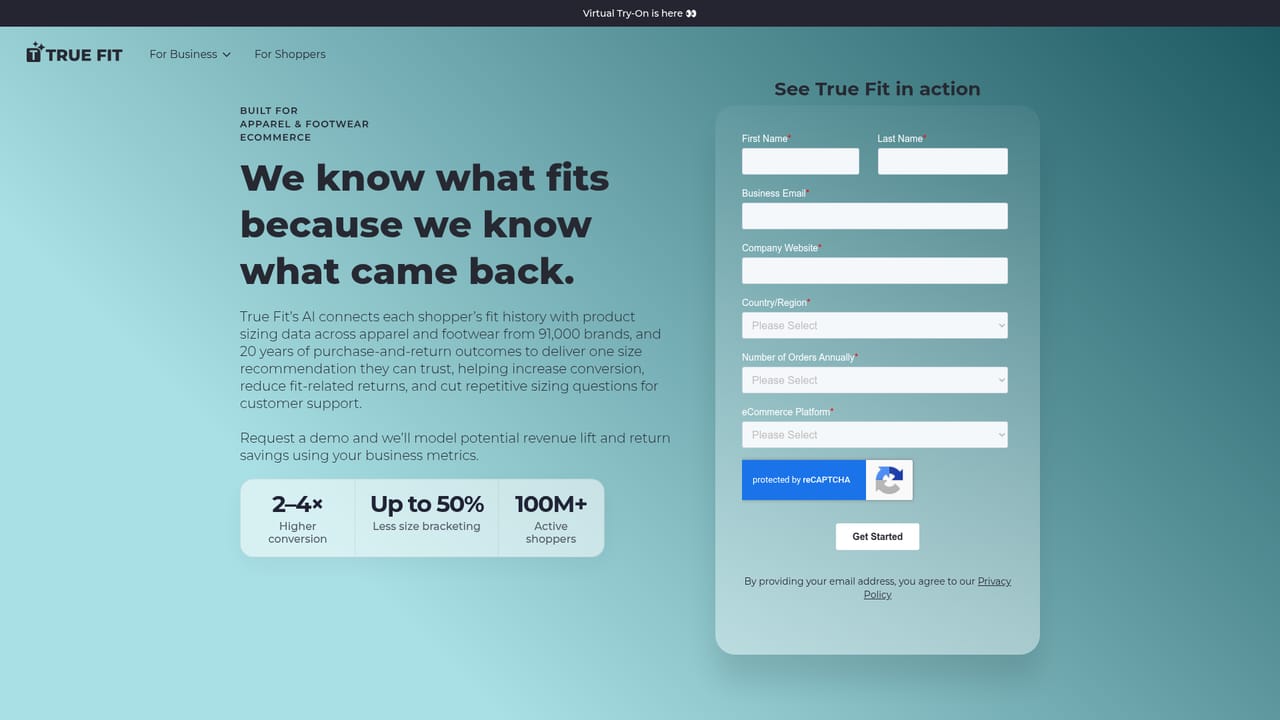
True Fit is an enterprise fit and sizing intelligence platform for apparel and footwear retailers. It recommends sizes from real purchase and return data, adds virtual try-on, and can plug into existing AI agents through MCP.
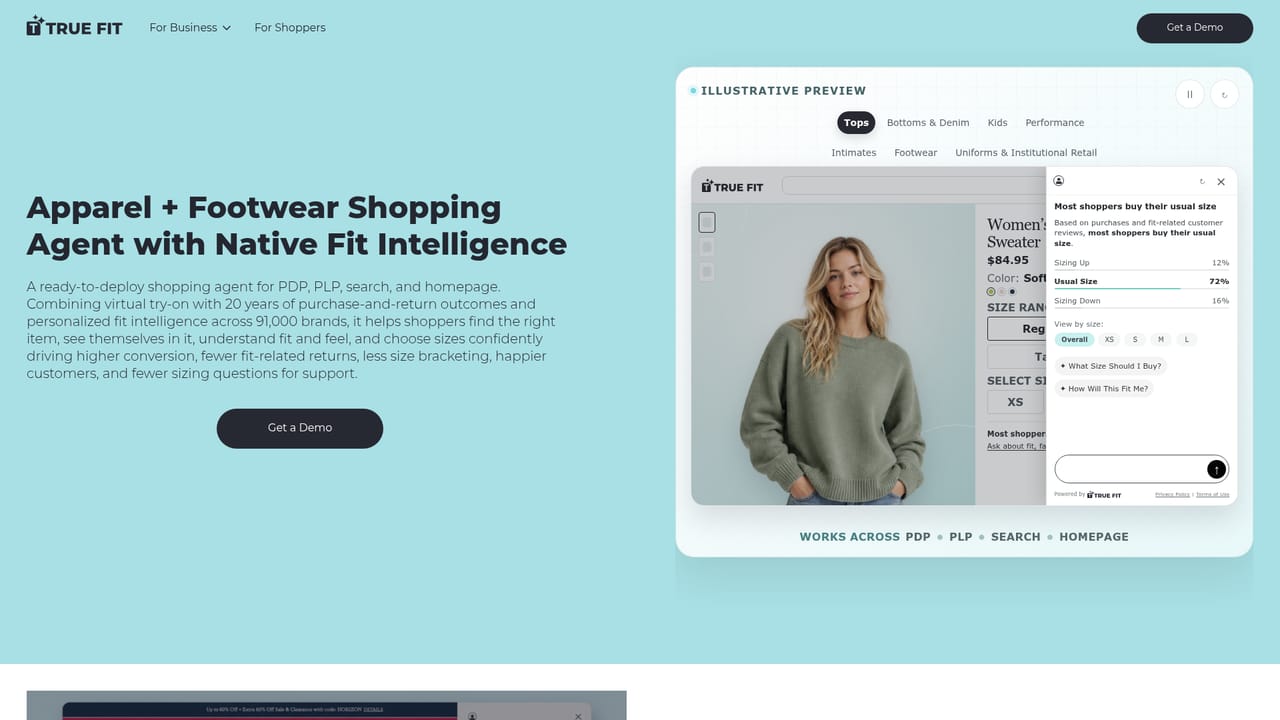
True Fit is a fit and sizing intelligence platform built for apparel and footwear retail. It draws on roughly 20 years of real purchase and return outcomes to tell a shopper which size will actually work, rather than relying on a static size chart. Retailers deploy it in one of two ways: a ready-made shopping agent with native virtual try-on, or a fit layer exposed through MCP that feeds sizing context into an AI stack the retailer already runs. The core mechanism is a shopper profile matched against product data. A shopper enters their usual size and reference garments, and True Fit compares those details with item measurements and cross-brand fit behavior to recommend a size and explain how the piece will feel. Guidance appears on product pages, listing pages, search results and the homepage, and the conversational layer lets shoppers ask about fabric, reviews and how a specific size will sit. Virtual try-on extends this by styling a selected item on the shopper's own photo (or a saved one), so the shopper can see the look and receive sizing guidance alongside it. True Fit is aimed at retail teams rather than individual consumers: apparel and footwear merchandisers, ecommerce and conversion leads, and support managers tired of repeated sizing questions. It also covers verticals such as kids, performance, intimates, uniforms, staff and workwear, and campus or school spirit stores. For retailers that already run an assistant, the MCP route adds fit intelligence without replacing their interface. The tradeoffs are structural. True Fit is an enterprise integration, so value depends on catalog data quality and merchant setup effort, and the homepage does not publish pricing or a self-serve signup, so buyers must go through a demo request. It is also narrowly focused on fit and sizing within apparel and footwear, which means it will not serve categories outside that scope. Competitors in virtual try-on and sizing are numerous, so the differentiation rests on the depth of historical outcome data, which is hard to verify from the outside.
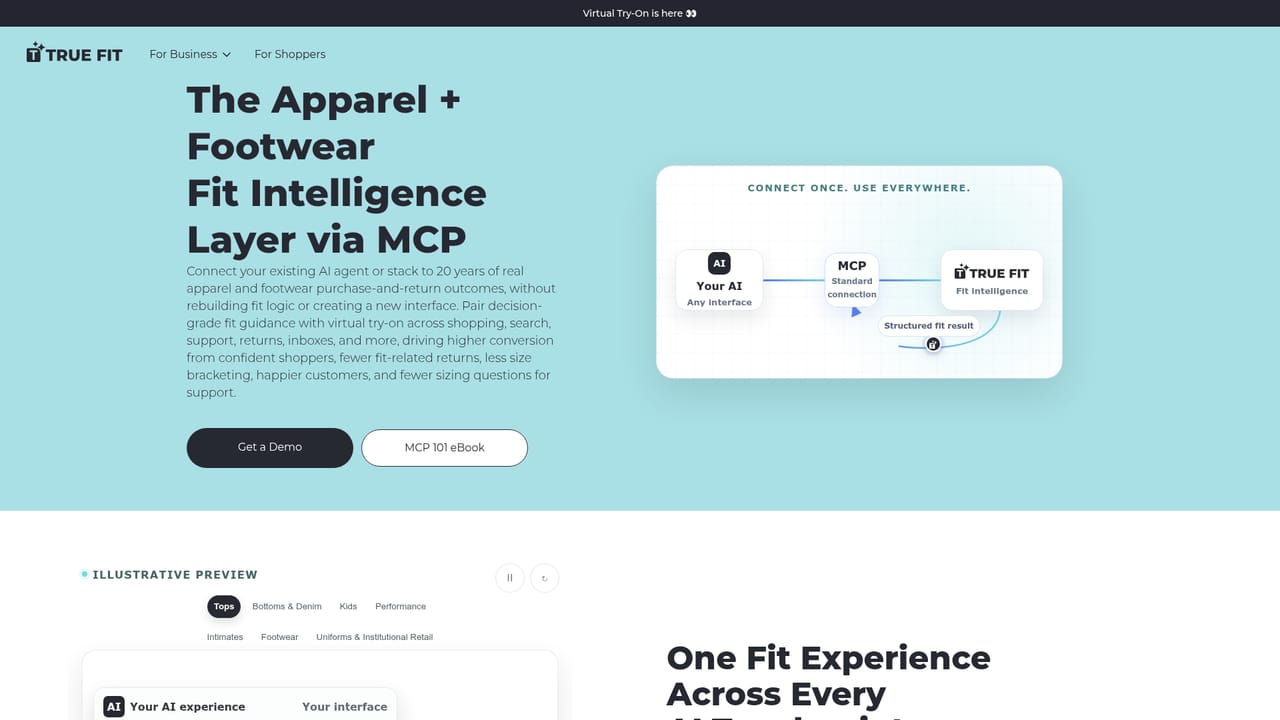
True Fit can be delivered through MCP, which passes product data, shopper fit and purchase and return history into an AI stack the retailer already operates. The ready shopping agent is described as Shopify Plus certified.
Learn moreFit and sizing recommendations built from real purchase and return data. Conversational questions about fit, fabric and reviews. Virtual try-on using a shopper photo or a saved selfie. Guidance across product pages, listing pages, search and the homepage. Vertical coverage for kids, performance, intimates, uniforms, staff and workwear, and school spirit stores. Optional fit intelligence delivered via MCP into an existing AI assistant.
Learn more AI Angels400+ customizable AI girlfriends for NSFW chat, voice calls, and roleplay
 Candy AIExperience the future of companionship with AI friends who chat, role-play, and connect with you on a human level.
 ourdream.aiA vast AI roleplay platform with millions of characters for chat, images, video and voiceAI Angels400+ customizable AI girlfriends for NSFW chat, voice calls, and roleplayCandy AIExperience the future of companionship with AI friends who chat, role-play, and connect with you on a human level.ourdream.aiA vast AI roleplay platform with millions of characters for chat, images, video and voice