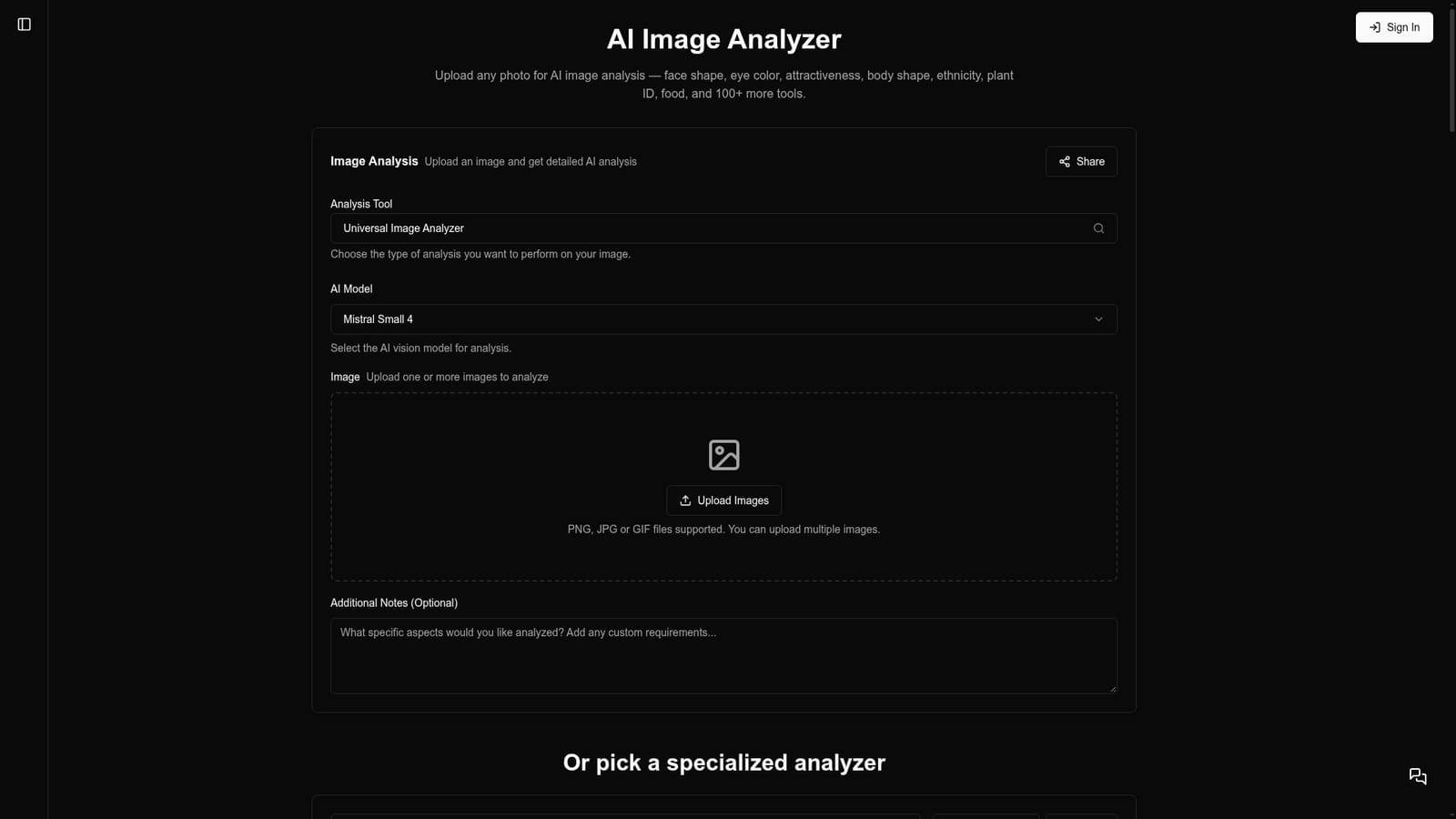
AI Image Analyzer by just build things. is an image analysis tool. A web hub of 100+ specialized AI image analyzers. Upload a photo and get prompts for image generators, photography and composition critiques, SEO and accessibility checks, style advice, and more, using a selectable vision model.
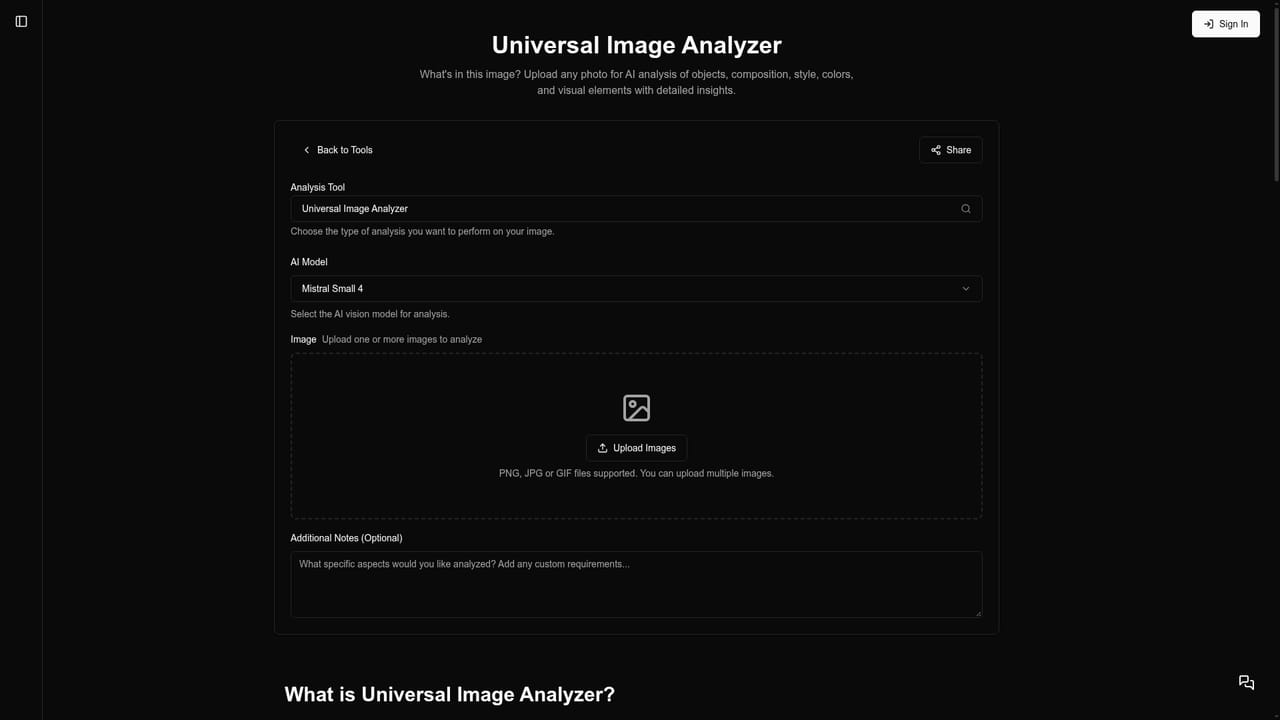
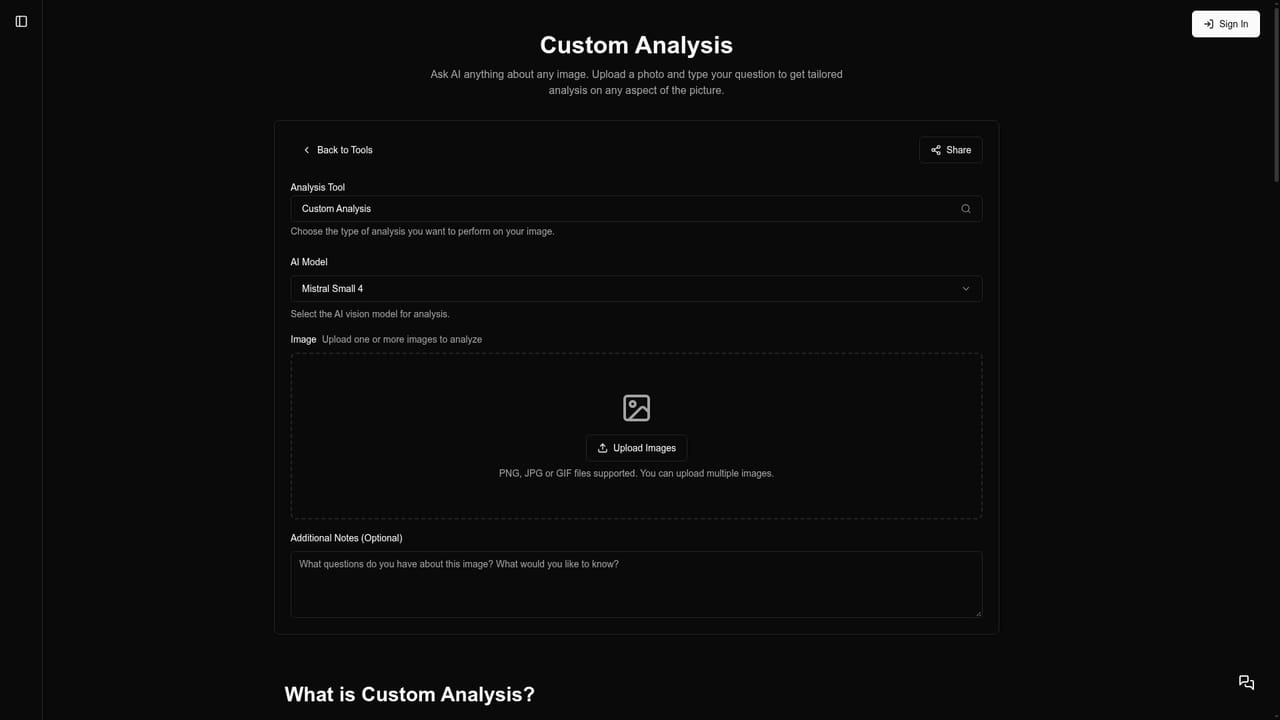
AI Image Analyzer by just build things is a web-based hub of single-purpose image analysis tools. Instead of one generic captioning box, the site offers more than a hundred specialized analyzers, each tuned to a different question about a picture. Examples include a universal analyzer for objects, colors and composition, a custom mode where the user types their own question, art and composition critiques, photography technical details, color palette extraction, and accessibility checks with alt-text suggestions.
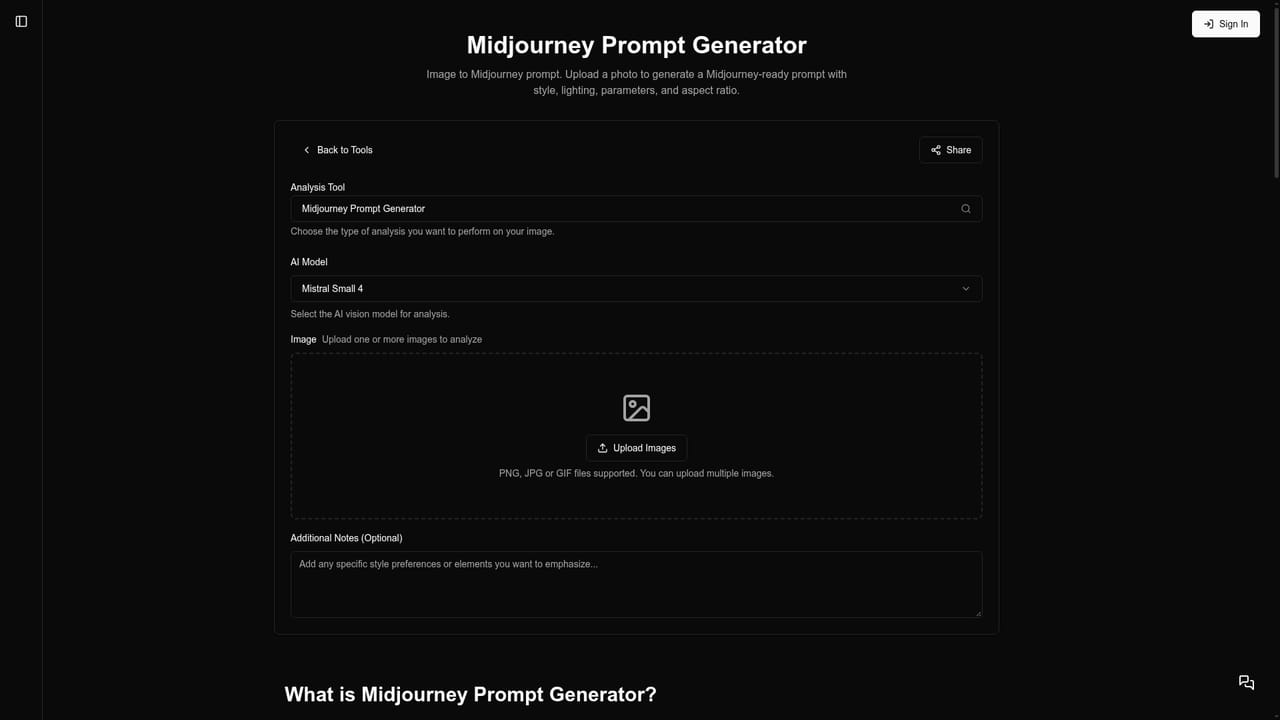
The catalog is wide. Prompt-reverse tools turn a photo into text prompts for Midjourney, DALL-E, Stable Diffusion, Flux and Leonardo, or into one universal prompt. Marketing-minded tools cover SEO scoring of images, brand audits, social media captions and hashtags, product photo ratings and photo-to-blog-post drafts. Others focus on people and style: face shape, facial harmony, emotion, fashion, personal color analysis and celebrity lookalikes. Further tools handle food, architecture, historical context, data visualization, UI screenshots, plant identification and content moderation.
In practice the workflow is short. The user selects an analyzer, chooses an AI vision model (Mistral Small 4 is shown as the selection on the page), uploads one or more PNG, JPG or GIF files, optionally adds notes, and runs the analysis. Tools are browsable through a search box, a random-tool button and tag filters such as Face, Art, Photography, Marketing, OCR, Medical and Nature.
The product suits creators who want reusable prompts from reference images, marketers and SEO staff checking visuals, photographers seeking feedback, educators looking for classroom material, and casual users curious about their own photos. Compared with general multimodal chatbots, it trades open-ended conversation for ready-made, task-specific outputs, which saves prompt writing but gives less control over the analysis. Several of the people-focused tools produce subjective or sensitive judgments, so their output is best treated as entertainment or loose guidance rather than fact, and the medical-tagged tools should not replace professional advice.