Tempus

Precision medicine powered by clinical and molecular data

Advanced
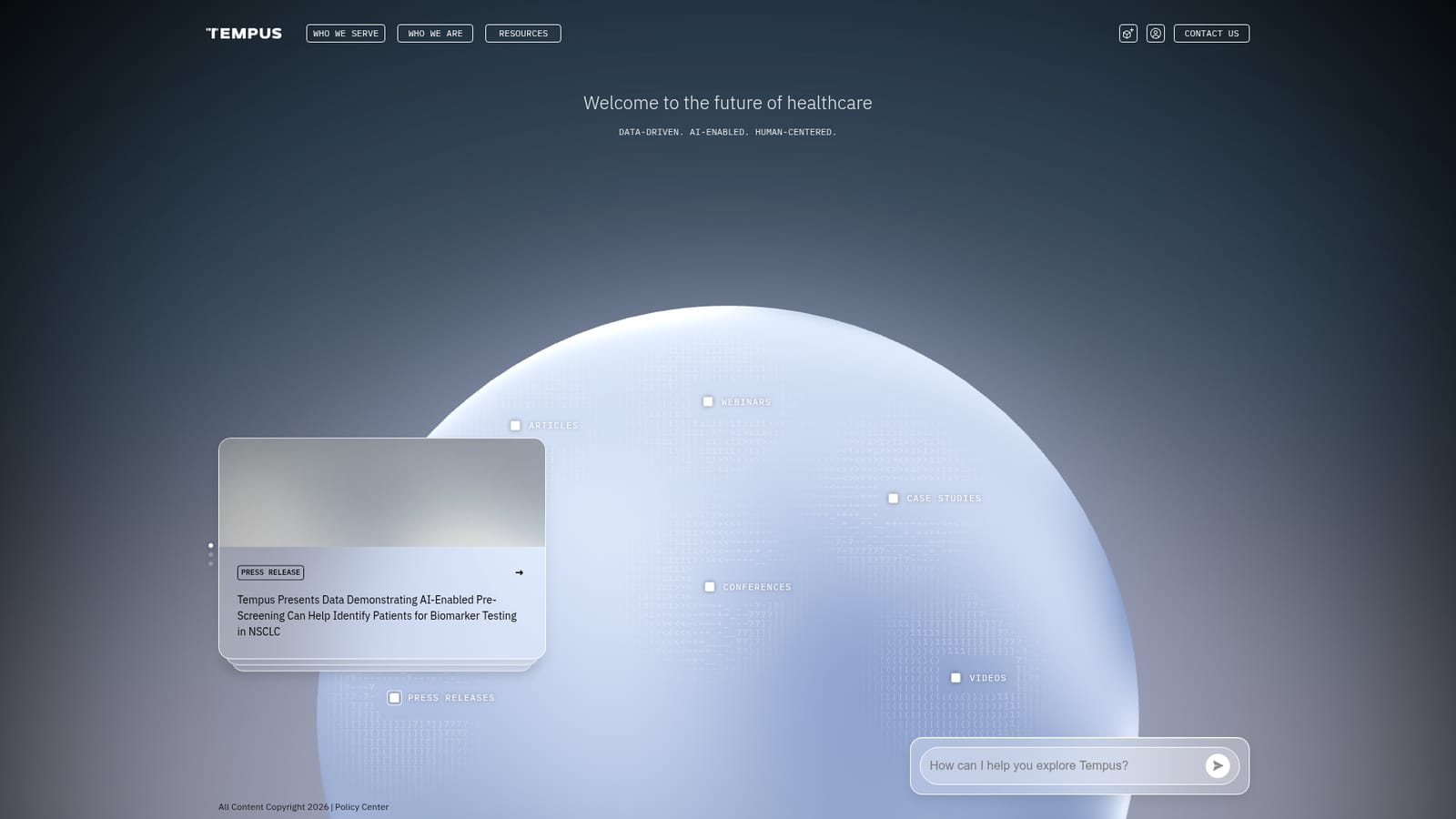
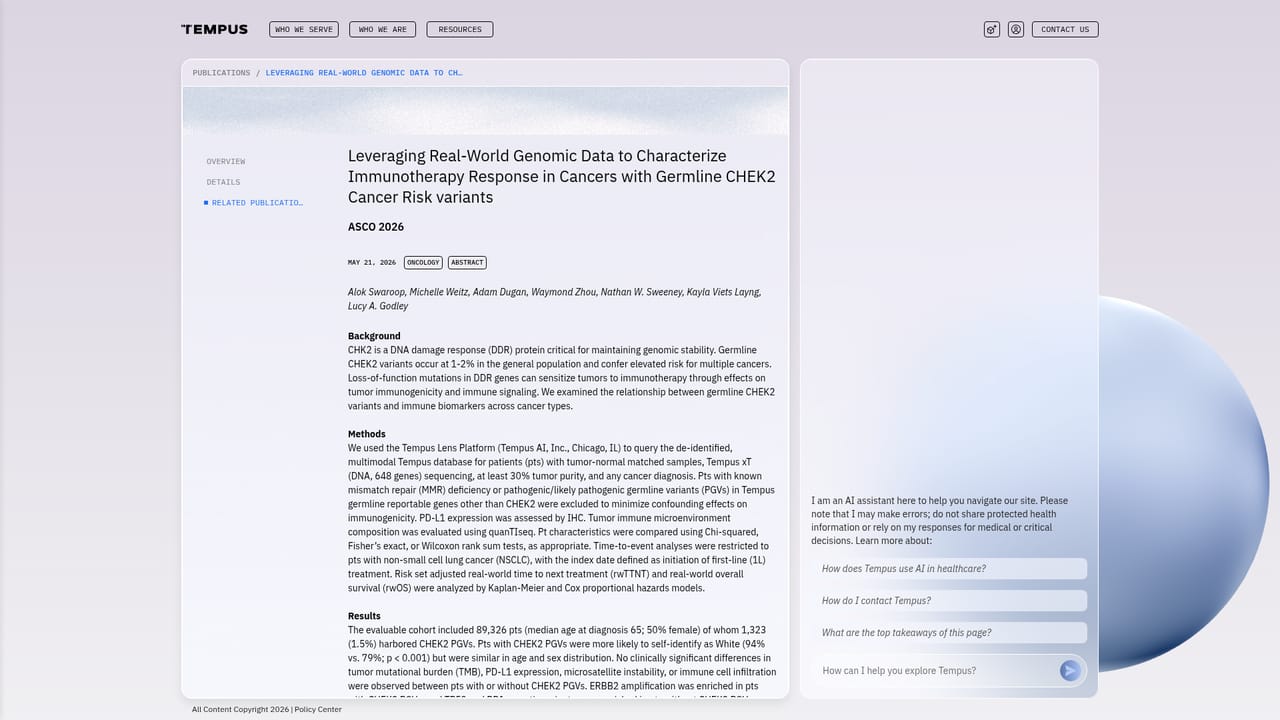
Screenshot of Tempus, Precision medicine powered by clinical and molecular data

What is Tempus?

Tempus is an image analysis tool. Tempus pairs a large library of clinical and molecular data with an AI-enabled operating system for precision medicine, starting with cancer and extending to neuropsychiatry, cardiology and radiology. It serves providers, life sciences teams, researchers and patients through specialty-specific lab services, data products and trial support.

Tempus is a precision medicine platform built around a large library of clinical and molecular data, paired with an operating system intended to make that data accessible and useful. The company describes its starting point as cancer, with oncology as the deepest area of coverage, and extends into neurology and psychiatry, cardiology and radiology. Its stated posture is data-driven, AI-enabled and human-centered, meaning the software supports clinicians and researchers rather than replacing their judgment. For care teams, Tempus organizes ordering and results around specialties. Providers working in oncology, pathology, neurology and psychiatry, cardiology or radiology get dedicated entry points, and academic and research centers are treated as a separate audience with their own pathway. Patients and patient advocacy groups have their own sections covering oncology, clinical trials and neuropsychiatry, which suggests the product is meant to be used across the clinical encounter rather than by a single role. For life sciences organizations, the offering splits into distinct workstreams: data and AI products, companion diagnostics and lab services, clinical research operations, clinical trial recruitment, and care gap intelligence. In practice this means a pharmaceutical or diagnostics team can work with Tempus at several points in a development program, from trial site and patient identification through to data products built on de-identified clinical and molecular records. Digital pathology is presented as its own solution area, reflecting the imaging-heavy nature of modern cancer diagnostics. Where Tempus sits among alternatives is narrower than a general AI tool directory implies. It is not a creative or generative content product despite being filed here for lack of a closer match. It competes with other precision medicine and real-world data vendors, and its differentiators are breadth of paired clinical and molecular data plus specialty-specific lab services. Access, pricing and contracting are not published on the homepage, so buyers should expect an enterprise or institutional conversation rather than a self-serve signup.

How do you use Tempus?

  1. 1Identify your audience pathway
    Start on the homepage and choose the track that matches you: providers, life sciences, or patients. Each track leads to a different set of specialty pages and services.
    Tempus — Identify your audience pathway
  2. 2Review your specialty offering
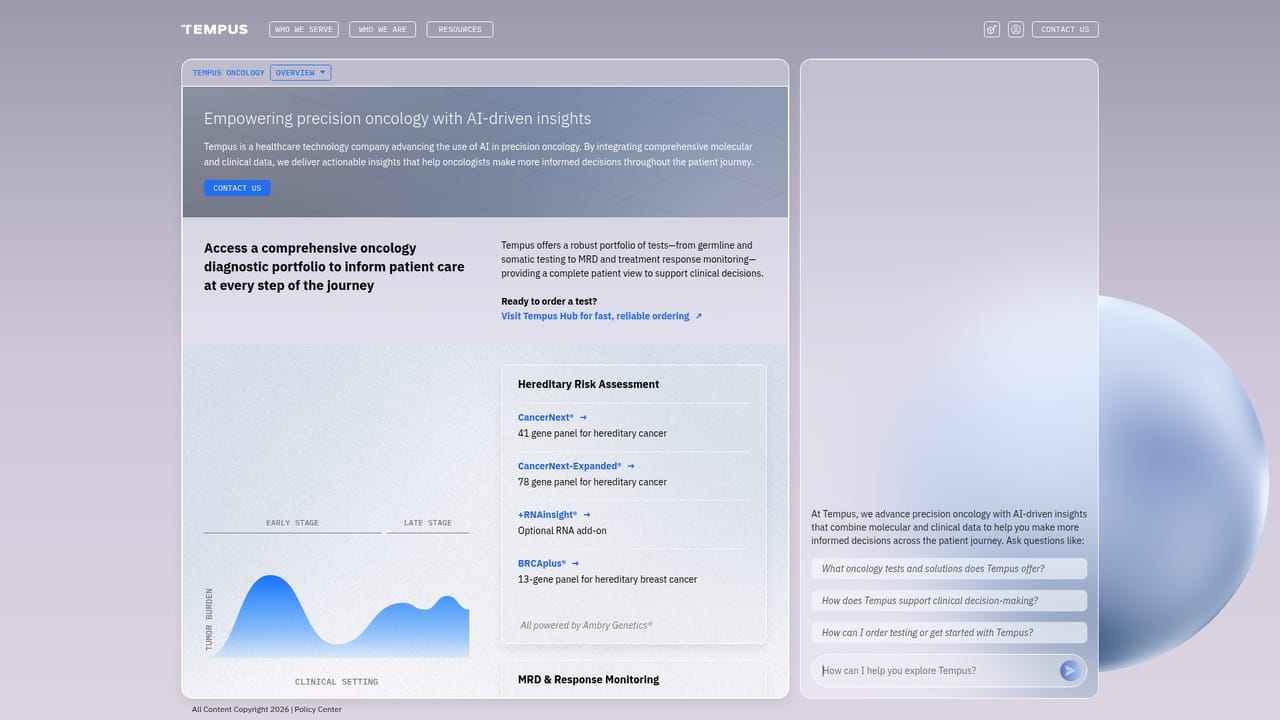
    Clinicians should open the page for their discipline, such as oncology or cardiology, to see which tests, reports and data services apply to their caseload.
    Tempus — Review your specialty offering
  3. 3Map life sciences workstreams
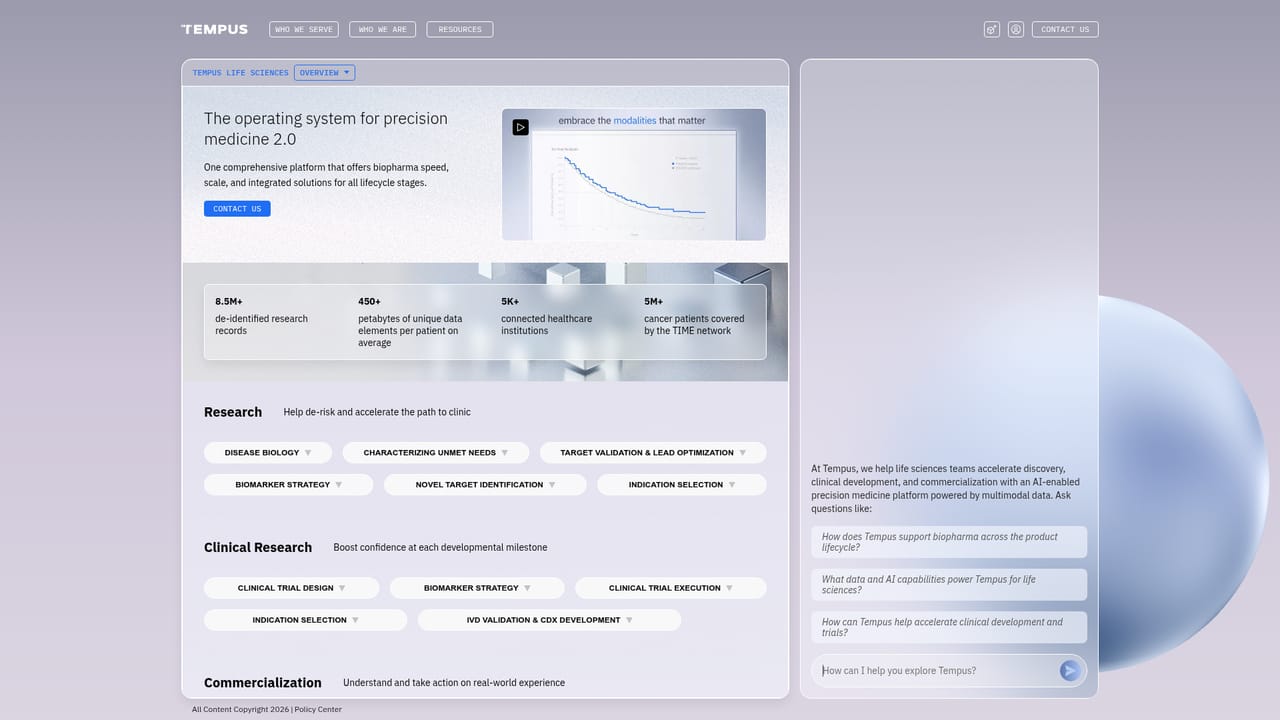
    Industry teams can read the life sciences overview to separate data and AI products, companion diagnostics, clinical research operations and trial recruitment before contacting anyone.
    Tempus — Map life sciences workstreams
  4. 4Check patient-facing resources
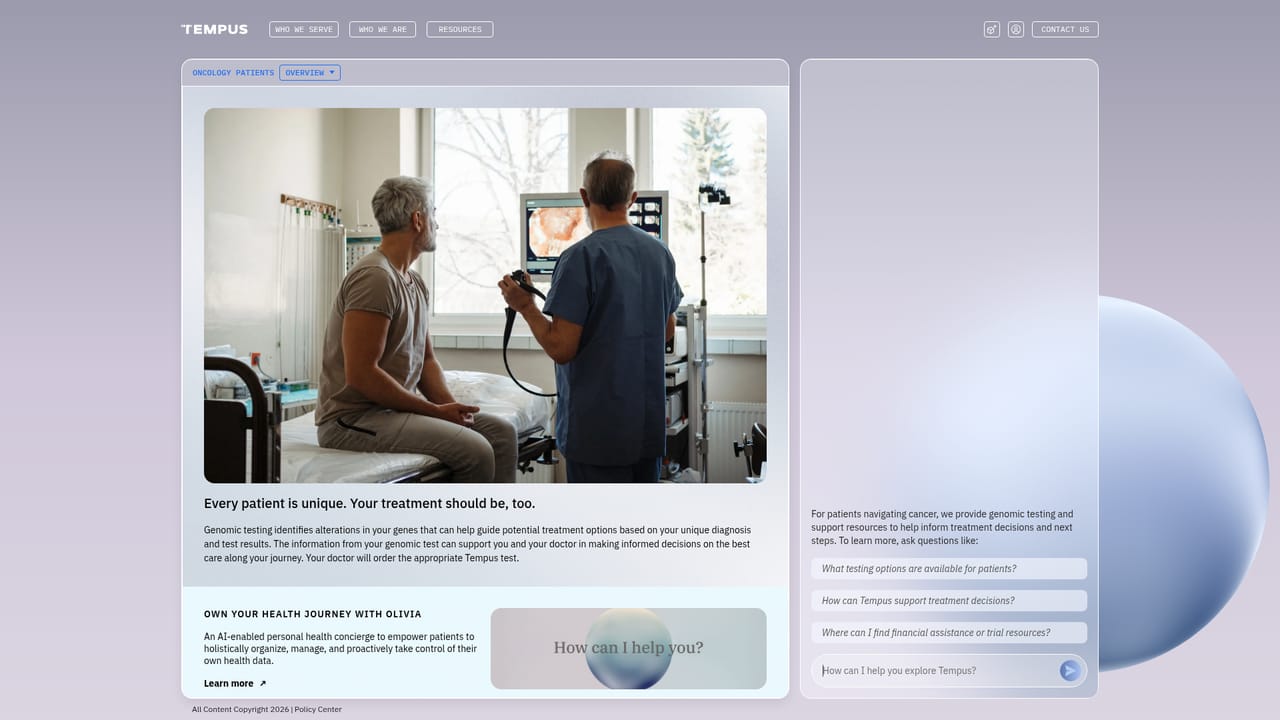
    Patients and advocacy groups can use the dedicated sections to understand testing options and how clinical trial matching is described.
    Tempus — Check patient-facing resources
  5. 5Read publications and technical material
    Before committing, review the publications and technology blog to assess evidence quality and how the data and AI products are actually used.
    Tempus — Read publications and technical material

Pros and cons

Pros

  • Specialty-specific pathways for oncology, pathology, neuropsychiatry, cardiology and radiology rather than one generic interfaceAI
  • Combines clinical and molecular data in a single library, which suits research that needs both record types togetherAI
  • Life sciences offering covers data products, companion diagnostics, CRO services and trial recruitment in one relationshipAI
  • Separate patient and advocacy group sections make results and trial information accessible beyond cliniciansAI
  • Explicit human-centered framing positions AI as decision support, which matters for clinical governance reviewsAI

Cons

  • No published pricing or self-serve access, so evaluation requires a sales or institutional contracting processAI
  • Positioned mainly on cancer, so teams outside oncology get a less proven starting pointAI
  • Pricing, implementation timelines and data sharing terms are absent from the public site, making budget comparison hardAI
  • Value depends on test ordering flowing through Tempus labs, which can mean workflow changes for existing pathology partnersAI

How much does Tempus cost?

Support

Support resources are grouped under Policy Center, Document Library and Media Library, with events, webinars and a technology blog available for ongoing education. The site assistant is explicitly labeled as error-prone and unsuitable for protected health information or medical decisions.

Learn more

Features

Specialty pages for oncology, digital pathology, neurology and psychiatry, cardiology and radiology. Life sciences workstreams cover data and AI products, companion diagnostics and lab services, CRO services, clinical trial recruitment and care gap intelligence. Research and data collaboration programs sit alongside an AI site assistant that answers navigation questions.

Learn more

Frequently asked questions about Tempus

  • How do you use Tempus?
    The walkthrough on this page covers 5 steps: 1. Identify your audience pathway 2. Review your specialty offering 3. Map life sciences workstreams 4. Check patient-facing resources 5. Read publications and technical material.
  • What platforms does Tempus support?
    Tempus is available on Web App.
  • What are the limitations of Tempus?
    No published pricing or self-serve access, so evaluation requires a sales or institutional contracting process. Positioned mainly on cancer, so teams outside oncology get a less proven starting point. Pricing, implementation timelines and data sharing terms are absent from the public site, making budget comparison hard.

Status

StatusActive
Views0
Outbound clicks0
Added10/21/2026

Platforms

Web App

Pricing

Paid