Free trial
New accounts receive 50 free credits, enough to run any model in the browser playground and validate outputs before integrating.
Learn moreOne API key for 180+ AI models at 30% to 70% below official pricing

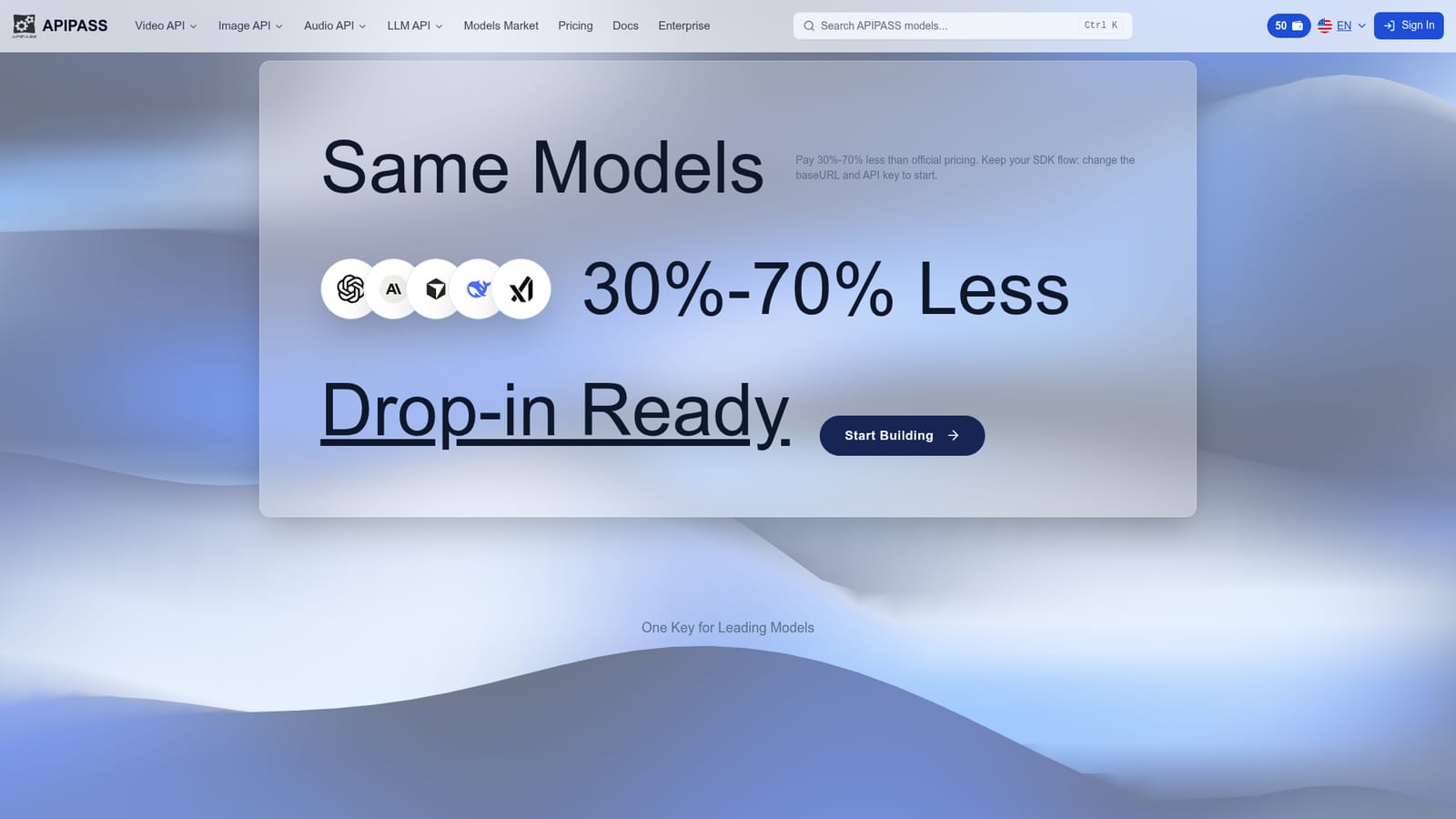
APIPASS is an API finder tool. ApiPass sells discounted access to 180+ AI models (OpenAI, Claude, Gemini, Veo, Kling, Flux, Suno and others) through one API key and one prepaid credit wallet. Swapping the baseURL and key usually requires no code rewrite, and failed tasks are not charged.
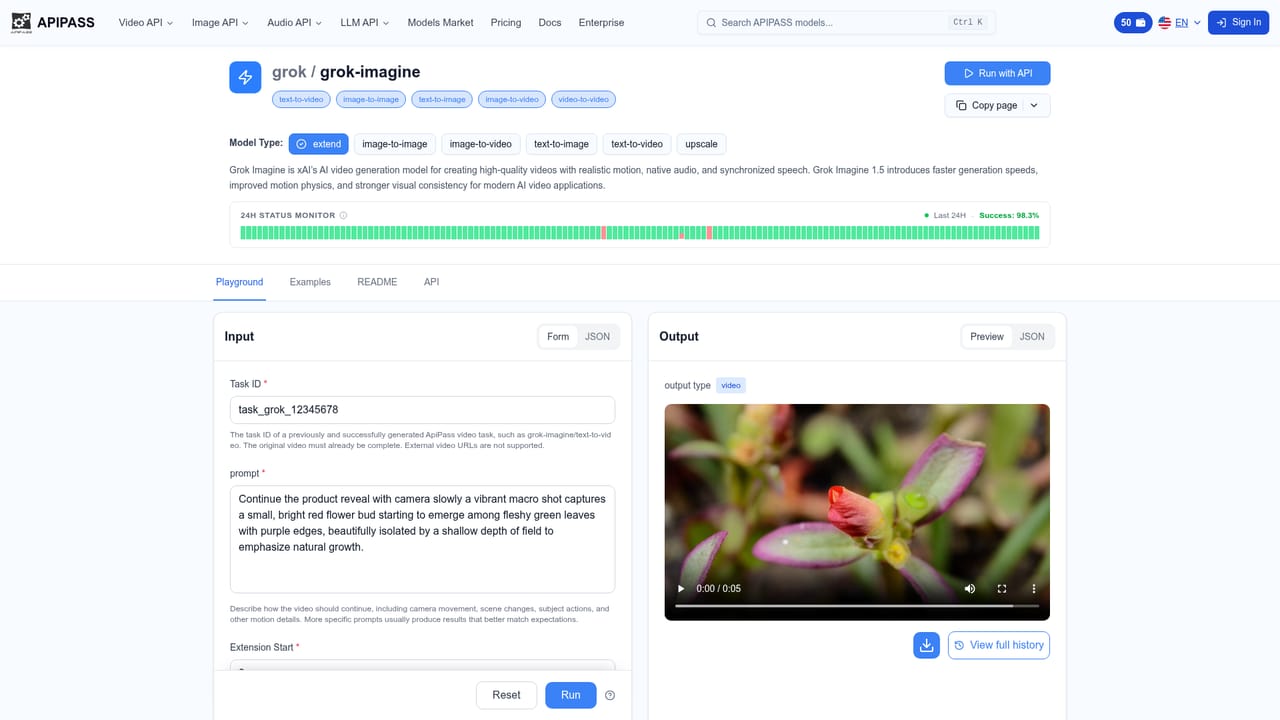
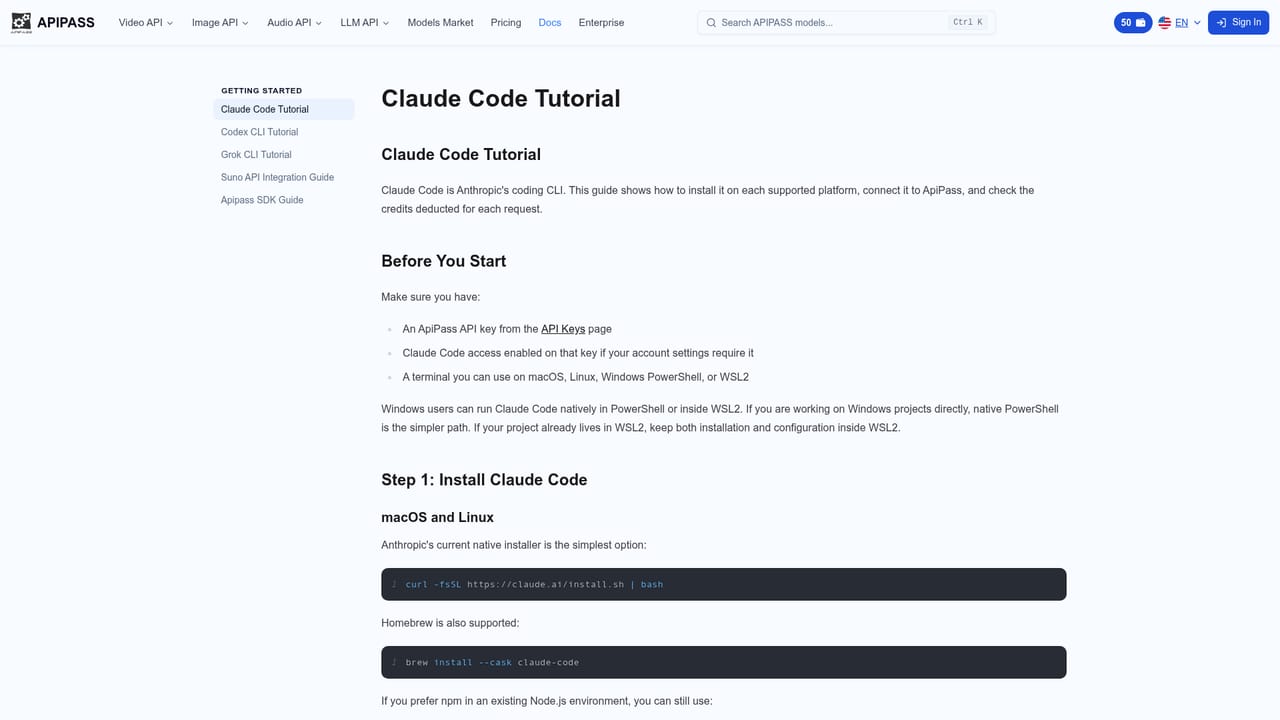
ApiPass is an API reseller that routes requests to more than 180 AI models across text, image, video, and audio through a single key and a single prepaid wallet. The catalog covers recognizable names including OpenAI GPT and GPT Image, Anthropic Claude, Google Gemini and Veo 3.1, Flux, Kling, Vidu, Suno, MiniMax, ElevenLabs, Qwen, and Grok Imagine. The core pitch is price: the company states that many calls cost 30% to 70% below the official rate, with per model comparisons published in the pricing catalog. Failed tasks are not billed. The product is aimed at developers and product teams who already build against provider APIs and want lower unit economics or fewer vendor relationships. Migration is deliberately shallow. Existing SDKs and request formats usually keep working after swapping the baseURL and the API key, and chat models accept OpenAI-compatible chat completions. Media generation runs on an asynchronous job pipeline: a POST to the createTask endpoint returns a taskId immediately, then the client either polls status or receives a webhook callback. Officially maintained SDKs and two open-source starters (a workflow canvas and a Next.js workflow app) reduce setup work. In practice, teams experiment in the browser playground on each model page before writing code. Signup includes 50 free credits, and every model page shows parameters, billing units, and a rolling 24-hour success-rate bar so reliability can be judged before production traffic is routed. Billing is pay-as-you-go credits, so spending tracks actual usage rather than a subscription seat count. The trade-off is position in the supply chain. ApiPass sits between the buyer and the model owner, so behavior depends on upstream availability, and the cheapest routes are labeled as starter channels. Teams with strict procurement requirements, direct enterprise agreements, or data residency clauses will want to weigh that layering against the savings. For indie developers, agencies, and internal tooling groups, the combination of discounted rates, drop-in compatibility, and one bill is the practical draw.
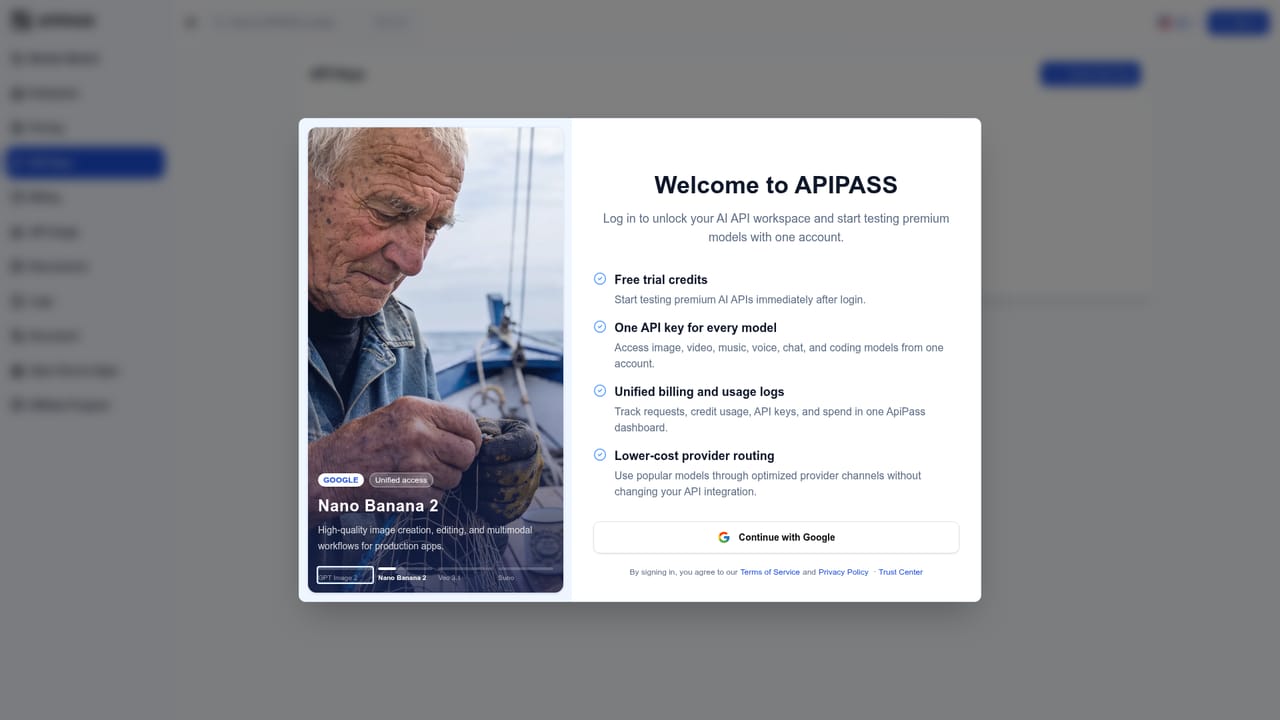
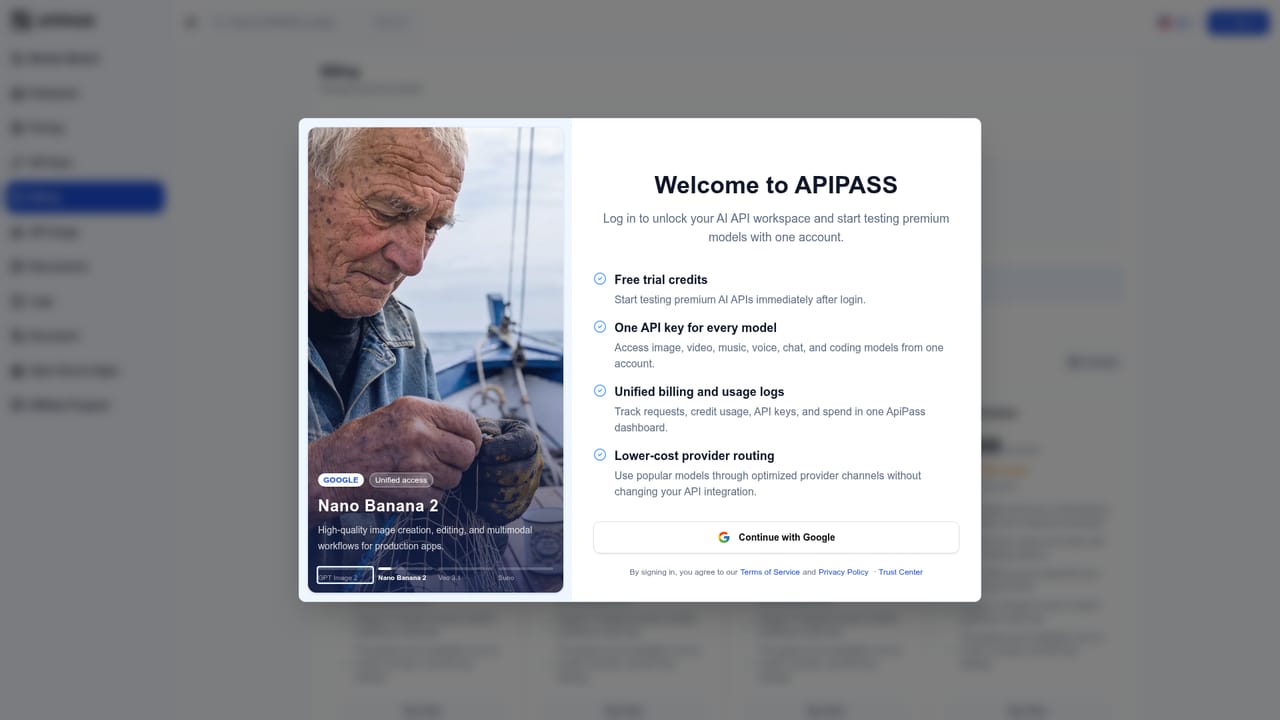
New accounts receive 50 free credits, enough to run any model in the browser playground and validate outputs before integrating.
Learn morePay-as-you-go credits in one wallet, with a stated base of $1,250 for 275,000 credits at $0.005 per credit. Model pages list credits and dollar prices per run or per second next to official reference rates. No subscription lock-in, no hidden fees, and failed tasks are not charged.
Learn more24/7 human support on a dedicated paid chat channel with engineers replying in minutes, plus a public incident tracking feed and integration help.
Learn moreWorks with existing provider SDKs and REST flows after swapping baseURL and key. OpenAI-compatible chat completions are supported, alongside official ApiPass SDKs and open-source React canvas and Next.js workflow projects.
Learn moreOne Bearer token covers 180+ models with a consistent request schema. Async job pipeline with instant taskId, webhook callbacks, 5-state status API, native model output, and credit refunds for failed tasks. Official typed SDKs, open-source workflow starters, a per model 24-hour success-rate monitor, and encryption with prompts and outputs never used for training.
Learn more AI Angels400+ customizable AI girlfriends for NSFW chat, voice calls, and roleplay
 Candy AIExperience the future of companionship with AI friends who chat, role-play, and connect with you on a human level.
 ourdream.aiA vast AI roleplay platform with millions of characters for chat, images, video and voiceAI Angels400+ customizable AI girlfriends for NSFW chat, voice calls, and roleplayCandy AIExperience the future of companionship with AI friends who chat, role-play, and connect with you on a human level.ourdream.aiA vast AI roleplay platform with millions of characters for chat, images, video and voice


