Support
Support is delivered through a guided implementation model: a booked demo, help launching into production, and ongoing performance reviews as workflows evolve.
Learn moreRole specific AI agents embedded in the tools your team already uses

BotDojo is a chatbot builder tool. BotDojo deploys role specific AI agents (operations, data analysis, knowledge management, workflow automation) that plug into CRM, ticketing, Slack, Teams and email, execute business tasks, and improve through human review of results.
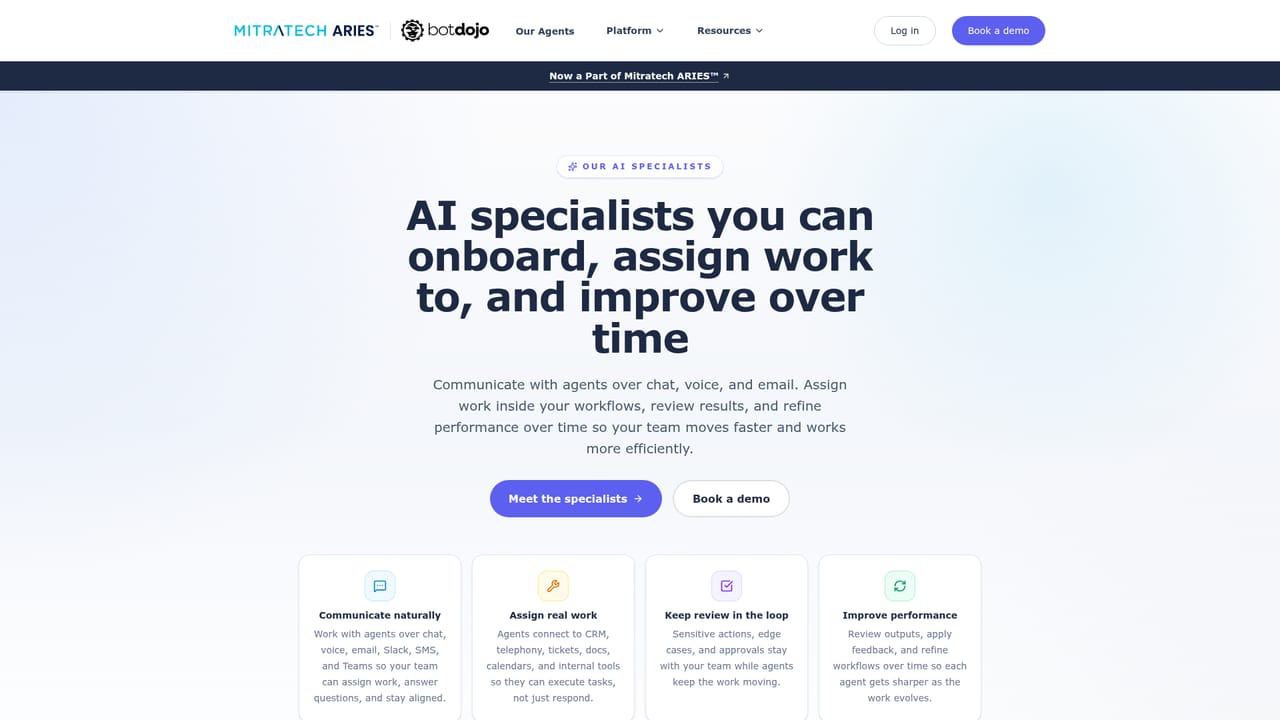
BotDojo is a platform for deploying AI agents that take on defined operational roles inside the software a company already runs. Rather than positioning itself as a general chatbot, it offers named specialists built around four job functions: operational efficiency, data analysis, knowledge management, and workflow automation. Each agent is described in terms of the work it produces, such as turning a backlog of calls into updated tickets, a Slack summary and a weekly status report. Conversation with the agents happens through channels people already watch: chat, voice and email. Task assignment, follow up questions and status checks all run through those surfaces, so adoption does not depend on learning a new interface. Behind that, the agents are wired into CRM, telephony, ticketing, documentation, Slack and approval systems, which is what allows them to act on a request instead of only answering it. The vendor reports more than 32 million workflow automations handled on the platform. Operationally, BotDojo is built around a review loop. Results get inspected, edge cases get corrected, and the agent configuration is adjusted as processes change. This human in the loop pattern is the core governance argument: agents handle volume and routine coordination, while judgment calls stay with staff. For enterprise buyers, that framing matters more than raw model capability, because it maps to how approvals and accountability already work. The tool sits in the same territory as workflow automation suites and custom agent frameworks, but differentiates on prebuilt role packages and production support. Onboarding is positioned at weeks rather than months, with help moving from demo to live deployment and then measuring impact. Teams evaluating it should expect a sales led process and should confirm which agents and connectors are included at their tier, since the homepage does not publish pricing.
Support is delivered through a guided implementation model: a booked demo, help launching into production, and ongoing performance reviews as workflows evolve.
Learn moreConnectors listed include Salesforce, HubSpot, Zendesk, Intercom, Slack, Microsoft Teams, Gmail, SendGrid, Notion, Stripe, Zapier, Azure, plus model providers OpenAI, Anthropic, xAI and Hugging Face.
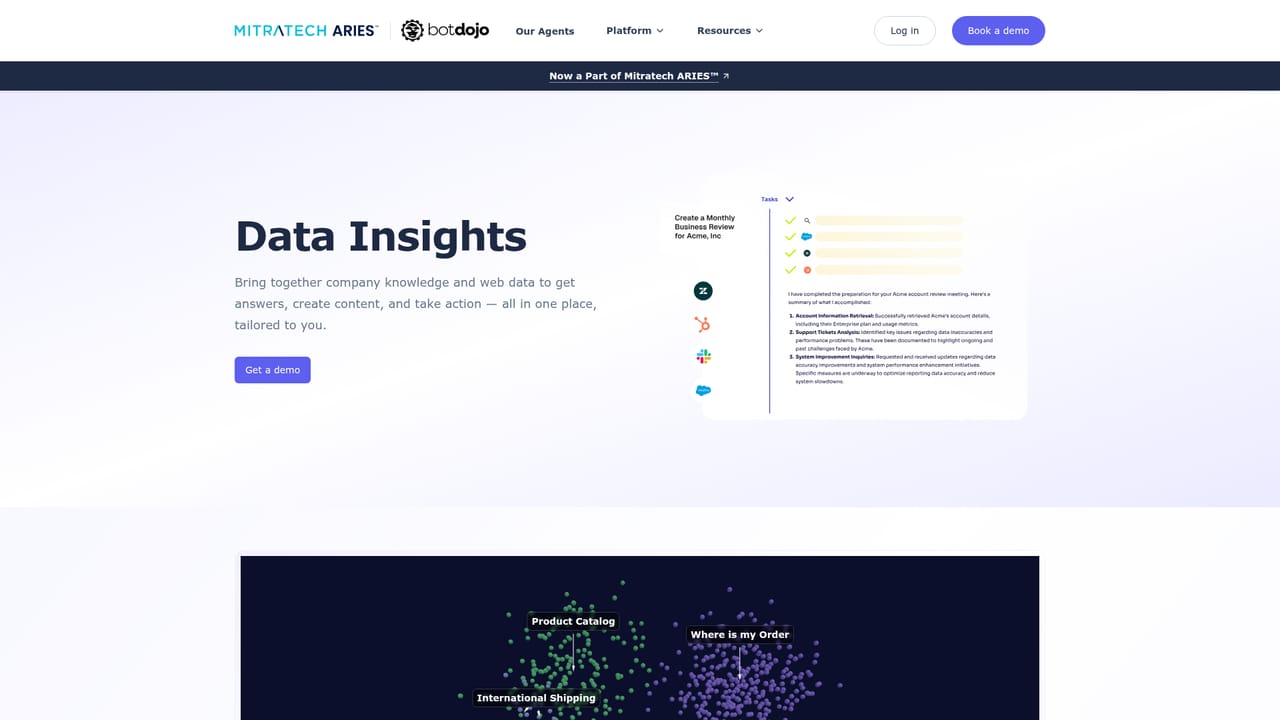
Learn moreRole specific AI agents for operational efficiency, data analysis, knowledge management and workflow automation. Agents are reached over chat, voice and email, act across CRM, telephony, ticketing, docs, Slack and approval systems, and are tuned through periodic review of their output so performance improves as workflows change.
Learn more AI Angels400+ customizable AI girlfriends for NSFW chat, voice calls, and roleplay
 Candy AIExperience the future of companionship with AI friends who chat, role-play, and connect with you on a human level.
 ourdream.aiA vast AI roleplay platform with millions of characters for chat, images, video and voiceAI Angels400+ customizable AI girlfriends for NSFW chat, voice calls, and roleplayCandy AIExperience the future of companionship with AI friends who chat, role-play, and connect with you on a human level.ourdream.aiA vast AI roleplay platform with millions of characters for chat, images, video and voice


