Cancel My Contract analyzes uploaded B2B vendor contracts with AI, explains notice windows, auto-renewals and buyout penalties, and offers an attorney-sent exit letter on law firm letterhead for a flat fee.
Cancel My Contract is a service from Trarian that helps businesses find a way out of vendor agreements that are built to be hard to leave. The target is the auto-renewing contract: uniform and linen services, waste hauling, copier and equipment leases, merchant-services and POS leases, business telecom and internet, SaaS subscriptions and alarm monitoring. It is aimed at business owners and operators, not consumers, and the site states plainly that it handles B2B matters only.
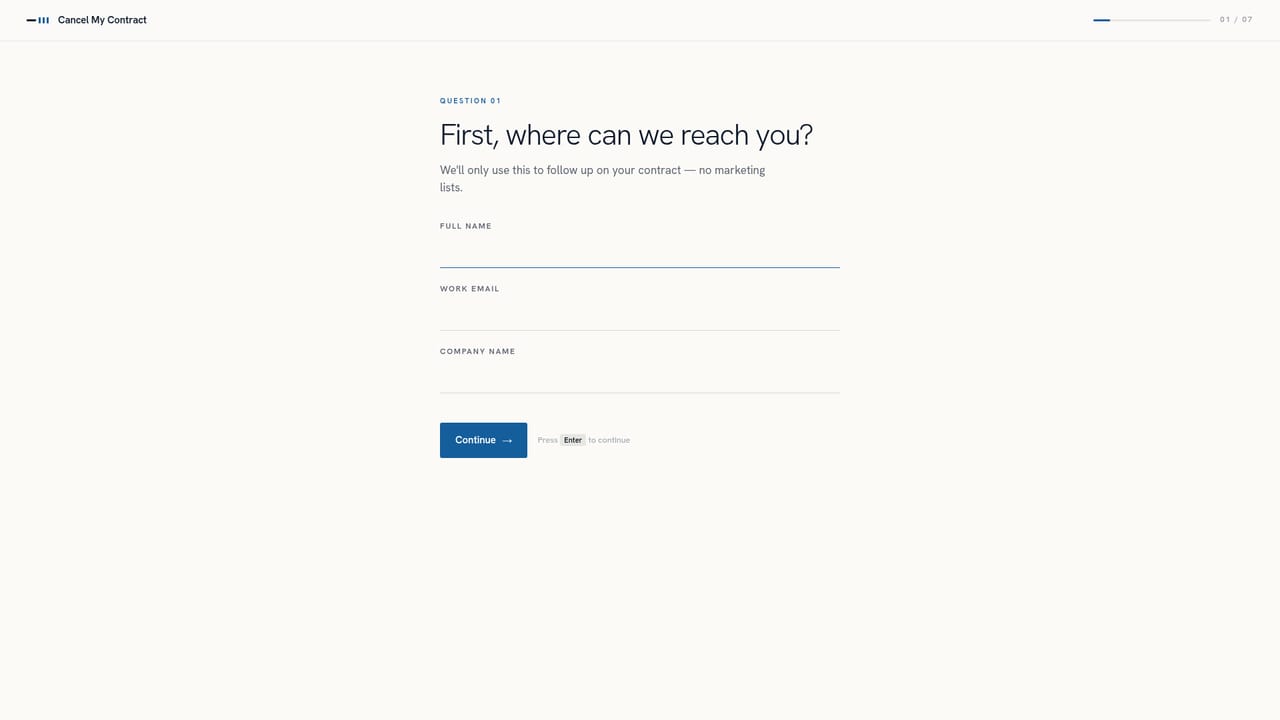
The workflow starts with an upload. The user submits the contract and describes what is happening, such as a renewal that slipped past, or a buyout quote that looks inflated. The AI reads the document and pulls out the clauses that matter: auto-renewal terms, notice windows, annual escalators and the buyout formula, all explained in plain English. It then recommends the strongest angle, whether that is a missed-notice fix, a vendor breach, or a challenge to a buyout that may be an unenforceable penalty. The site says it will report when no real argument exists.
A second tier adds a human. For a flat fee, a licensed attorney reviews the contract and the situation, then sends a termination or demand letter on law firm letterhead. This is described as limited-scope representation, and availability depends on licensed coverage in the user's state, which is confirmed before payment. If a vendor ignores the letter, the service points to next steps such as negotiation, small claims or a referral, with additional fees at that stage.
Among alternatives, the product sits between two extremes. Cost consultants can audit and negotiate but cannot apply legal pressure, while hourly lawyers are expensive and often unwilling to take smaller disputes. Cancel My Contract targets that gap with fixed prices and no percentage of savings. The analysis is information rather than legal advice, outcomes are not guaranteed, and brokers or procurement teams can inquire about white-labeling the analysis and letters for their own clients.