Integrations
Animate 3D is offered as an API for developers embedding motion capture in their own products. Published tutorials describe retargeting captured animation into Unreal Engine 5 and applying motion to MetaHuman characters.
Turn ordinary video into 3D character animation, no mocap suit required

Deepmotion is a dance generator tool that turns ordinary video into 3D character animation, no mocap suit required. DeepMotion is a web based AI motion capture tool that turns video clips into 3D character animation, plus a text to animation product called SayMotion.
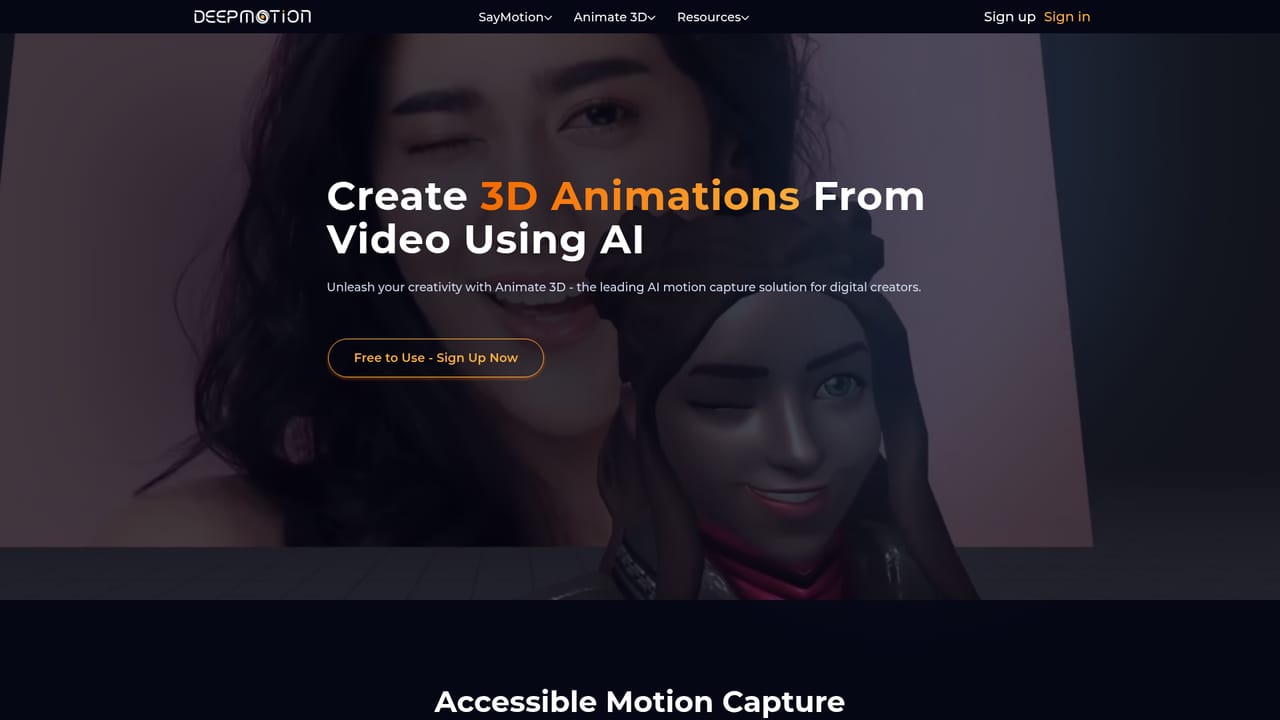
DeepMotion is a browser-based motion capture studio that converts video footage into 3D character animation using AI body tracking. Instead of hiring performers, renting suits and booking a capture stage, a creator uploads a clip and receives an animated skeleton that can be exported to their own character. The company positions the product around two workflows: Animate 3D for video to 3D animation, and SayMotion for text to 3D animation. Both sit under the broader banner of bringing digital humans to life. The practical appeal is access. The homepage testimonials come from an XR artist animating characters made in virtual reality, a professor teaching novices and industry veterans, a PhD student recreating kung fu moves he cannot physically perform, and an indie creator who describes the usual barrier of expensive software and hardware. Animate 3D is also offered as an API, and one quoted partner credits it with speeding up a development cycle. Tutorials on the site cover animating a MetaHuman from a video, retargeting animation into Unreal Engine 5, and building a three scene 3D animation from video or text input. In practice, the tool fits into an existing pipeline rather than replacing it. Capture happens in the browser, then the resulting animation is cleaned up and retargeted in a 3D package or game engine such as Unreal. Teams choosing between DeepMotion and traditional mocap should think about the tradeoff honestly: video-based tracking removes hardware cost and scheduling, but it cannot match the fidelity of a dedicated marker-based stage for subtle finger, facial or contact-heavy performance. For indie studios, students, game jams and social content, that is usually an acceptable exchange. DeepMotion sits in a crowded field of AI animation tools, distinguished by its emphasis on full body motion capture from plain footage, facial capture, and an API route for developers building animation features into their own products. Its partner list includes hardware and platform names such as Samsung, NVIDIA, Qualcomm, Intel and Epic Games, which signals where the technology is expected to run.

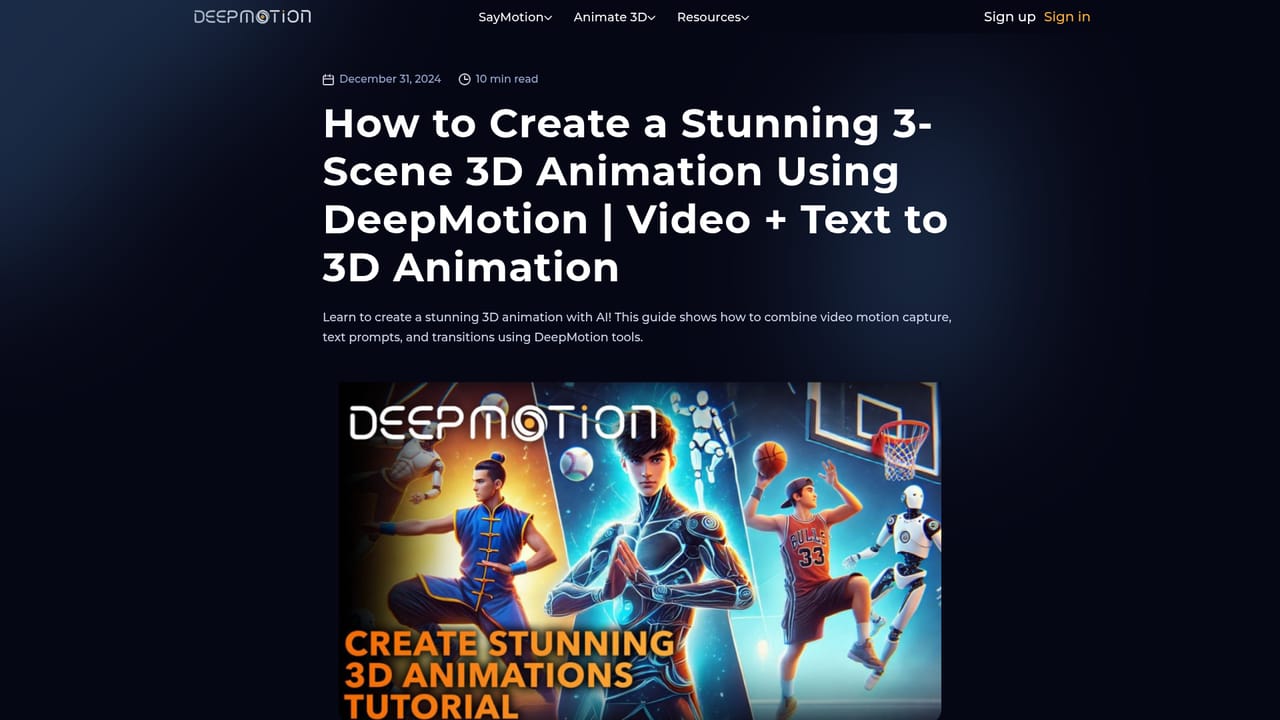
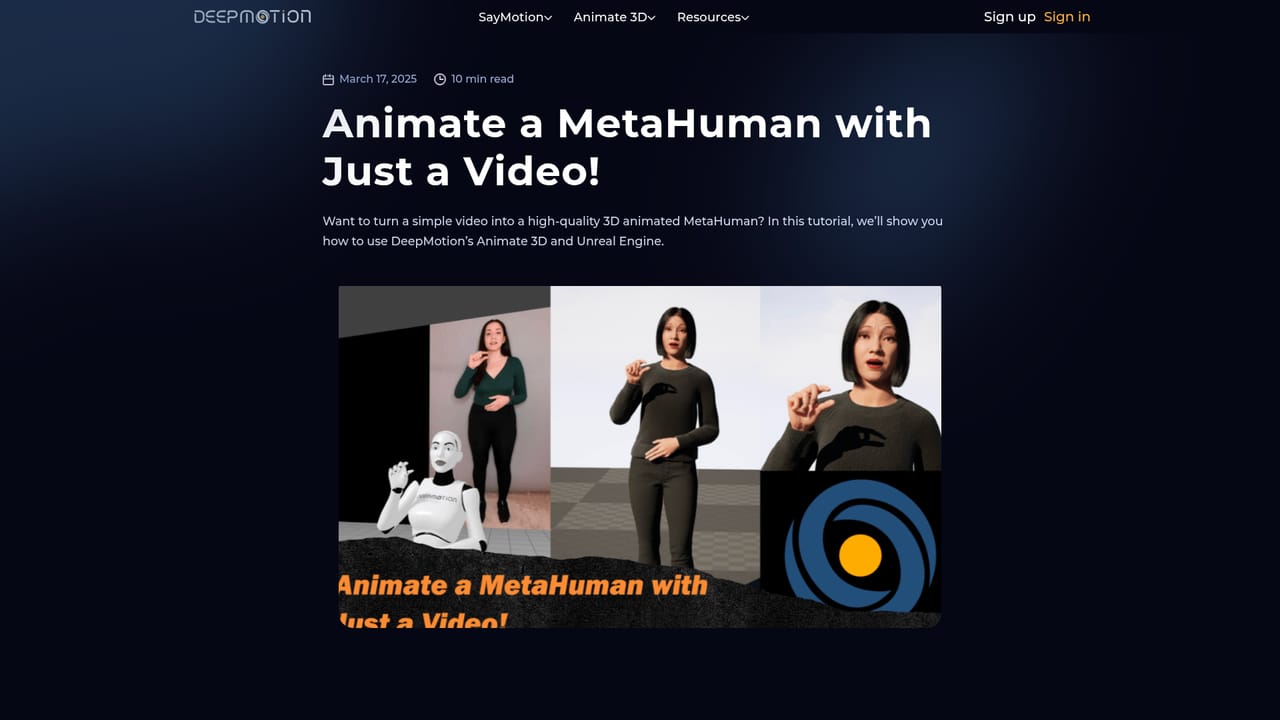
Animate 3D is offered as an API for developers embedding motion capture in their own products. Published tutorials describe retargeting captured animation into Unreal Engine 5 and applying motion to MetaHuman characters.
Two core products: Animate 3D converts uploaded video into 3D character animation with AI body tracking and facial capture, and SayMotion generates 3D animation from text prompts. Both run in a web browser. Animate 3D is also available as an API, and published guides cover MetaHuman characters, Unreal Engine 5 retargeting and multi scene animation builds.
Learn more AI Angels400+ customizable AI girlfriends for NSFW chat, voice calls, and roleplay
 Candy AIExperience the future of companionship with AI friends who chat, role-play, and connect with you on a human level.
 ourdream.aiA vast AI roleplay platform with millions of characters for chat, images, video and voiceAI Angels400+ customizable AI girlfriends for NSFW chat, voice calls, and roleplayCandy AIExperience the future of companionship with AI friends who chat, role-play, and connect with you on a human level.ourdream.aiA vast AI roleplay platform with millions of characters for chat, images, video and voice


