Free trial
A free start is offered: you can sign up, connect a repo and watch the world model build without talking to sales first. No credit card is required to begin.
Learn moreRoute coding agents to cheaper models and review PRs against past incidents.

Entelligence is a developer tool. Entelligence routes each AI coding agent turn to the cheapest model that clears your quality floor, then reviews pull requests against a shared graph of code, deploys and past incidents. It targets teams running Claude Code, Codex or Cursor at scale and want spend and review quality in one place.
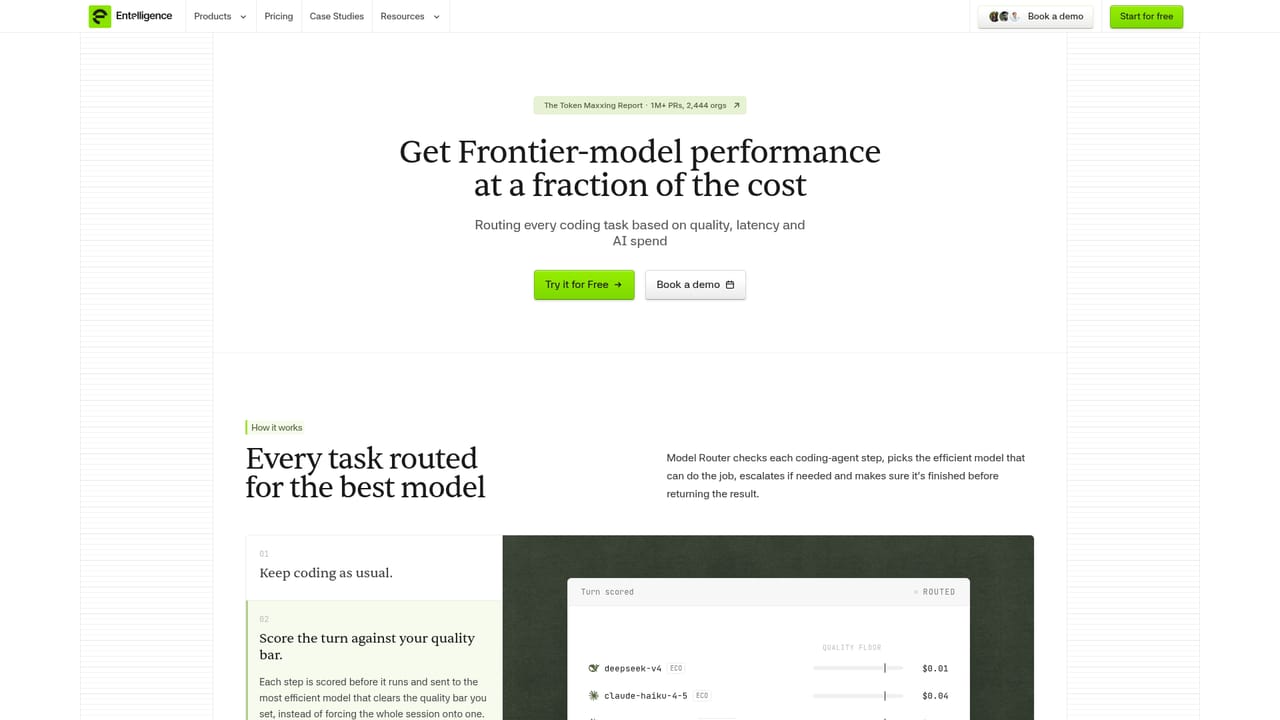
Entelligence is a cost and quality layer for teams running AI coding agents in production. The core idea is that most agent work does not need a frontier model, so the router scores each turn against a quality floor you define and hands the task to the cheapest model that clears it, escalating only when the work warrants it. The result is spend you can trace per session and per merged pull request rather than a single opaque bill at the end of the month. Underneath sits what the company calls a world model: one graph that ingests agent sessions, pull requests, deploys and incidents as they happen. Code review reads from that same graph. Separate passes check a diff for security, performance, precedent and contracts, and a resolved incident becomes a rule the next PR is tested against. That is the mechanism behind the pitch that bugs should not ship twice. The same memory powers weekly release notes, a per engineer view of spend against merged PRs, and token waste tracking that shows where context is being rebuilt unnecessarily. In practice the tool plugs into an existing workflow rather than replacing it. A CLI wraps Claude Code, Codex and Cursor, an MCP server answers requests from outside assistants, and Ellie responds in Slack when spend spikes or a release correlates with a drop in conversion. Setup starts with connecting a repository, and all three surfaces share the resulting index. It is aimed at engineering organizations large enough to feel agent spend, typically teams with several repos and a review bottleneck, rather than individual hobbyists. Against plain model subscriptions or standalone review bots, Entelligence competes on routing and on the memory that ties reviews to real incidents. The trade off is that its value grows with your history, so a brand new codebase has little precedent to draw on at first.
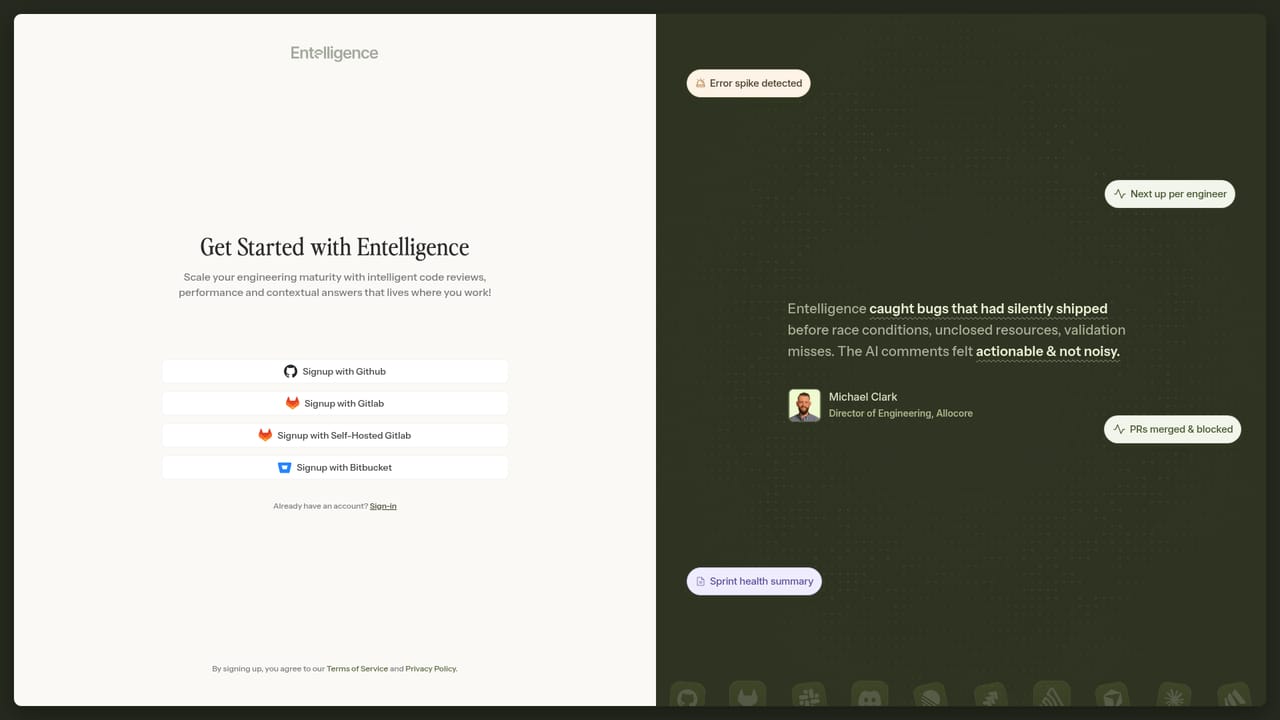
A free start is offered: you can sign up, connect a repo and watch the world model build without talking to sales first. No credit card is required to begin.
Learn morePlan tiers are banded by team size and the number of reviews run per month, with enterprise scoped individually. Exact figures are not stated on the homepage; the pricing page carries the current numbers.
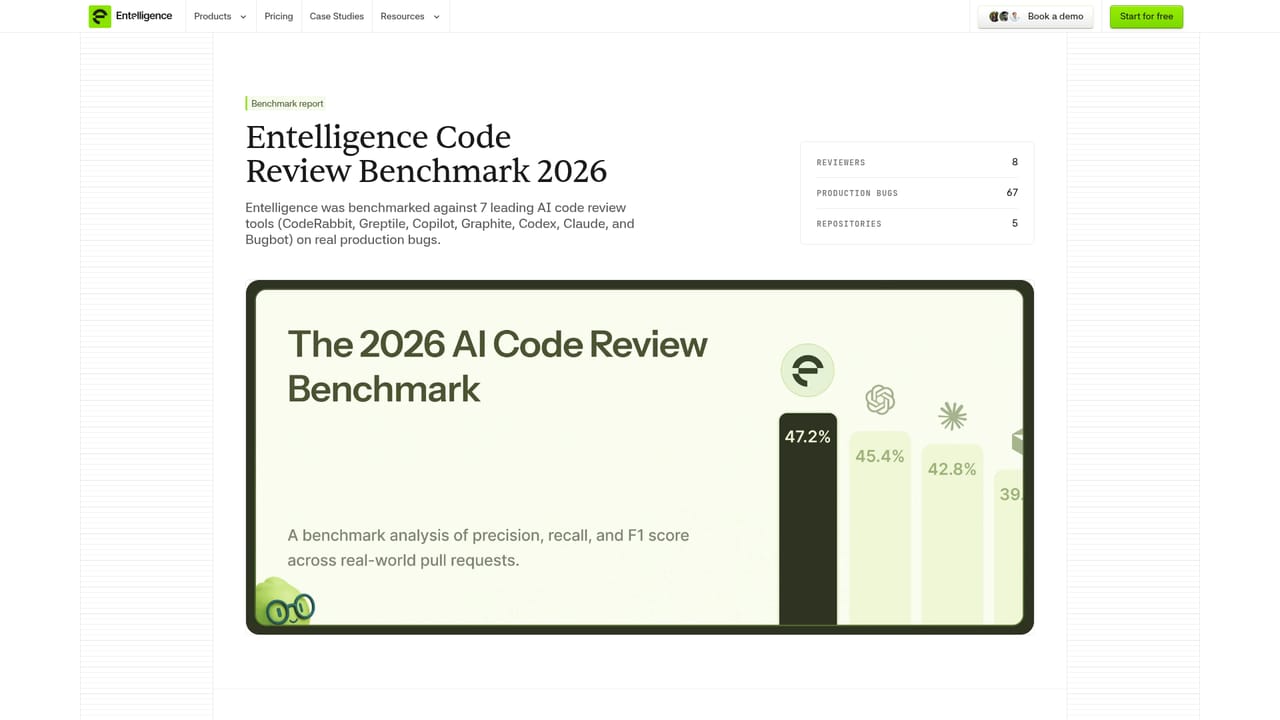
Learn moreSupport is reachable through a contact message from the site, with a demo booking option and published case studies and benchmark reports for self-serve evaluation. No dedicated documentation portal is listed on the homepage.
Wraps Claude Code, Codex and Cursor through a terminal CLI, and exposes an MCP server and plugins so requests from ChatGPT, Claude, Gemini, Llama and DeepSeek can query the index. Slack is supported for alerts and questions to Ellie.
Learn moreModel Router scores every turn against your quality floor and escalates only when needed. The world model indexes code, PRs, deploys, incidents and agent sessions into one graph. Code Review runs parallel passes for security, performance, precedent and contracts, and turns resolved incidents into rules. Agent Insights reports spend per developer, retry rate and token waste, with ledgers and cost flow per task. Slack and weekly release notes surface spend spikes and release impact.
Learn more AI Angels400+ customizable AI girlfriends for NSFW chat, voice calls, and roleplay
 Candy AIExperience the future of companionship with AI friends who chat, role-play, and connect with you on a human level.
 ourdream.aiA vast AI roleplay platform with millions of characters for chat, images, video and voiceAI Angels400+ customizable AI girlfriends for NSFW chat, voice calls, and roleplayCandy AIExperience the future of companionship with AI friends who chat, role-play, and connect with you on a human level.ourdream.aiA vast AI roleplay platform with millions of characters for chat, images, video and voice


