Support
The homepage cites responsive support, comprehensive resources, guided onboarding and expert assistance, plus forward deployed engineers for custom connector work.
Enterprise translation platform built around agentic AI workflows

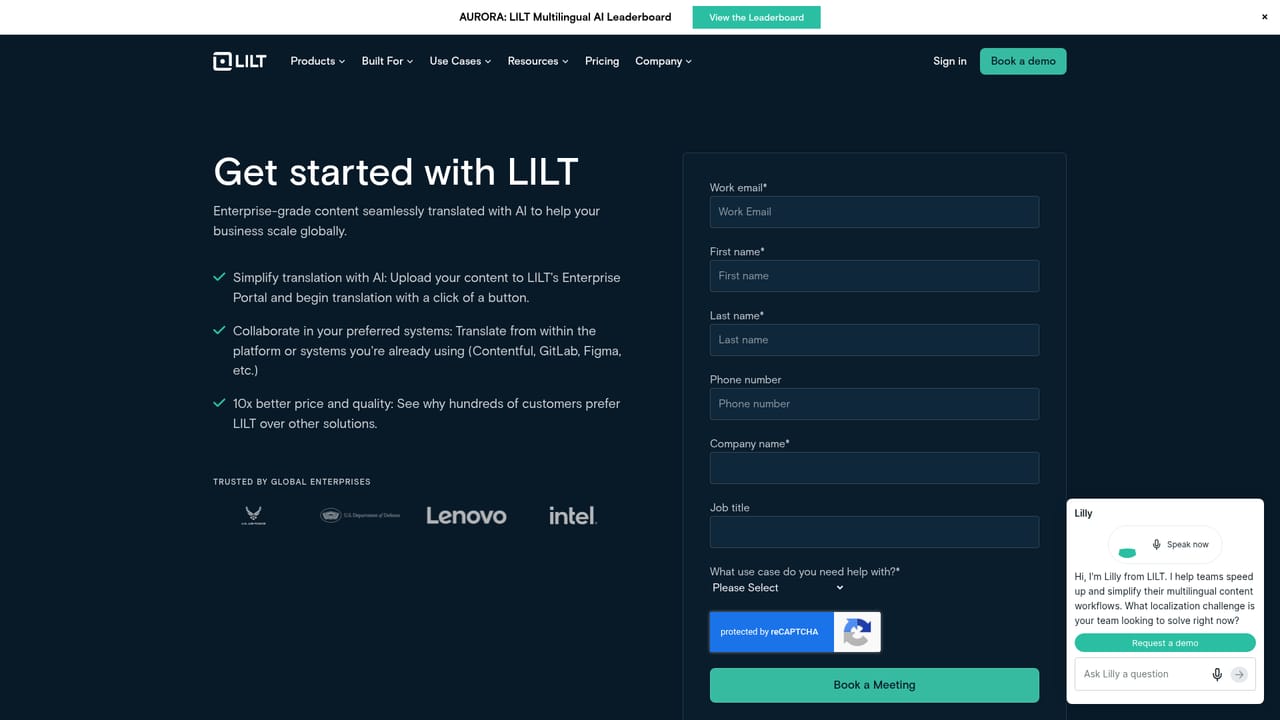
LILT is an enterprise AI translation platform that combines custom and third party models, agentic review automation, human expert routing and real time quality and budget analytics under one governed workflow.
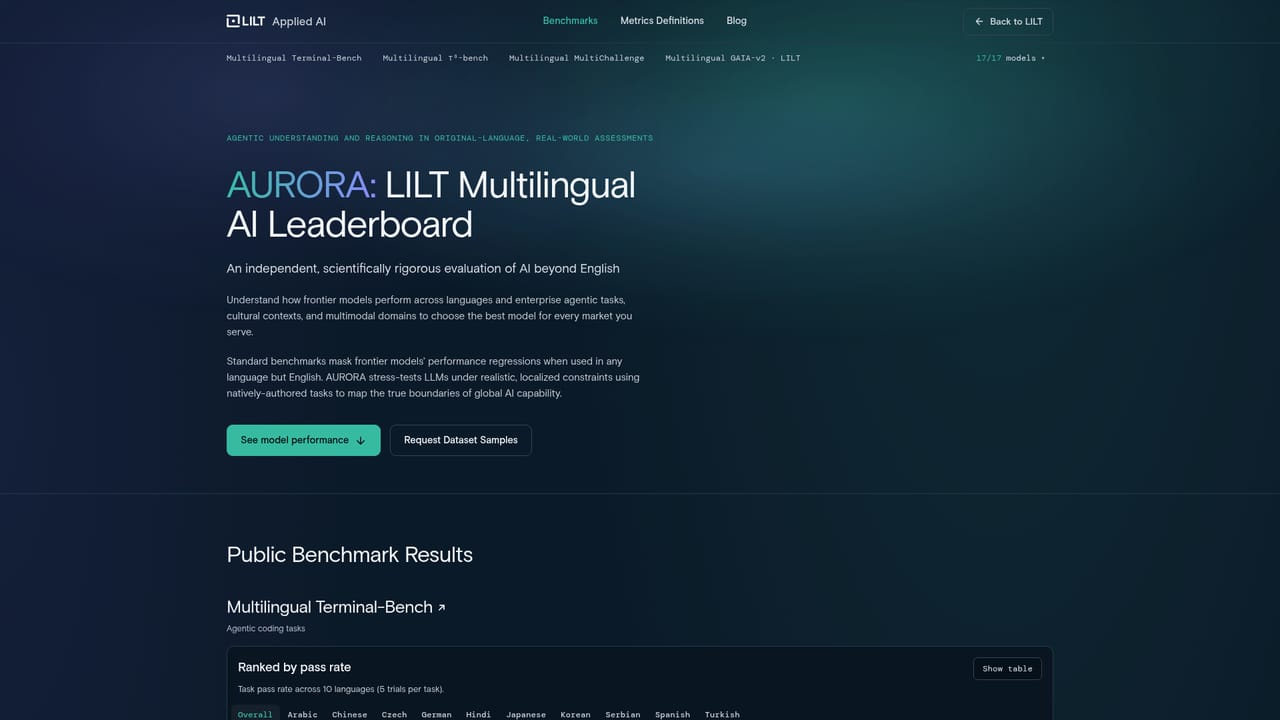
LILT is an enterprise platform for multilingual content that combines AI translation with workflow automation and human review. Rather than a standalone translator, it is a managed system where custom models, connected third party LLMs and review agents handle large volumes of content across languages, with governance and reporting layered on top. The core building block is the AI Model Builder. Teams develop, fine tune and manage models powered by LILT, or wire in external LLMs from the model library and assign each model to the use case it handles best. Around that sits end to end workflow management: global content, data privacy settings and configurations in one place, so inputs to models stay controlled. Agentic automation then runs reviews and routes work to human experts, either the customer's own linguists or LILT's, when a job needs that step. In practice the platform is aimed at localization managers, content operations leads and product teams in large organizations that ship content into many markets. Observability tools track what the AI agents and copilots are doing, real time analytics cover delivery, translation quality and budget, and role based access controls cover user and domain management. Deployment is flexible, spanning multicloud and on premises environments, which matters for regulated industries and public sector buyers. Companies working inside AI assistants can use native MCP support to pull brand aligned translations into the tools their teams already use. Against alternatives, LILT is closer to a translation management system than to a consumer translator. Competitors range from traditional language service providers to standalone machine translation APIs, while LILT positions itself as the connective layer: model management, automated review, human escalation, analytics and enterprise security in one contract. The company points to a PhD led research team and a public multilingual model leaderboard as evidence of its technical depth. Pricing is quoted per engagement, so evaluation starts with a demo rather than a self serve signup.
The homepage cites responsive support, comprehensive resources, guided onboarding and expert assistance, plus forward deployed engineers for custom connector work.
LILT connects to content systems through integrations and custom connectors, and native MCP support brings brand aligned translation into the AI assistants and agents teams already use.
AI Model Builder for custom and third party LLMs, end to end workflow management, agentic automation with routing to human experts, governance and observability, real time analytics on delivery, quality and budget, data and user management, MCP support for in-tool translation, and multicloud or on premises deployment.
 AI Angels400+ customizable AI girlfriends for NSFW chat, voice calls, and roleplay
 Candy AIExperience the future of companionship with AI friends who chat, role-play, and connect with you on a human level.
 ourdream.aiA vast AI roleplay platform with millions of characters for chat, images, video and voiceAI Angels400+ customizable AI girlfriends for NSFW chat, voice calls, and roleplayCandy AIExperience the future of companionship with AI friends who chat, role-play, and connect with you on a human level.ourdream.aiA vast AI roleplay platform with millions of characters for chat, images, video and voice


