OpenEvidence

Clinical answers grounded in peer-reviewed medical literature

Beginner
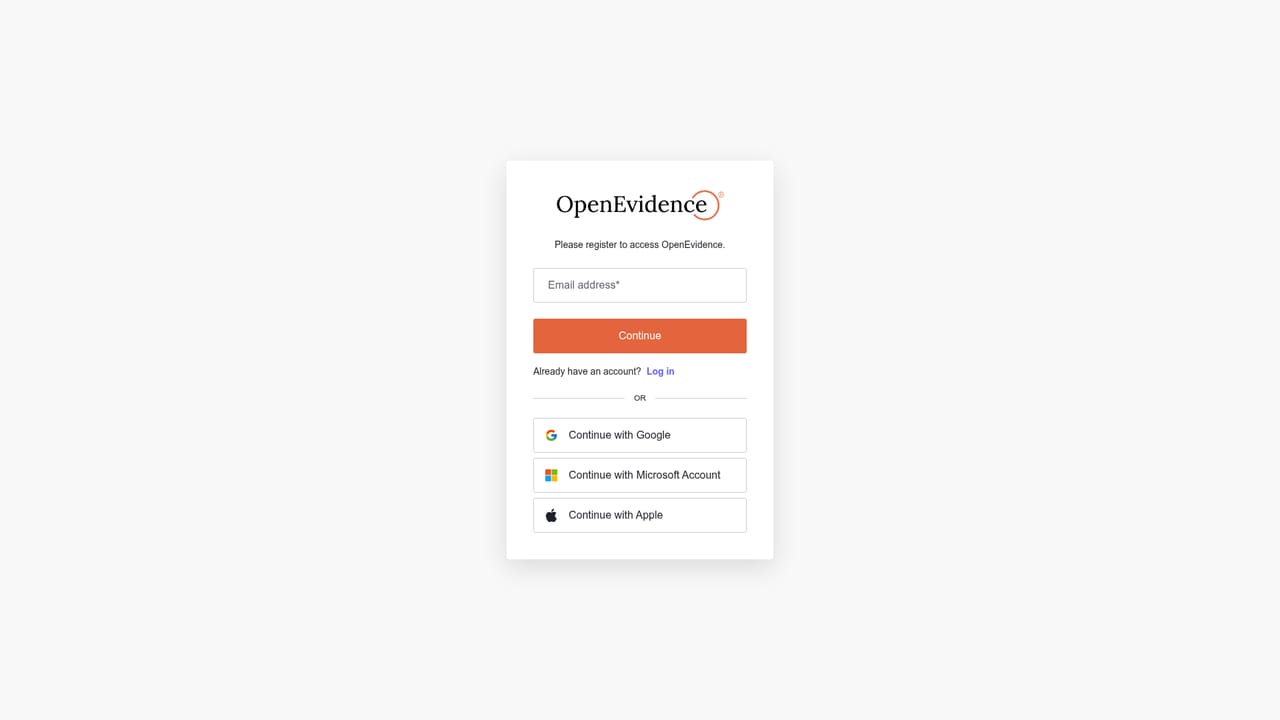
Screenshot of OpenEvidence, Clinical answers grounded in peer-reviewed medical literature

What is OpenEvidence?

OpenEvidence is an AI search tool. A medical question answering platform for clinicians, built on licensed full text from NEJM, JAMA, Nature, Cochrane and NCCN guidelines. It answers clinical queries with sourced literature and offers task templates for prior authorization letters, exam question writing and MOC exam preparation.

OpenEvidence is a medical knowledge platform built for clinicians rather than general consumers. It answers clinical questions using content drawn from peer-reviewed research, and the company positions it as America's official medical knowledge platform. The distinguishing feature is the source base: official AI partnerships with the New England Journal of Medicine, JAMA and the JAMA Network specialty journals, Nature and the Nature Portfolio, Cochrane Systematic Reviews, and an official collaboration with the National Comprehensive Cancer Network covering NCCN Guidelines treatment algorithms. Society partnerships extend across NCCN, AAP, ACC, ADA, AAFP, NORD, ACOG, AUA, AAO, ACEP and a longer roster that includes neurology, hematology, addiction medicine and sleep organizations. In practice a clinician poses a question in plain language and receives an answer tied to that licensed literature. Because figures, tables, multimedia and full text are part of the indexed material, responses can point back to the specific paper or guideline rather than to an unsourced synthesis. The homepage also surfaces ready-made workflows beyond straight question answering: drafting a prior authorization letter, writing exam questions, and preparing for MOC exams. The platform states that it is HIPAA compliant, and its privacy notice says searches and submitted content are not sold or shared, with an opt-out for advertising measurement sharing. The audience is healthcare professionals: physicians, residents, advanced practice providers, pharmacists and students who need fast literature review at the point of care, plus educators building assessment material and clinicians maintaining board certification. Compared with general purpose chatbots, OpenEvidence trades breadth for provenance, and compared with traditional literature search tools it trades exhaustive query syntax for conversational retrieval over a curated corpus. What the homepage does not disclose matters for budgeting and rollout. No pricing tiers, no subscription terms, no mobile apps and no integration documentation appear there, so anyone evaluating it for a practice or health system should confirm commercial terms, device support and EHR connectivity directly before committing.

How do you use OpenEvidence?

  1. 1Check eligibility and create an account
    OpenEvidence is aimed at verified healthcare professionals. Start the signup flow and be ready to confirm your clinical credentials, since access is gated rather than open to the general public.
    OpenEvidence — Check eligibility and create an account
  2. 2Ask a clinical question in plain language
    Type the question the way you would put it to a colleague, for example a diagnostic dilemma or a treatment comparison. The platform returns an answer linked to the licensed literature behind it.
  3. 3Follow the citations to the source paper
    Use the referenced articles, figures and tables to verify the claim before you act on it. Reading the underlying study is the step that separates a sourced answer from a plausible one.
  4. 4Run a task template instead of a blank prompt
    Pick a prepared capability such as writing a prior authorization letter or drafting an exam question. These templates structure the request so the output matches the format the task expects.
  5. 5Set up exam and certification prep
    Use the MOC exam preparation capability to build practice material around your specialty. Revisit it periodically as maintenance of certification deadlines approach.
  6. 6Review the privacy and data sharing settings
    Open the cookie and data sharing preferences and decide whether to opt out of advertising measurement sharing. The site notes that searches and submitted content are not sold or shared either way.

Pros and cons

Pros

  • Answers are grounded in licensed peer-reviewed sources, including NEJM, JAMA, Nature and Cochrane full textAI
  • Official NCCN collaboration brings treatment algorithms for oncology questions into the same interfaceAI
  • Purpose-built clinical workflows such as prior auth letter drafting and MOC exam prep go beyond plain chatAI
  • States HIPAA compliance and says searches and submitted content are not sold or sharedAI
  • Society partnerships span dozens of specialties, so guidance is not limited to internal medicineAI

Cons

  • No pricing, plan tiers or licensing terms are published on the homepage, so cost has to be requestedAI
  • Restricted to healthcare professionals, which limits usefulness for students outside clinical programs or for patientsAI
  • No integration or EHR connectivity details are documented on the site, leaving workflow fit unclearAI
  • Answers are only as strong as the indexed corpus, so niche or non-indexed literature may be thinAI
  • Platform availability is unstated beyond the web experience, and no mobile apps are describedAI

How much does OpenEvidence cost?

Features

Answers grounded in peer-reviewed literature from NEJM, JAMA and the JAMA Network specialty journals, Nature and the Nature Portfolio, and Cochrane Systematic Reviews, with figures, tables, multimedia and full text included. An official NCCN collaboration adds NCCN Guidelines treatment algorithms. Task capabilities cover prior authorization letters, exam question writing and MOC exam preparation. The platform states HIPAA compliance.

Frequently asked questions about OpenEvidence

  • How do you use OpenEvidence?
    The walkthrough on this page covers 6 steps: 1. Check eligibility and create an account 2. Ask a clinical question in plain language 3. Follow the citations to the source paper 4. Run a task template instead of a blank prompt 5. Set up exam and certification prep 6. Review the privacy and data sharing settings.
  • What platforms does OpenEvidence support?
    OpenEvidence is available on Web App.
  • What are the limitations of OpenEvidence?
    No pricing, plan tiers or licensing terms are published on the homepage, so cost has to be requested. Restricted to healthcare professionals, which limits usefulness for students outside clinical programs or for patients. No integration or EHR connectivity details are documented on the site, leaving workflow fit unclear.

Status

StatusActive
Views0
Outbound clicks0
Added10/21/2026

Platforms

Web App

Pricing

Free