Free trial
Free start is advertised through a sign-up link, described as free access to the Conversion Intelligence layer. No time limit or paid tier detail is published on the homepage.
Learn moreAI ad creative briefs built on real ecommerce conversion data

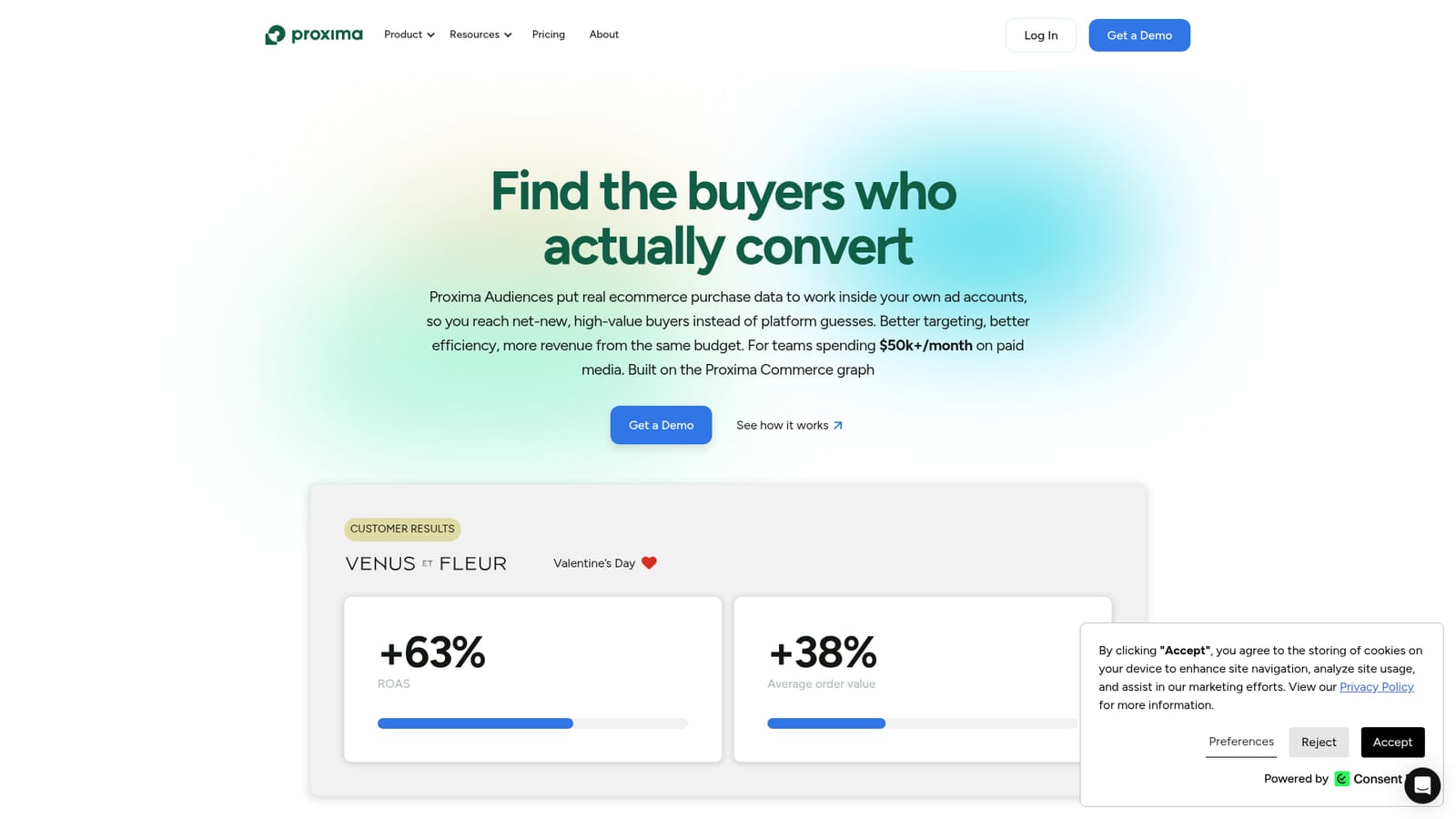
Proxima turns real ecommerce purchase data into creative briefs and audience intelligence for paid media teams, using a Commerce Graph of shopper behavior to recommend what to promote, how to message it, and which ad angles to test next.
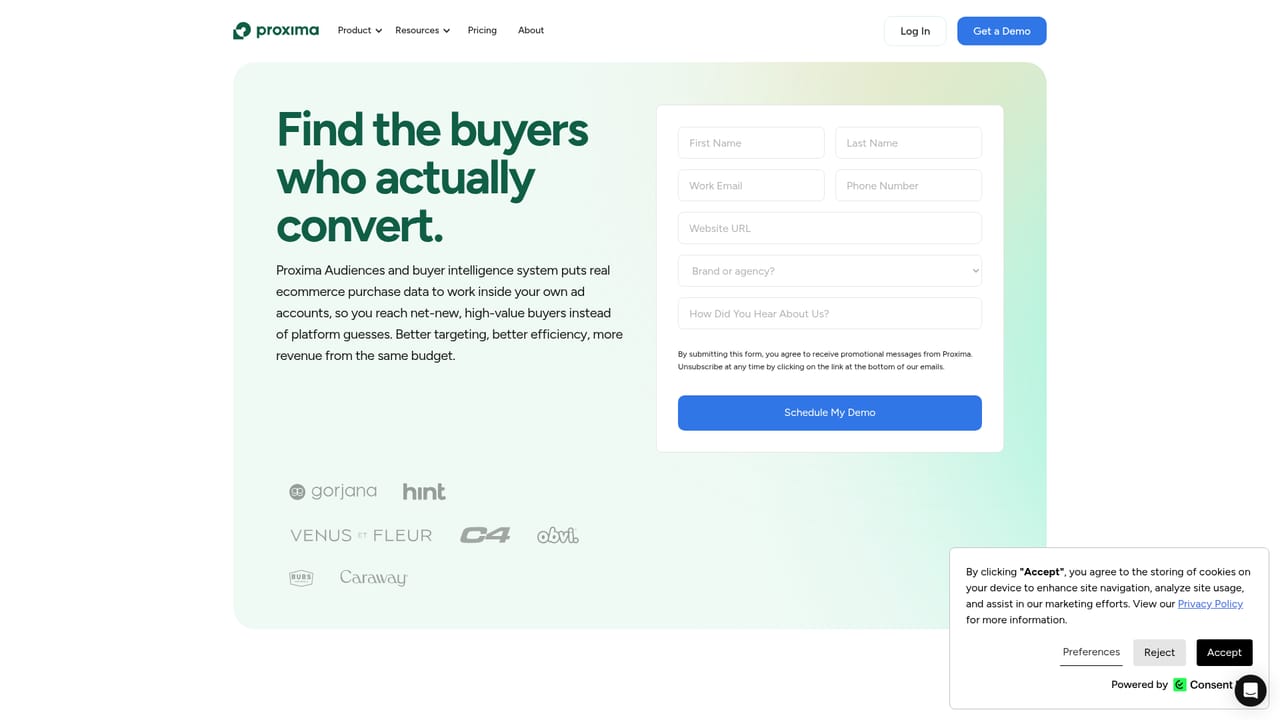
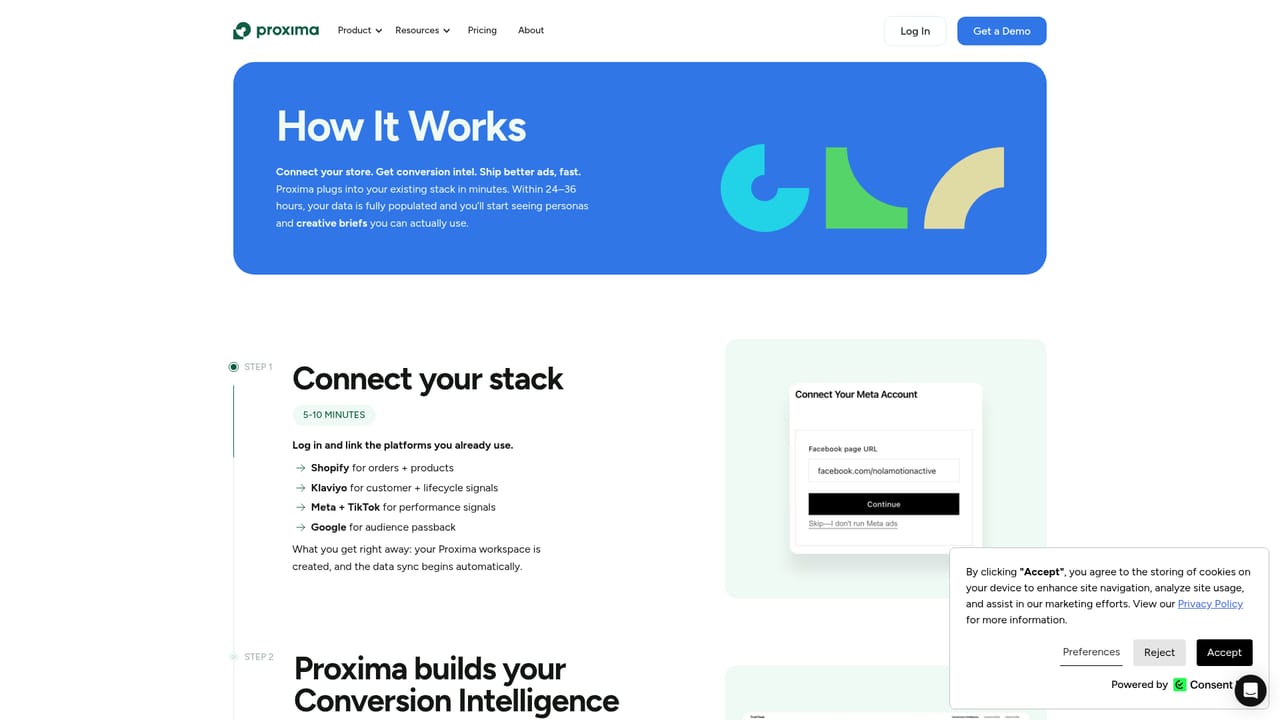
Proxima is a creative intelligence tool for ecommerce paid media teams. Its starting point is a proprietary Commerce Graph drawn from cross-brand transactional signals and US shopper profiles, which the company describes as the richest independent source of ecommerce behavioral data outside the major ad platforms. Instead of generating ad concepts from prompts alone, Proxima mines that observed purchase behavior and returns creative direction: what to promote, how to frame the message, which angles to test next, and which concepts deserve variations. The workflow has two layers. Conversion Intelligence is the research half, surfacing patterns such as product level affinities and bundles, taste and aesthetic preferences, life stage and income coded signals, seasonal buying behavior, and hobby based affinities. The Creative Engine is the output half, converting those patterns into ready to use briefs that may include UGC and scripted concepts, storyboards, visual guidance, and a prioritized list of angles. The pitch is that teams get a launchpad rather than a blank page, which matters when ad platforms demand constant iteration. It is aimed at brands with serious paid media budgets, with the audiences product positioned for teams spending roughly 50k dollars or more per month, plus the agencies and growth leads serving them. Smaller stores can sign up for free access to the Conversion Intelligence layer, though the heavier targeting and briefing value sits with active advertisers. Work begins by connecting store data so the platform can read real conversion behavior. Against generic AI image and copy generators, Proxima competes on evidence: the claims rest on observed purchases rather than model priors, and competitors rarely expose a comparable dataset. The tradeoff is scope. This is not a design canvas or a video editor, and its usefulness rises with the volume of creative a team ships and the budget it spends.
Free start is advertised through a sign-up link, described as free access to the Conversion Intelligence layer. No time limit or paid tier detail is published on the homepage.
Learn moreThe homepage says the audiences product works inside your own ad accounts and begins by connecting your store, but it names no specific platforms or data connectors.
Conversion Intelligence built on a Commerce Graph of cross-brand transactional signals and US shopper profiles, covering product affinities, bundles, aesthetic preferences, life stage and income signals, and seasonal behavior. The Creative Engine turns that into briefs: UGC and scripted concepts, storyboards, visual guidance, recommended angles and variations, plus audience targeting inside your own ad accounts.
Learn more AI Angels400+ customizable AI girlfriends for NSFW chat, voice calls, and roleplay
 Candy AIExperience the future of companionship with AI friends who chat, role-play, and connect with you on a human level.
 ourdream.aiA vast AI roleplay platform with millions of characters for chat, images, video and voiceAI Angels400+ customizable AI girlfriends for NSFW chat, voice calls, and roleplayCandy AIExperience the future of companionship with AI friends who chat, role-play, and connect with you on a human level.ourdream.aiA vast AI roleplay platform with millions of characters for chat, images, video and voice


