Pricing
Pay-per-use model with no monthly subscription. Text-to-speech is billed per UTF-8 byte of text spoken, voice cloning costs a flat 100 credits per clone, and purchased credits never expire.
Learn moreClone a voice from a short sample and make it speak 83 languages.

Resona is a voice cloning tool that clones a voice from a short sample and make it speak 83 languages. Resona clones a voice from a short audio sample and generates speech in 83 languages using pay-per-use credits that never expire, with no subscription required.
Resona is an AI voice cloning and text-to-speech platform built around a pay-per-use credit system rather than a subscription. A user uploads or records a voice sample of roughly ten seconds or more, and the platform trains a reusable voice model that can then read text aloud in any of 83 supported languages, including languages the original speaker never actually recorded, while preserving the voice's timbre and character. Beyond cloning, Resona offers a library of more than 200,000 ready-made community voices for people who want multilingual narration without training a custom model, a voice design feature that generates candidate voices from a text description, and a streaming mode built on WebSocket with reported time-to-first-audio around 90 milliseconds, aimed at conversational voice agents rather than one-off narration. A speech-to-text capability, billed by audio hour and supporting multiple speakers and emotion tags, rounds out the toolset as a companion to the voice generation features. Billing is based on actual usage: text-to-speech is charged per UTF-8 byte of text spoken, so short lines consume only a small number of credits, while cloning a new voice is a flat 100-credit action. Credits are purchased once and do not expire, which removes the recurring cost structure common to competing voice platforms. The tool suits video narrators, e-learning producers, podcasters, game studios needing character voices, and teams localizing content across languages without re-recording source audio. It sits between fully managed enterprise voice platforms and raw open-source cloning models, trading some customization depth for a simpler, console-based workflow and transparent per-use pricing.
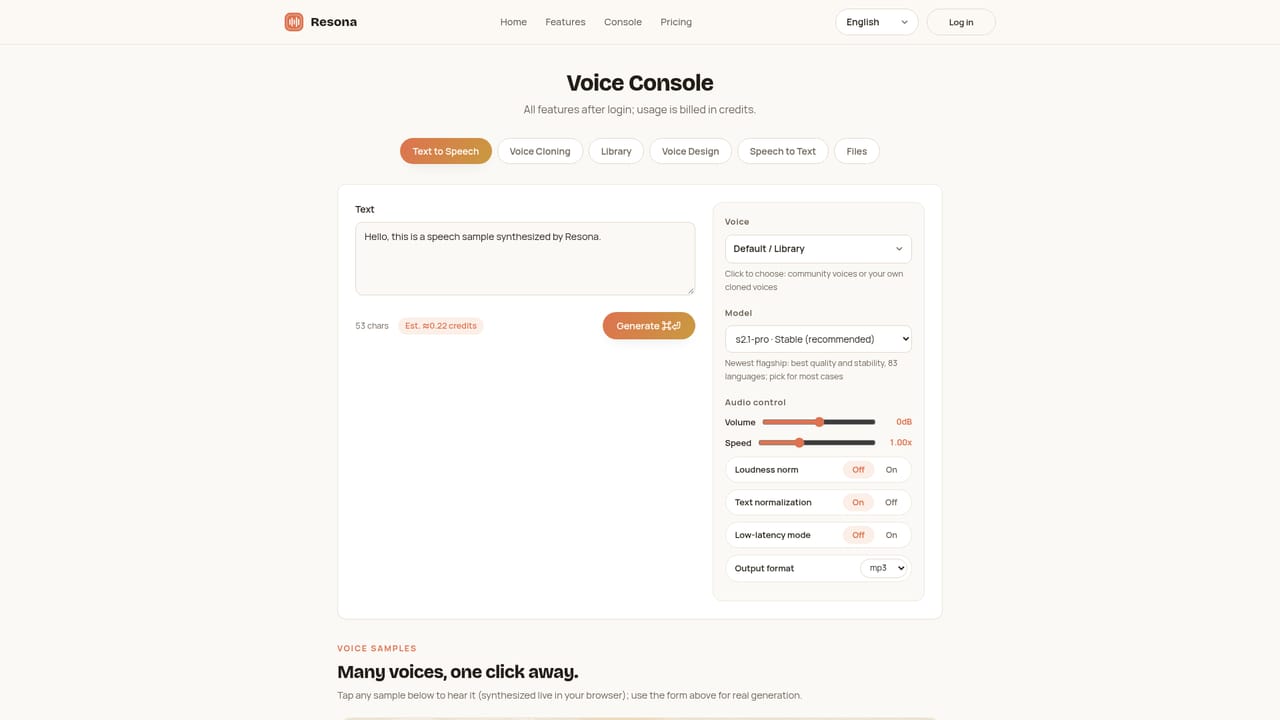
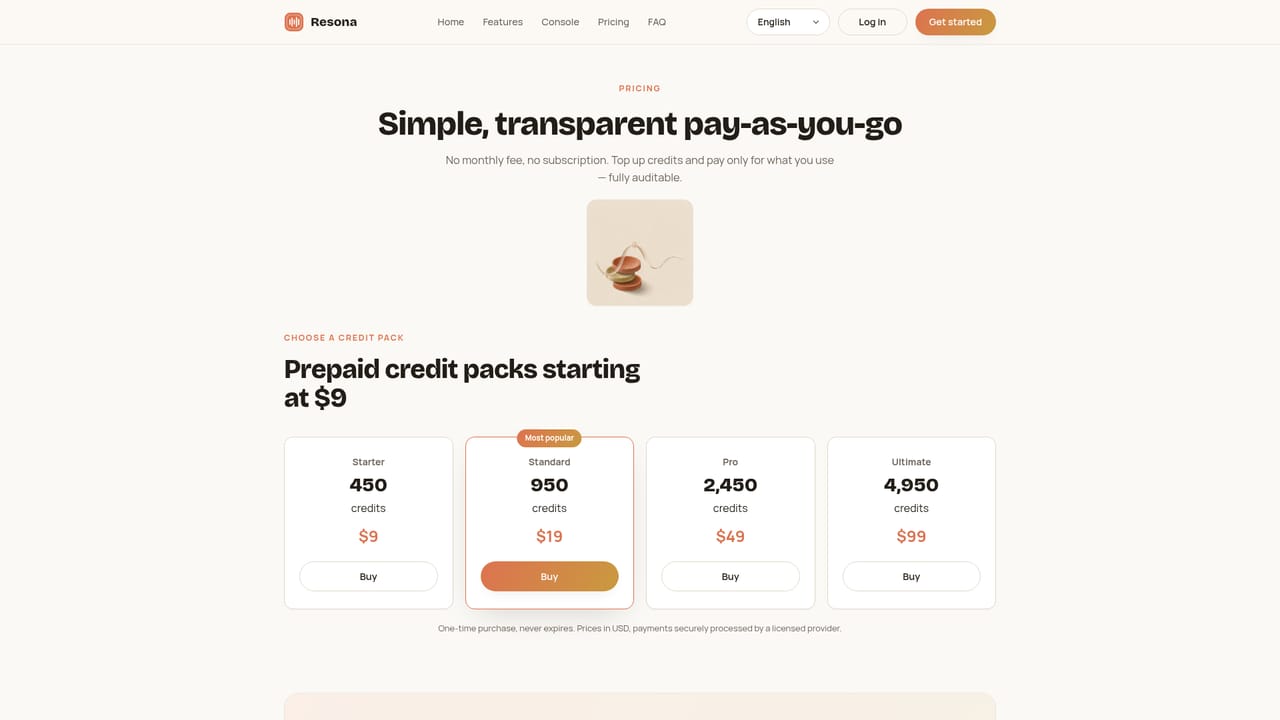
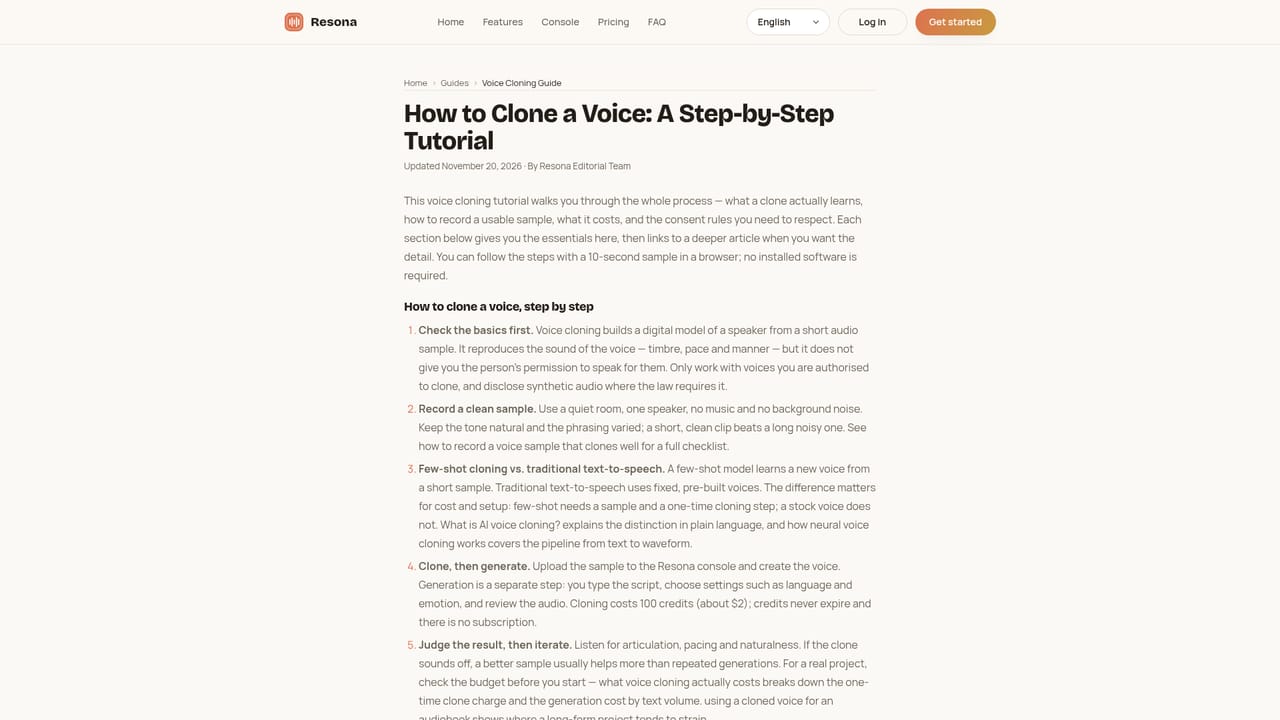
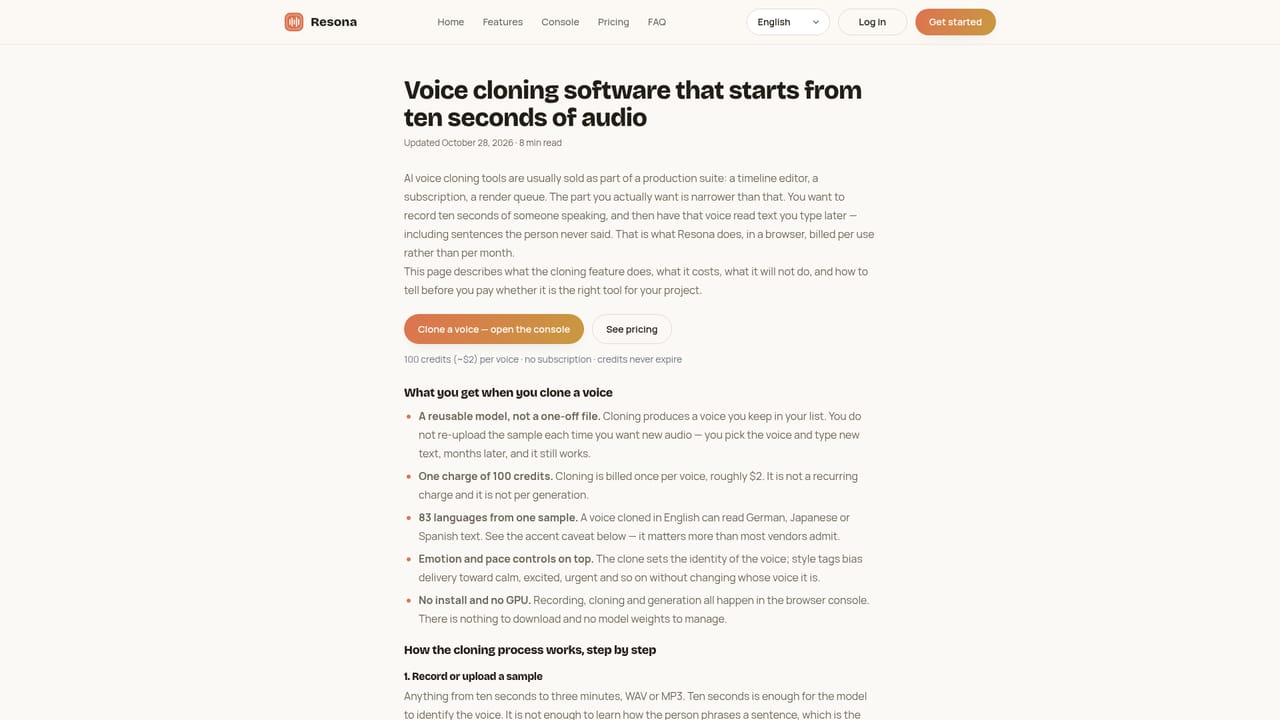
Pay-per-use model with no monthly subscription. Text-to-speech is billed per UTF-8 byte of text spoken, voice cloning costs a flat 100 credits per clone, and purchased credits never expire.
Learn moreSupport resources include a public FAQ page and a contact channel; no live chat or phone support is described on the homepage.
Learn moreStreaming output is delivered over WebSocket with reported time-to-first-audio around 90 milliseconds, aimed at voice agent and conversational integrations, though no named third-party platform integrations are listed.
Core features include sample-based voice cloning, text-to-speech with emotion tags, a library of over 200,000 ready-made voices, low-latency WebSocket streaming for voice agents, speech-to-text billed by audio hour, and text-described voice design.
Learn moreTwitter / X
 AI Angels400+ customizable AI girlfriends for NSFW chat, voice calls, and roleplay
 Candy AIExperience the future of companionship with AI friends who chat, role-play, and connect with you on a human level.
 ourdream.aiA vast AI roleplay platform with millions of characters for chat, images, video and voiceAI Angels400+ customizable AI girlfriends for NSFW chat, voice calls, and roleplayCandy AIExperience the future of companionship with AI friends who chat, role-play, and connect with you on a human level.ourdream.aiA vast AI roleplay platform with millions of characters for chat, images, video and voice


