Pricing
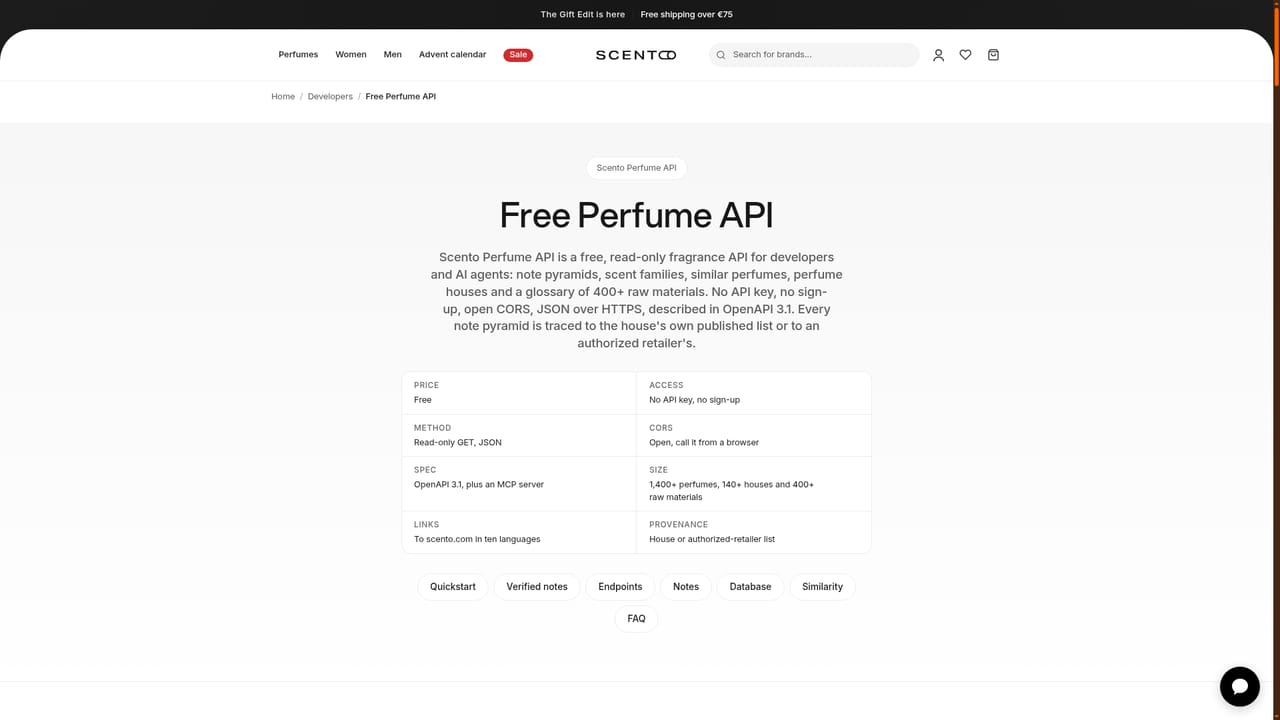
Free. The page states the MCP server and REST API are free and read only, with no API key, account or sign-up needed. No paid tiers are mentioned.
Learn moreA free perfume knowledge server that gives AI assistants a nose

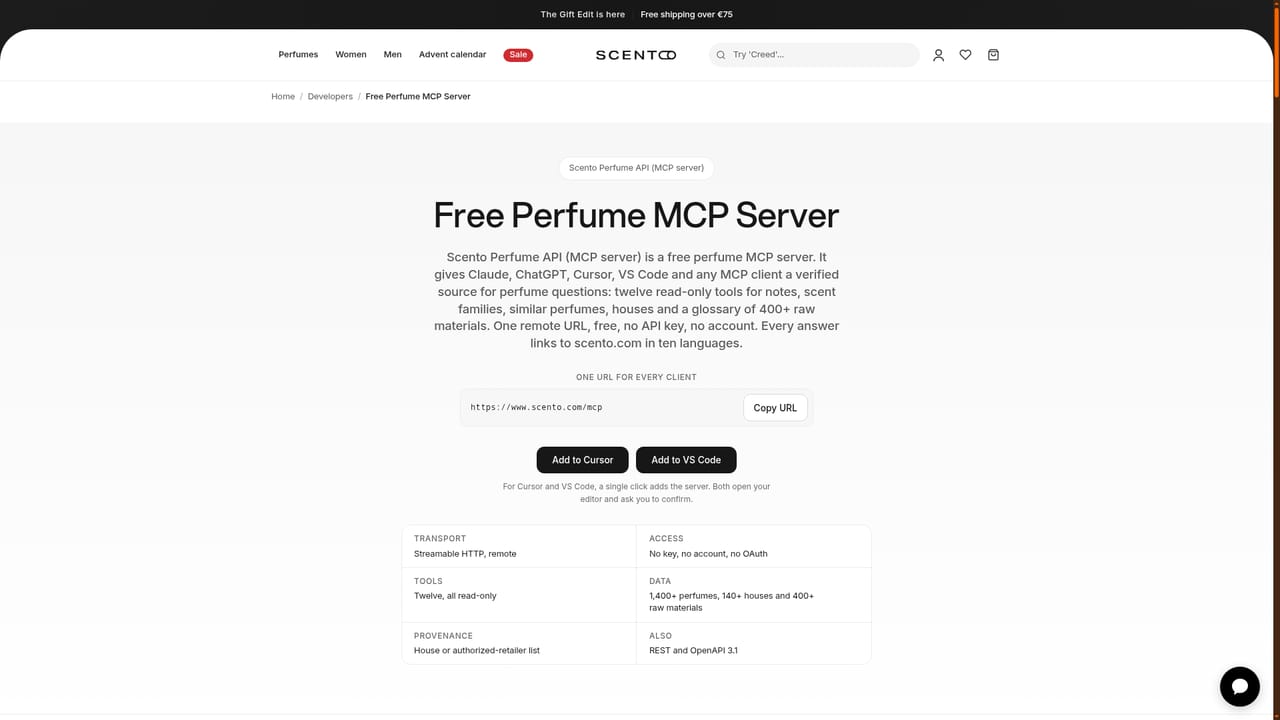
Scento MCP is a developer tool. Scento exposes its perfume database to AI assistants through a free MCP server and REST API. Twelve read only tools cover note pyramids, similar scents, side by side comparisons, raw materials, houses, occasion edits and a wardrobe builder, all with links back to scento.com and no API key or account required.
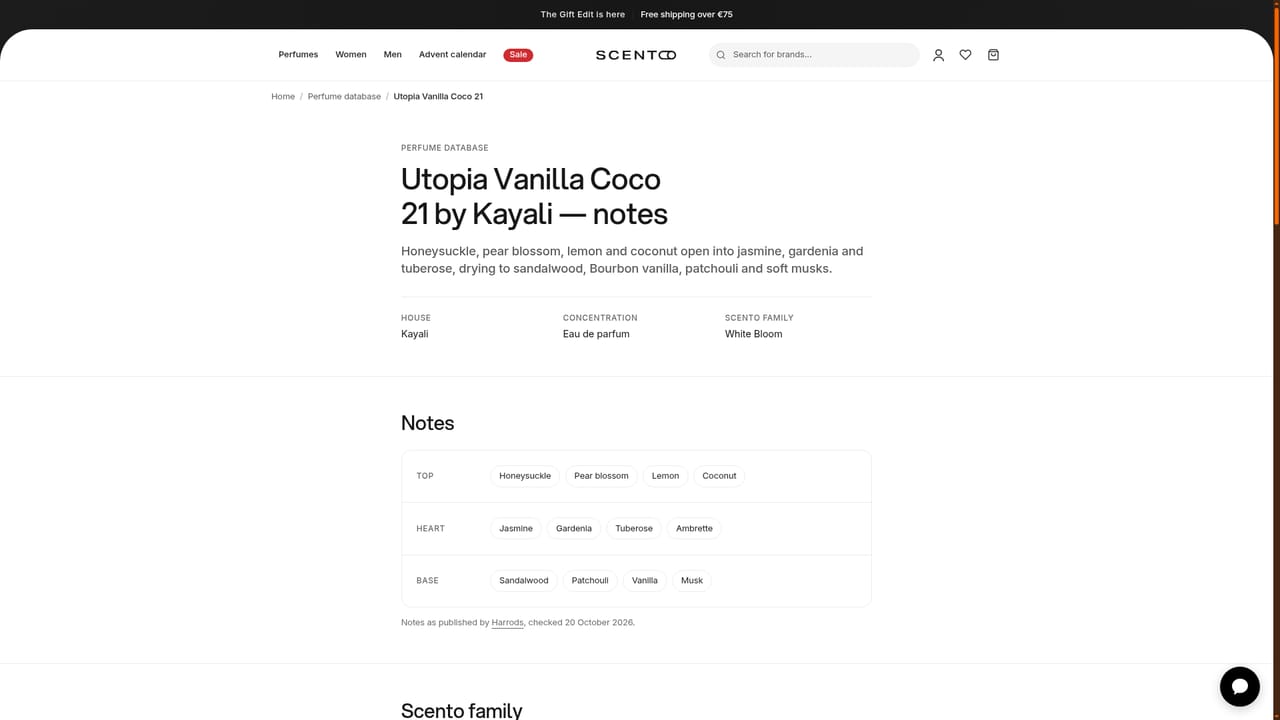
Scento's fragrance offering at this URL is a developer connector, not a shopping front end. The same perfume data that powers scento.com is exposed two ways: as a remote Model Context Protocol server at scento.com/mcp, and as a plain REST API under scento.com/api/perfume/v1. Neither asks for a key or an account. The dataset behind both covers more than 1,400 designer and niche perfumes, over 400 raw materials, and Scento's own fragrance family system. Every response is read only and carries a link back to a matching scento.com page, rendered in the user's language across ten languages. The practical value shows up when someone asks an assistant what a scent smells like. The server ships twelve tools that map to distinct perfume questions: searching by name, house, note or mood; pulling a full note pyramid, family, character and season for one perfume; finding near neighbours that share materials; contrasting two to four perfumes side by side; explaining a single raw material; listing perfumes built on given notes in a specific tier; profiling a house; walking the family tree; picking scents for a fixed occasion list; composing a small wardrobe; defining terms such as sillage or chypre; and searching Scento's journal. Each answer arrives as a folio with a quotable lede, structured detail, a citation line and a canonical page link. Setup is deliberately thin. Claude web and desktop accept the URL through the connectors menu, Claude Code takes a one line command, ChatGPT works through developer mode, and Cursor, VS Code and Windsurf read the same JSON block. Anyone building without MCP can hit the REST routes with curl instead. The honest framing: this is not a recommendation engine of its own. It hands curated fragrance knowledge to whatever assistant or app the user already runs, so the quality of the final advice depends on that host. Consumers wanting to browse can use the Scento perfume database directly, while the developer angle is clearly aimed at people building chat assistants, fragrance apps or shopping tools that need reliable notes, houses and comparisons rather than invented ones.
Free. The page states the MCP server and REST API are free and read only, with no API key, account or sign-up needed. No paid tiers are mentioned.
Learn moreRemote MCP server over streamable HTTP for Claude, Claude Code, ChatGPT developer mode, Cursor, VS Code, Windsurf and any MCP client, plus a parallel REST API for anything that can make an HTTP request.
Learn moreTwelve read only tools: perfume search, perfume portrait with note pyramid and wear data, similar scent neighbours, side by side contrast, note and material portraits, matching perfumes by note and tier, house profiles, the Scento family map, occasion edits, a wardrobe composer, a perfumery glossary and journal search. Responses include a quotable lede, detail, citation and scento.com link in ten languages.
Learn more AI Angels400+ customizable AI girlfriends for NSFW chat, voice calls, and roleplay
 Candy AIExperience the future of companionship with AI friends who chat, role-play, and connect with you on a human level.
 ourdream.aiA vast AI roleplay platform with millions of characters for chat, images, video and voiceAI Angels400+ customizable AI girlfriends for NSFW chat, voice calls, and roleplayCandy AIExperience the future of companionship with AI friends who chat, role-play, and connect with you on a human level.ourdream.aiA vast AI roleplay platform with millions of characters for chat, images, video and voice


