Support
Support runs through the contact form, and the Academy provides workshops, bootcamps and live cohorts for teams that need hands-on training. No public help centre or documentation portal is linked from the homepage.
Learn moreContextual AI agents that turn enterprise data into answers and forecasts

Traversaal builds contextual AI agents for enterprises: Olive OS for natural language analysis and forecasting, Traversaal Pro for cited document search, and Ares for structured web search. It connects structured and unstructured data sources with business context, and adds guardrails, evaluation and monitoring for production use.
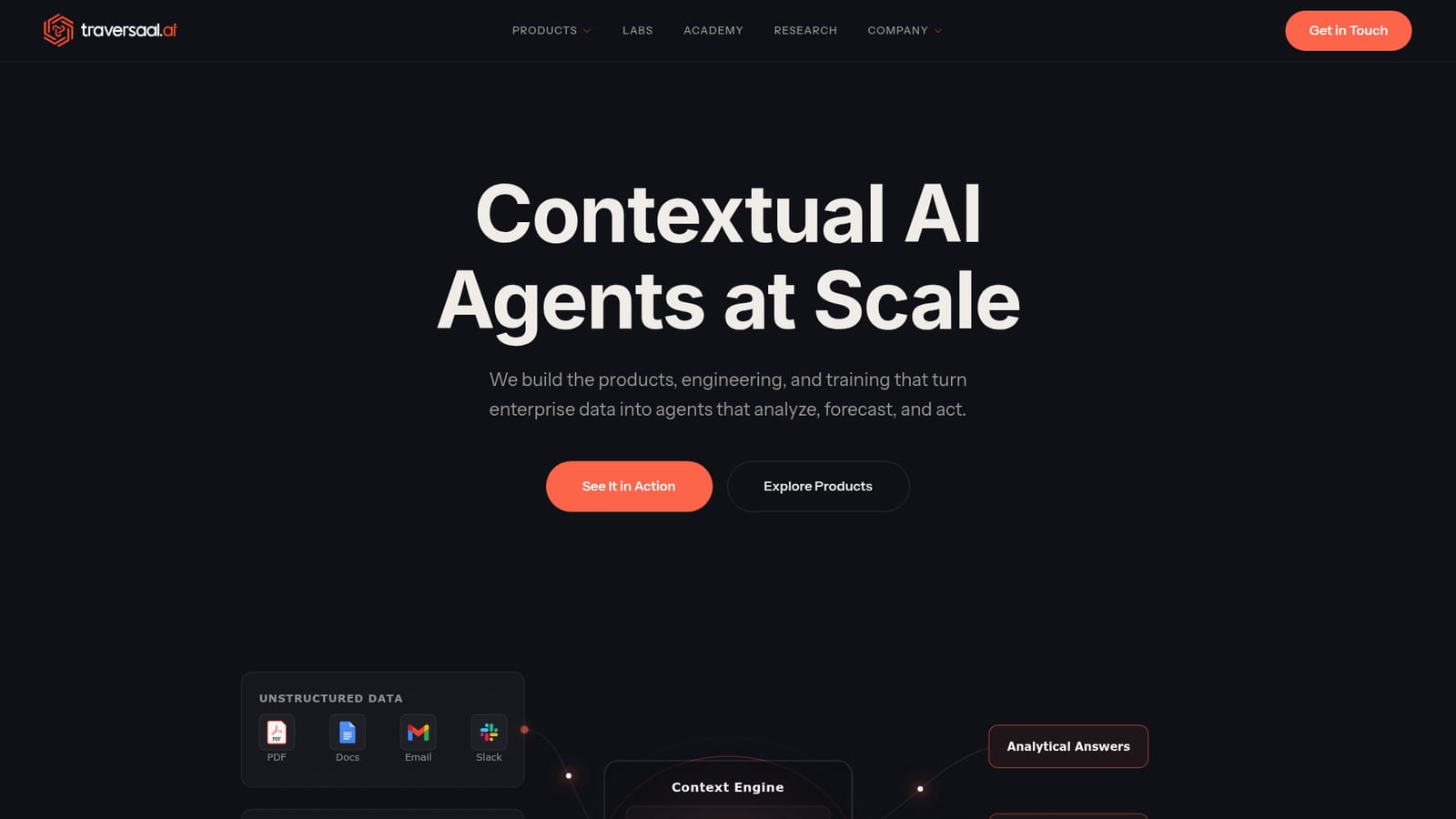
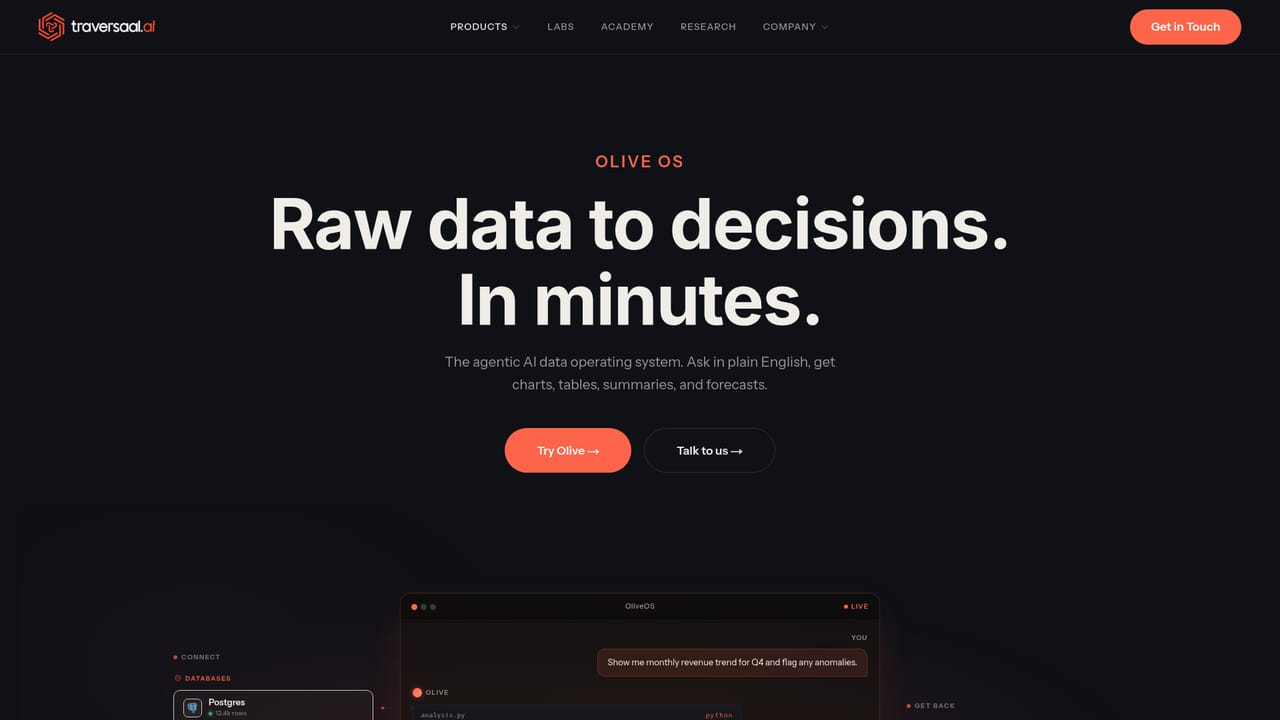
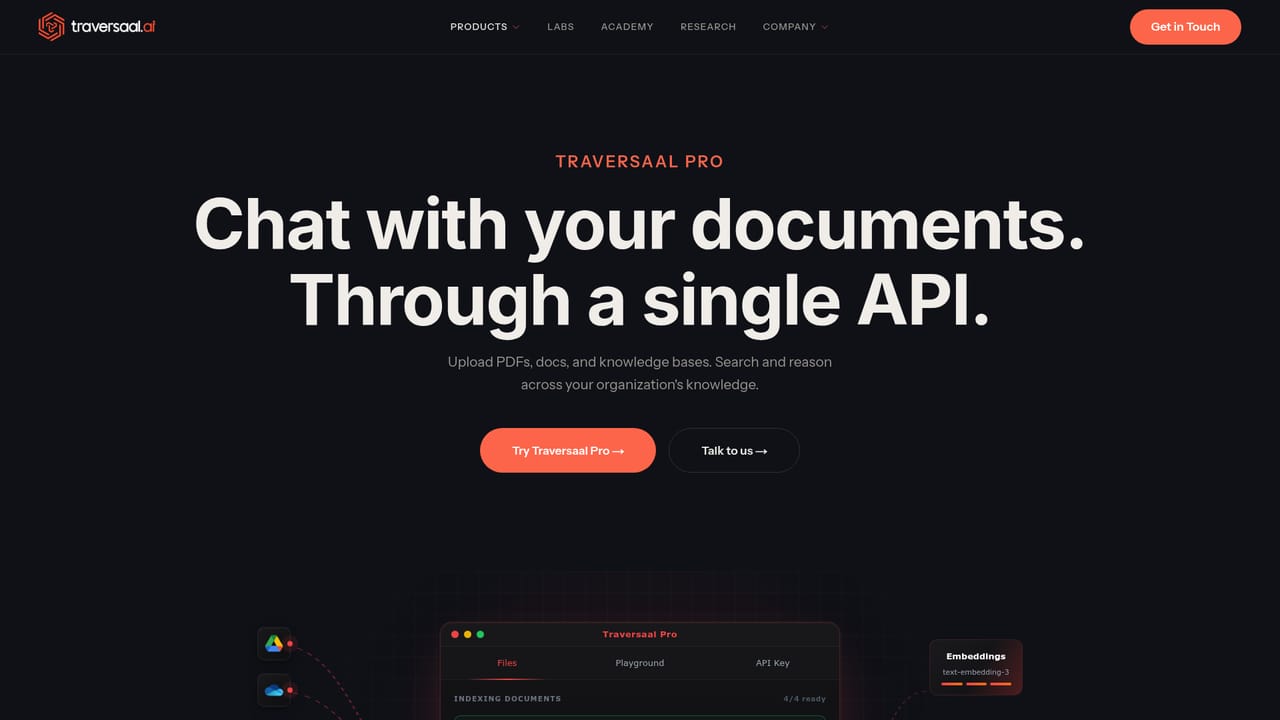
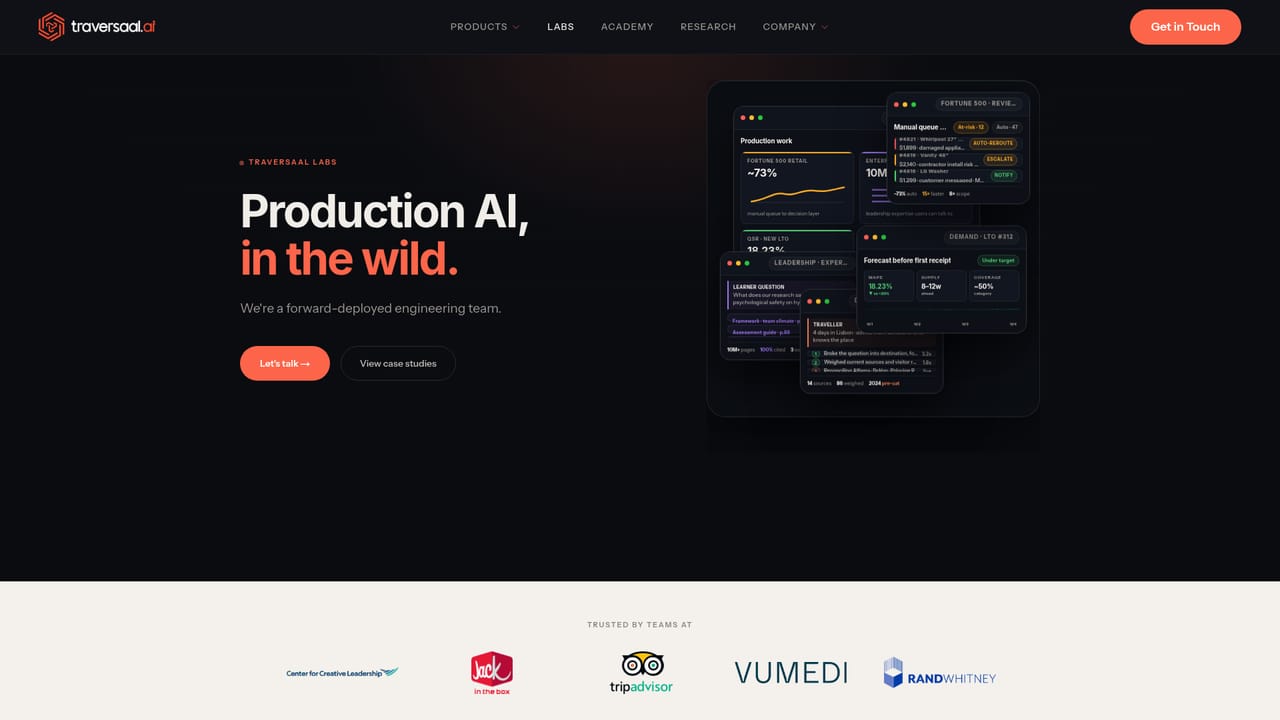
Traversaal is an enterprise AI company whose core offering is a set of contextual agents that read an organization's own data and business rules, then answer analytical questions, produce forecasts and drive workflows. The homepage frames the product as a "context engine" with three stages: ingest, understand, reason. Unstructured sources such as PDFs, documents, email and Slack are combined with structured sources such as Postgres, BigQuery, S3 and CSV, then annotated with business context like guidelines, campaigns and reports before any question is asked. The product line splits into three parts. Olive OS, the agentic data operating system, is the analysis surface: users ask in plain language and receive charts, tables, summaries and forecasts rather than raw query output. Traversaal Pro searches across an organization's document estate through a single API, returning answers with source citations. Ares is a separate web intelligence layer that queries Google, Bing, DuckDuckGo and Yahoo and returns structured results formatted for LLM consumption. The homepage examples are retail and operations flavored: stockout risk by store, conversion lift from faster delivery promises, churn drivers, retention ROI, and prioritization of initiatives by return, complexity and customer impact. The audience is clearly enterprise rather than individual. Buyers are data, analytics and operations teams at large organizations, and the vendor handles build work through its Labs arm alongside the packaged products. Guardrails, policy checks, factual grounding and production monitoring with accuracy, latency and drift metrics are presented as part of the architecture, which suggests the company expects regulated or high stakes deployments. Traversaal also runs an Academy with workshops and cohorts, which matters if a team needs to be trained on the tooling rather than simply handed a license. Compared with self-serve BI copilots that bolt a chat box onto a warehouse, Traversaal positions itself as a full stack: ingestion, context, orchestration across multiple agents, evaluation and training. That breadth is a strength for enterprises with messy, multi-source data, but it also means the product is sold and scoped through conversation rather than a signup form.
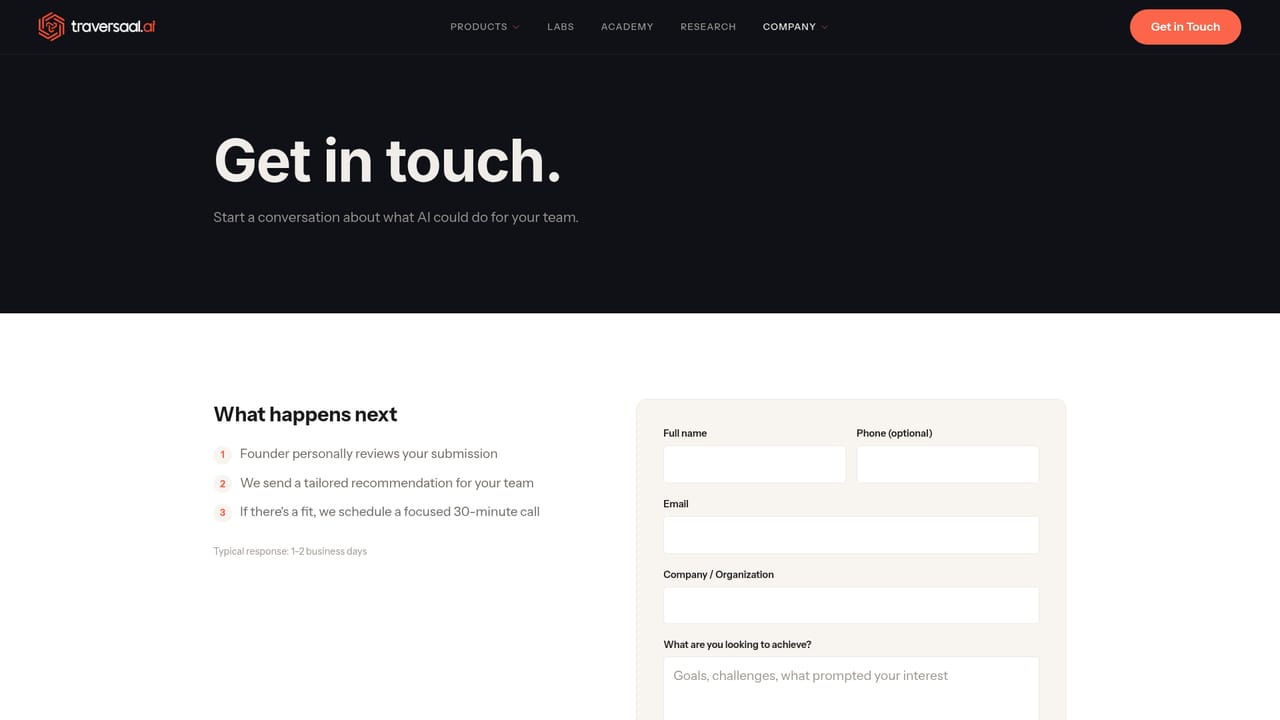
Support runs through the contact form, and the Academy provides workshops, bootcamps and live cohorts for teams that need hands-on training. No public help centre or documentation portal is linked from the homepage.
Learn moreStructured sources named on the homepage are Postgres, BigQuery, S3 and CSV; unstructured sources are PDFs, documents, email and Slack. REST and GraphQL APIs are listed as agent inputs, and Traversaal Pro is offered as a search API.
A context engine that ingests documents, databases and APIs, layers on business rules, and reasons over them. Olive OS answers plain language questions with charts, tables, summaries and forecasts. Traversaal Pro searches organizational documents with cited, grounded answers. Ares returns structured web search results from Google, Bing, DuckDuckGo and Yahoo. Multi-agent orchestration, policy guardrails, and production monitoring with accuracy, latency and drift metrics support the whole stack.
Learn more AI Angels400+ customizable AI girlfriends for NSFW chat, voice calls, and roleplay
 Candy AIExperience the future of companionship with AI friends who chat, role-play, and connect with you on a human level.
 ourdream.aiA vast AI roleplay platform with millions of characters for chat, images, video and voiceAI Angels400+ customizable AI girlfriends for NSFW chat, voice calls, and roleplayCandy AIExperience the future of companionship with AI friends who chat, role-play, and connect with you on a human level.ourdream.aiA vast AI roleplay platform with millions of characters for chat, images, video and voice


