Vidverse AI

Multi-model AI image to video generator with mobile apps

Beginner
Screenshot of Vidverse AI, Multi-model AI image to video generator with mobile apps

What is Vidverse AI?

Vidverse AI is a web and mobile generator that animates photos into AI video, with many models such as Seedance, Kling, Wan, Veo 3.1 and Sora 2 selectable in one interface, plus text to video, editing and audio tools.

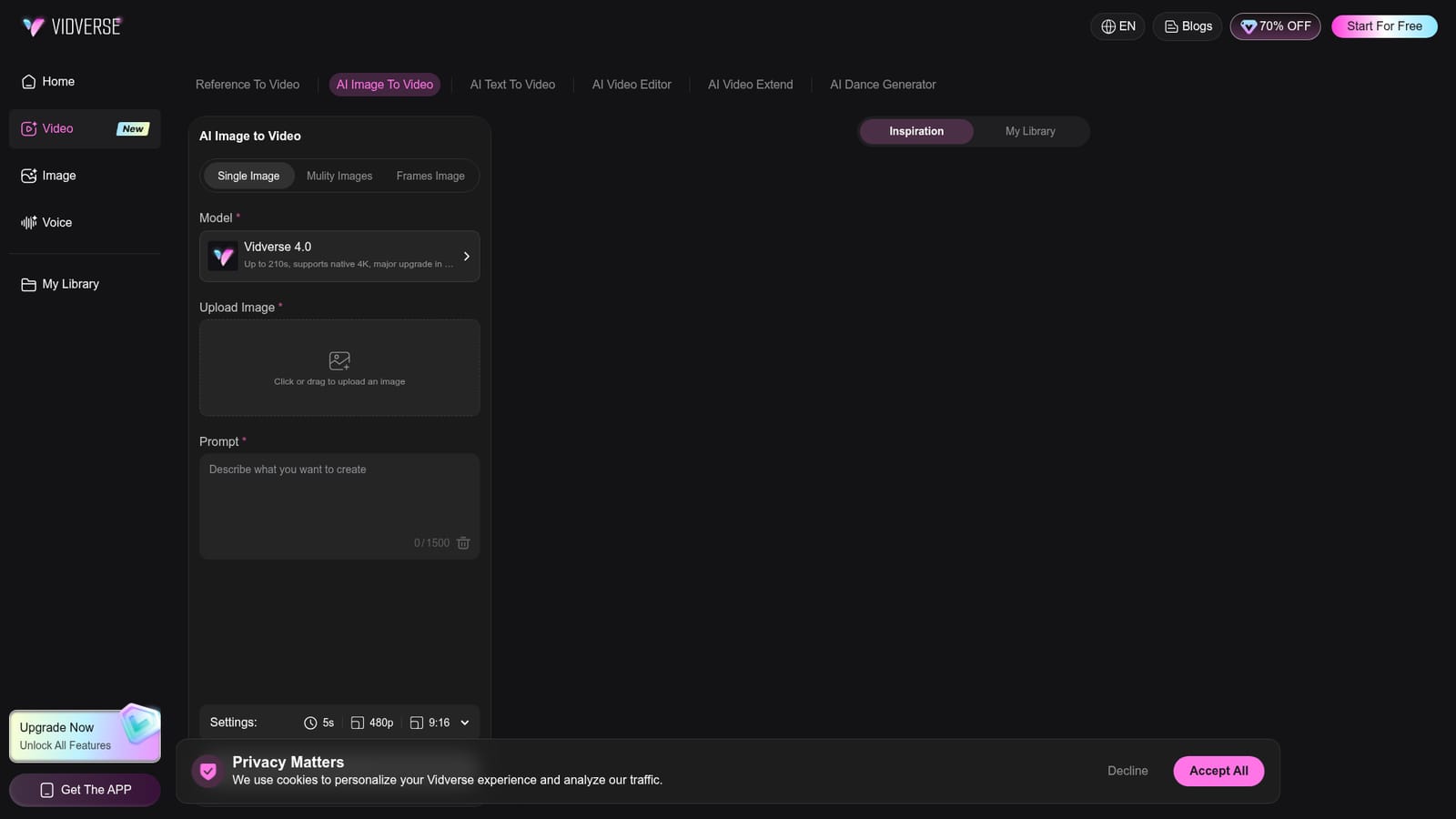
Vidverse AI is a browser-based generator that turns still photos into short AI videos. Instead of tying users to a single engine, it puts a long list of video models behind one interface, including its own Vidverse 4.0, Seedance 2.5 and 2.0, Kling 4.0 and 3.0, Wan 3.0 and 2.7, Minimax H3, Google Veo 3.1, Sora 2, Hailuo 02, Vidu Q3 and Q2, Grok Video and Gemini Omni. Each model carries a short note on its strengths, such as maximum clip length, physical motion quality or synchronized audio, which helps with picking one without outside research. The image to video page offers three input modes: single image, multiple images and frames image. A user picks a model, uploads a photo, writes a prompt of up to 1,500 characters and adjusts settings such as duration, resolution and aspect ratio (the default shown is 5 seconds, 480p, 9:16). Generation starts from one button. An Inspiration gallery lists ready-made templates, many of them dance and action clips with animals or stylized characters, and a My Library tab keeps finished work. Clip length varies by model. The page lists up to 210 seconds for Vidverse 4.0 and its Long Video option, up to 30 seconds for Seedance 2.5, Kling 4.0 and Wan 3.0, and shorter limits for the rest. Vidverse 4.0 is described as supporting native 4K. Beyond animating photos, the site covers neighboring jobs: text to video, reference to video, a video editor, video extension, a dance generator, image to image, text to image, audio and text to speech, all inside the same account. Premium access is advertised as cheaper per generation, with savings of up to 70%. The audience is social creators, marketers, hobbyists and anyone who wants to compare several generators without maintaining separate subscriptions. Compared with single-model tools, the draw is breadth and quick switching. Compared with a professional editing suite, it is a generation front end rather than a timeline editor. Mobile apps for Android and iOS are offered alongside the web app.
How do you use Vidverse AI?

  1. 1Open the image to video tool
    Go to the AI Image to Video page and choose Single Image, Multiple Images or Frames Image depending on how the video should be built.
    Vidverse AI — Open the image to video tool
  2. 2Choose a model
    Open the model list and pick an engine based on its note, such as clip length, motion realism or audio sync. Longer-form options like Vidverse 4.0 are listed there too.
  3. 3Upload a photo and write a prompt
    Upload the source image and describe the motion or scene in up to 1,500 characters. Adjust duration, resolution and aspect ratio in the settings.
  4. 4Generate and review
    Press Generate and wait for the result, which is saved to My Library. Try a different prompt or model on the same image to compare outputs.
  5. 5Check plans for more capacity
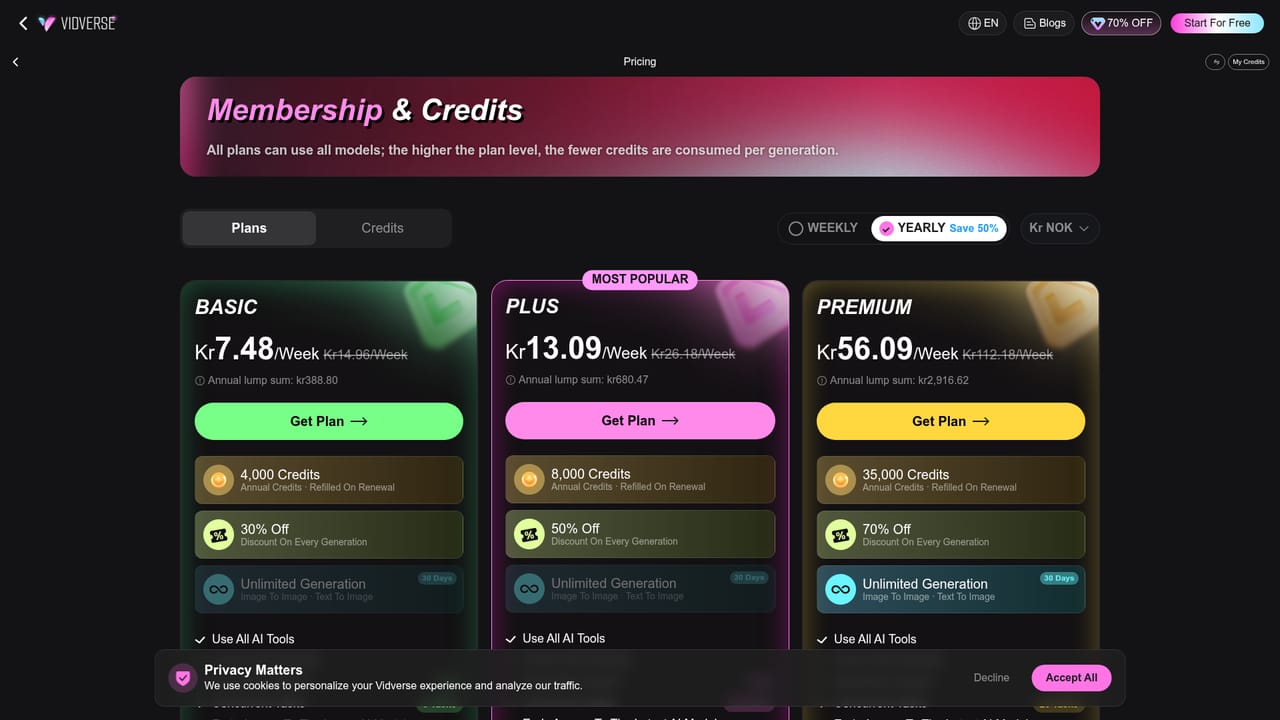
    Review the pricing page if higher quality or more generations are needed, since Premium is advertised as cheaper per generation.
    Vidverse AI — Check plans for more capacity

Pros and cons

Pros

  • Wide model choice (Seedance, Kling, Wan, Veo 3.1, Sora 2, Vidu and more) in one interfaceAI
  • Single, multiple and frames image modes cover different animation setupsAI
  • Some models run up to 210 seconds, far longer than typical image to video clipsAI
  • Template gallery gives quick starting points for dance and action clipsAI
  • Companion tools for text to video, editing, extending, images and speech share one accountAI

Cons

  • Many near-identical model names make the right choice confusing for newcomersAI
  • Default settings shown are low (5 seconds, 480p), so better output likely needs paid creditsAI
  • Pricing details are not visible on the page, so real per-video cost is unclearAI
  • Interface labels contain typos (such as Mulity Images), which hurts polishAI
  • Generation tool only, with no timeline editing for assembling finished projectsAI

How much does Vidverse AI cost?

Free trial

The page is titled as a free AI image to video generator, but it does not spell out free usage limits or trial terms.

Learn more

Pricing

The homepage shows an Upgrade prompt to unlock all features and says generations are cheaper on Premium, saving up to 70%. Specific plan prices are not stated there.

Learn more

Support

The site links an FAQ, a contact page, an about page, a refund policy and a blog with guides and model comparisons.

Learn more

Integrations

No third-party integrations are listed. The site bundles models from other providers, including Veo 3.1, Sora 2, Kling and Wan, inside its own interface.

Features

Image to video with single, multiple or frames inputs; many selectable models; prompts up to 1,500 characters; duration, resolution and aspect ratio settings; template gallery; My Library; text to video, editor, extend, dance, image and audio tools.

Learn more

Frequently asked questions about Vidverse AI

  • How much does Vidverse AI cost?
    The homepage shows an Upgrade prompt to unlock all features and says generations are cheaper on Premium, saving up to 70%. Specific plan prices are not stated there.
  • Does Vidverse AI offer a free trial?
    The page is titled as a free AI image to video generator, but it does not spell out free usage limits or trial terms.
  • How do you use Vidverse AI?
    The walkthrough on this page covers 5 steps: 1. Open the image to video tool 2. Choose a model 3. Upload a photo and write a prompt 4. Generate and review 5. Check plans for more capacity.
  • What platforms does Vidverse AI support?
    Vidverse AI is available on Web App, iOS and Android.
  • What does Vidverse AI integrate with?
    No third-party integrations are listed. The site bundles models from other providers, including Veo 3.1, Sora 2, Kling and Wan, inside its own interface.
  • What are the limitations of Vidverse AI?
    Many near-identical model names make the right choice confusing for newcomers. Default settings shown are low (5 seconds, 480p), so better output likely needs paid credits. Pricing details are not visible on the page, so real per-video cost is unclear.

Status

StatusActive
Views0
Outbound clicks0
Added10/18/2026

Platforms

Web AppiOSAndroid

Pricing

FreemiumSubscription