Abridge is an enterprise ambient AI platform that converts clinical conversations into structured documentation for clinicians, revenue cycle teams and nursing staff. Built for health systems and payers rather than individual users, it is validated by large provider organizations and backed by published research on clinical accuracy.
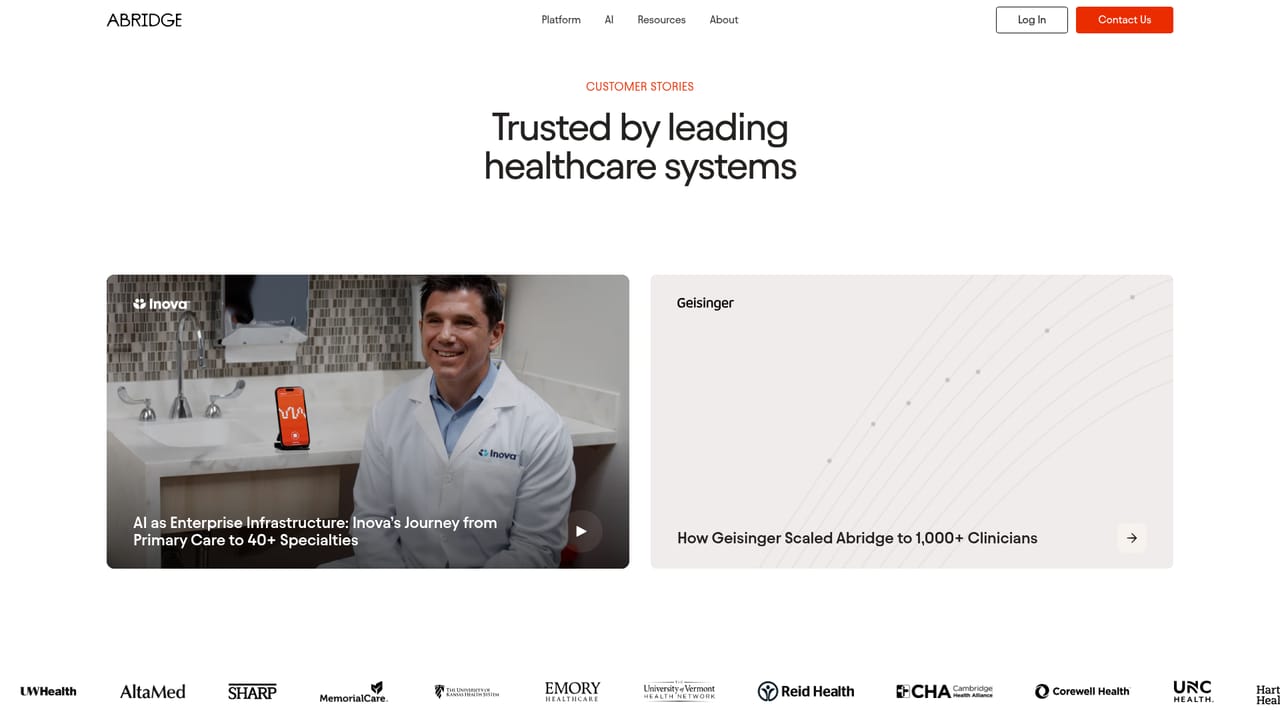
Abridge is an enterprise AI platform for healthcare organizations that converts spoken clinical conversations into structured documentation. The company positions itself as a single intelligence layer connecting health systems, payers and life sciences organizations, with the stated goal of supporting every moment of care. Rather than selling to individual practitioners, Abridge is built for large provider organizations: the company reports deployment across more than 300 health systems, with named rollouts at systems including Sutter Health, Inova, Corewell Health, WVU Medicine and the University of Kansas Health System.
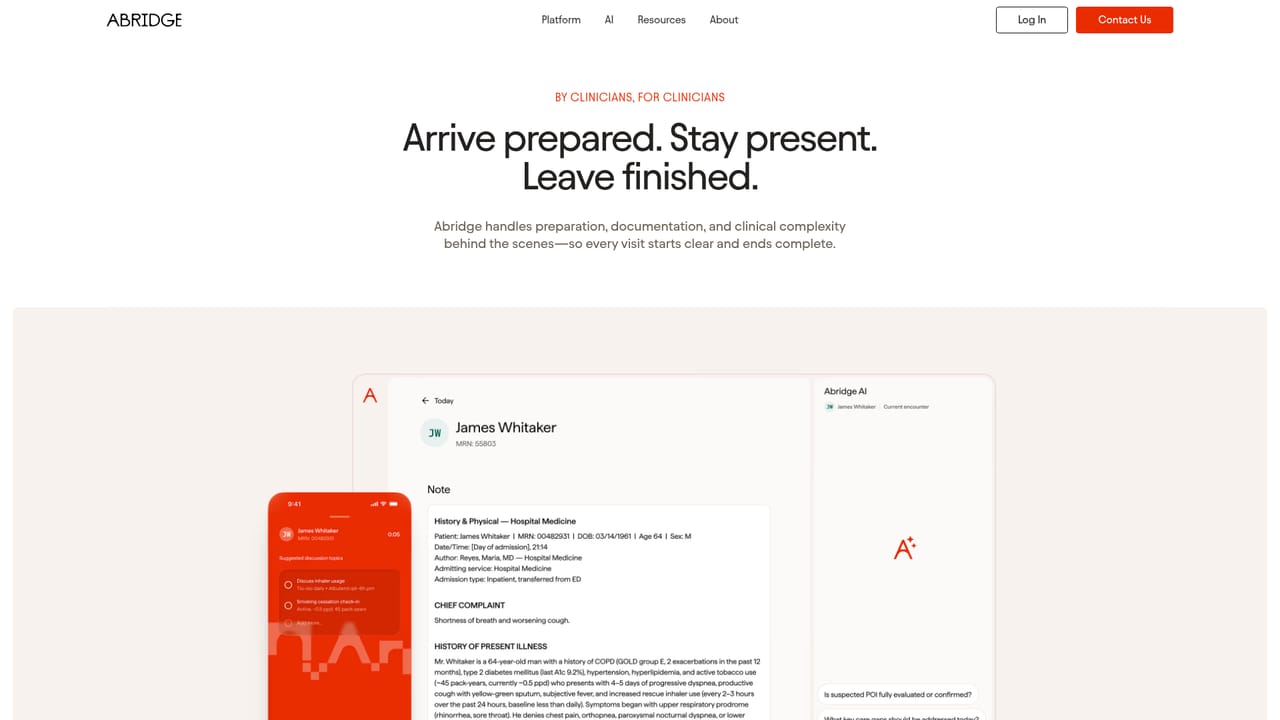
The platform ships as three tailored experiences. Clinicians get AI powered clinical documentation built for accuracy. Revenue Cycle teams get billable documentation automated from the start of the encounter. Nursing teams get natural conversations turned into draft documentation. Two cross cutting capabilities sit underneath: Assistant, described as the AI assistant for healthcare, and Care Signals, which surfaces the right conditions to address during a visit. An inpatient product extends the clinical story from admission through discharge.
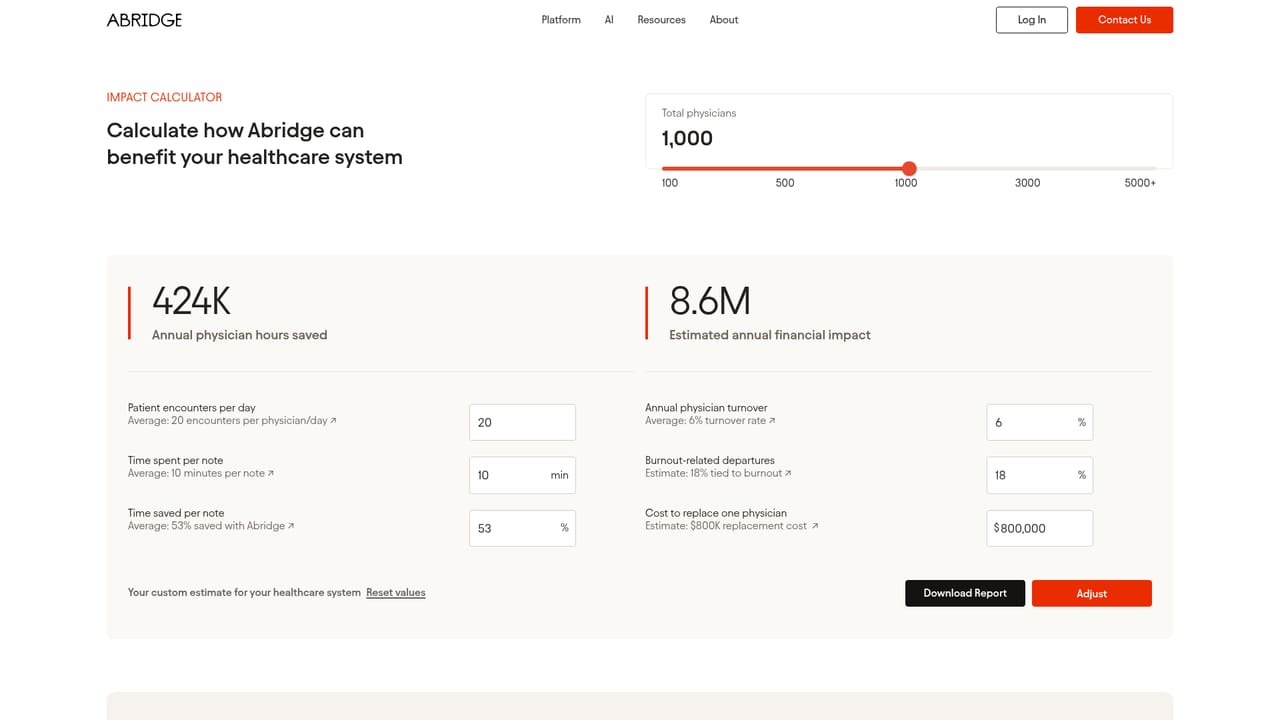
In practice, a clinician runs a normal visit conversation and Abridge generates draft notes and related documentation from that audio, which the clinician then reviews. Organizations can see customer evidence before committing: case studies report metrics such as a 78 percent reduction in cognitive load at Christus Health, roughly 30 minutes per day of documentation time saved across 800 plus providers in third party UW Health research, and a 55 percent decrease in burnout rate at Riverside Health. An impact calculator and a Scale and Impact Report let buyers model the math themselves.
Where Abridge differs from generic transcription or consumer note takers is its enterprise posture. It is sold to health systems through direct engagement rather than self serve signup, it is validated by large customers, and it publishes peer reviewed research and evaluation methodology on accuracy and safety. Smaller practices and individual clinicians looking for a low cost dictation tool will likely find the buying process and scope mismatched to their needs, and specialty coverage and outcomes depend on how each organization configures and rolls out the platform.