Integrations
The integrations page covers connecting publishing tools so audio fits existing workflows. Named ad server connections are mentioned for programmatic audio and video advertising.
Learn moreAI audio CMS that turns publisher articles into listenable voice content

BeyondWords is an AI narration tool. An AI audio CMS for publishers: it converts articles into AI-voiced audio, embeds a branded WCAG 2 player, and reports listen rates, completion and time spent. Voice cloning options, pronunciation controls, ad monetization and publisher integrations are included.
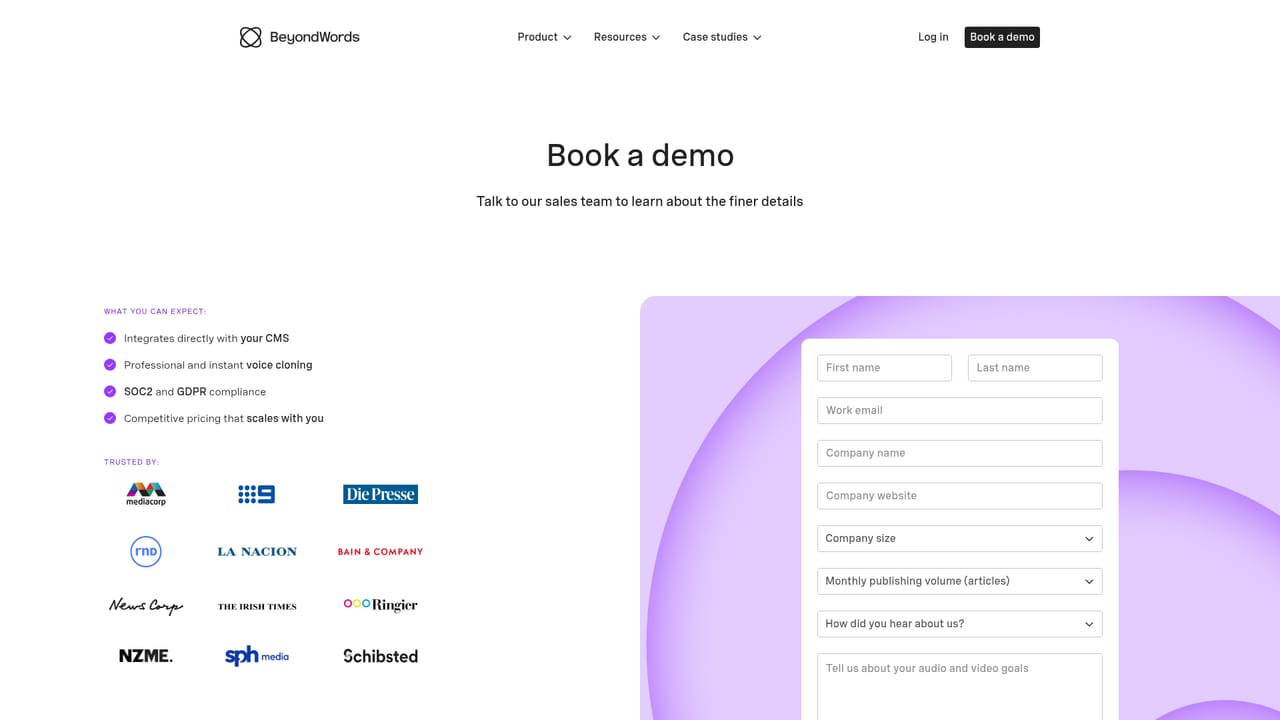
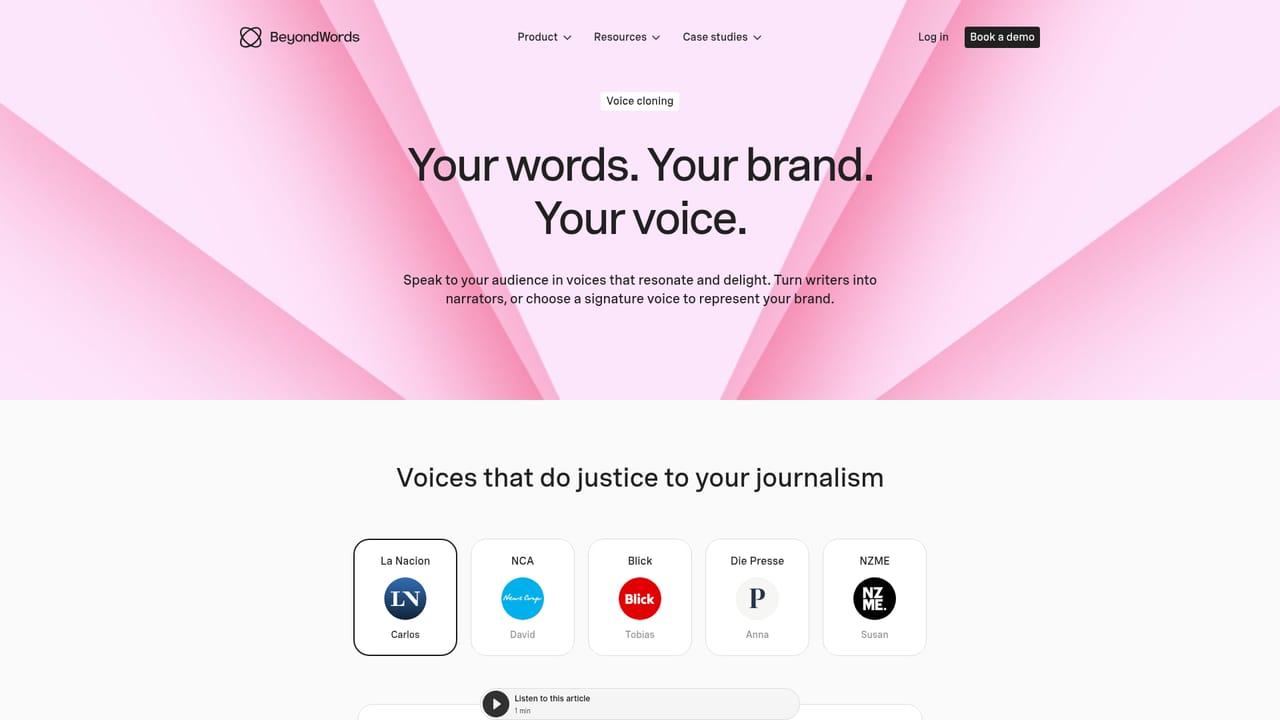
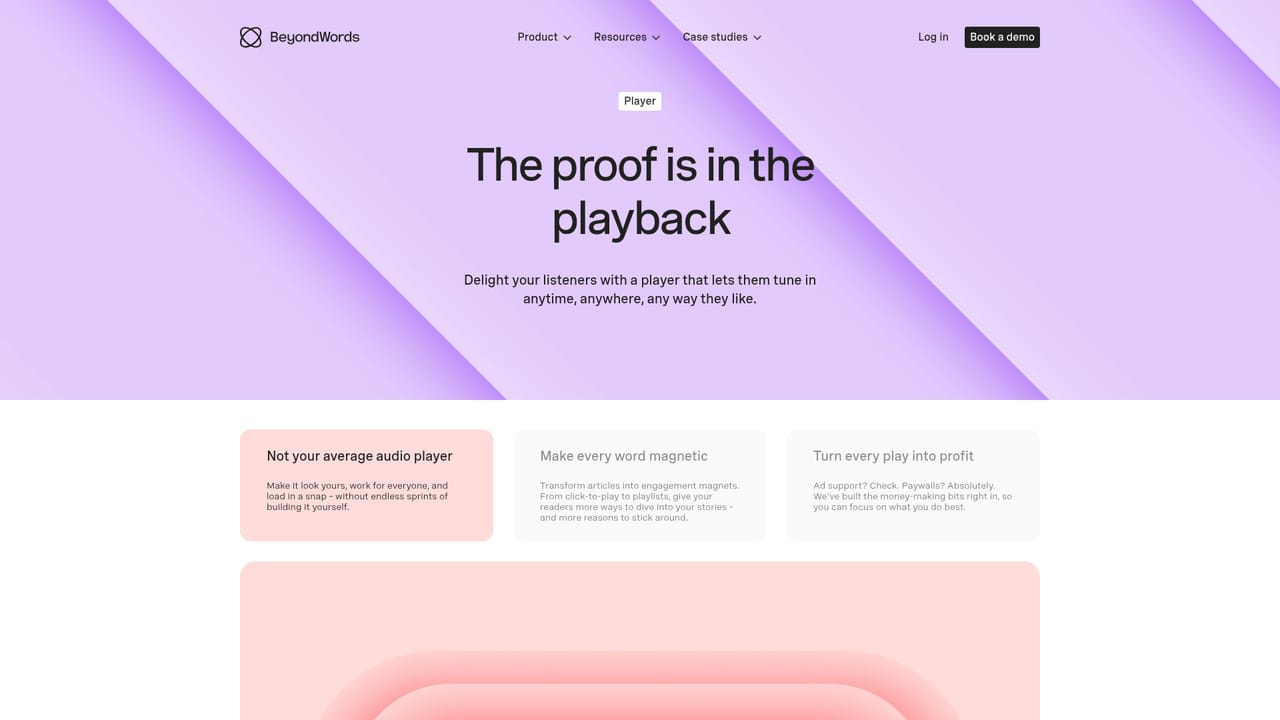
BeyondWords is an audio publishing layer for newsrooms and content sites. It converts written articles into spoken audio using AI voices, then serves that audio through a player embedded in the article page. The product is positioned as a content management system for audio rather than a standalone text to speech utility, and the homepage states its target plainly: publishers of all sizes, from large media groups to smaller outlets that want an audio presence without a production team. Voice generation comes in three forms. Instant cloning gives quick results, professional cloning is pitched at higher realism, and a ready-made voice library covers publishers who do not want to clone anyone at all. Pronunciation controls let editors correct how names and unusual terms are spoken, which matters for local news and brand coverage. BeyondWords also emphasizes predictable costs for updating articles, so re-editing and regenerating a published story does not turn into an open-ended bill. In practice the workflow runs from article to embed. A few lines of code place a customizable player that matches the site's branding and meets WCAG 2 accessibility standards. Listeners can navigate at word level, jumping to any point in the text. Analytics cover listen rates, time spent and completion rates, and monetization is handled either through programmatic audio and video ad servers or through campaigns run from the dashboard. Against general purpose voice generators, BeyondWords competes on publishing infrastructure rather than raw synthesis quality alone. The integrations, player, analytics and ad hooks are what a media operation needs, and the roster of named customers (News Corp, The Irish Times, Schibsted, Die Presse and others) signals where the product is aimed. A blog or solo creator will likely find it heavier than needed; a site with a steady article flow and an ad or subscription model is the natural fit.
The integrations page covers connecting publishing tools so audio fits existing workflows. Named ad server connections are mentioned for programmatic audio and video advertising.
Learn moreArticle to audio conversion at scale, with voice cloning (instant and professional) or a ready-made voice library, pronunciation controls, predictable update costs, a customizable WCAG 2 compliant player with word-level navigation, listen analytics (rates, time spent, completion), and audio monetization through programmatic ad servers or dashboard campaigns.
Learn more AI Angels400+ customizable AI girlfriends for NSFW chat, voice calls, and roleplay
 Candy AIExperience the future of companionship with AI friends who chat, role-play, and connect with you on a human level.
 ourdream.aiA vast AI roleplay platform with millions of characters for chat, images, video and voiceAI Angels400+ customizable AI girlfriends for NSFW chat, voice calls, and roleplayCandy AIExperience the future of companionship with AI friends who chat, role-play, and connect with you on a human level.ourdream.aiA vast AI roleplay platform with millions of characters for chat, images, video and voice


