Inworld

Realtime voice models and open LLMs for consumer apps

Advanced API
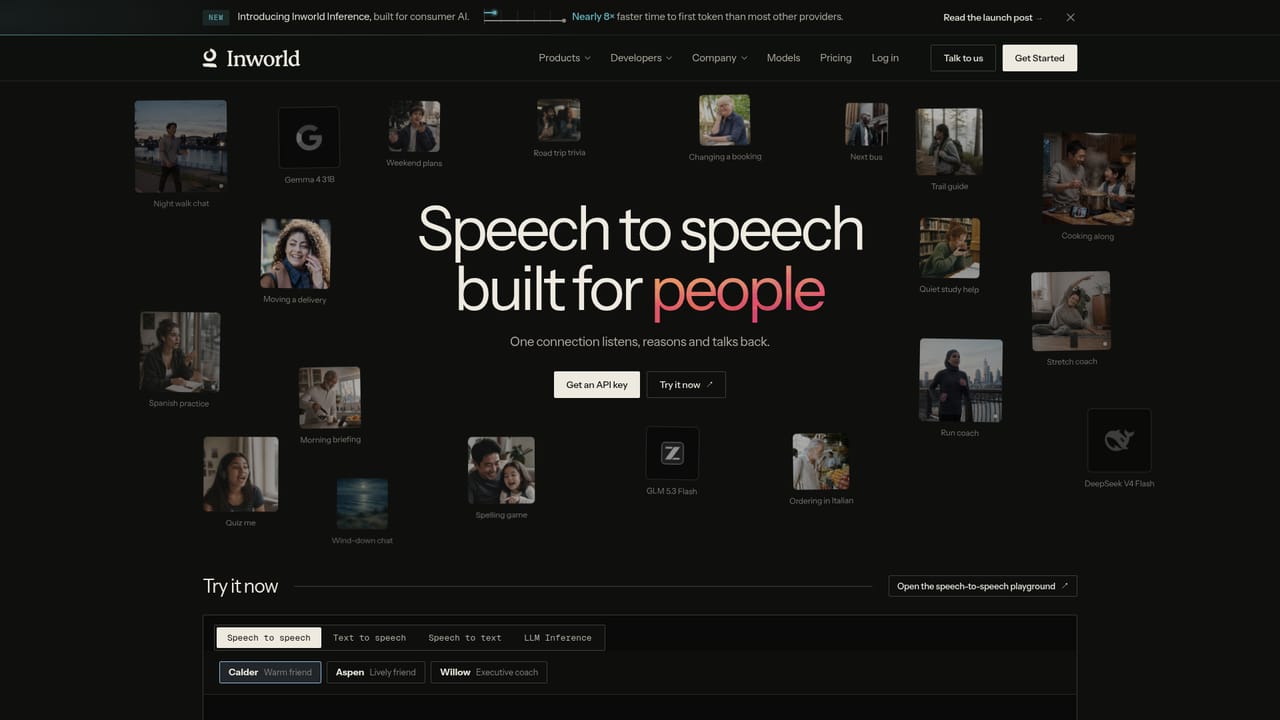
Screenshot of Inworld, Realtime voice models and open LLMs for consumer apps

What is Inworld?

Inworld is an AI narration tool. Inworld provides realtime text to speech, speech to text, speech to speech and open LLM inference for consumer apps, with first audio reported as low as 50 ms and a browser playground for testing voices before you build.

Inworld is an AI infrastructure provider aimed at teams building consumer-facing products: companions, language tutors, fitness coaches, storytelling apps and personal agents. Its stack is built around realtime voice, with text to speech, speech to text, speech to speech and LLM inference all served from a fleet Inworld operates itself. The pitch is speed and cost at consumer scale, with first audio reported as low as 50 ms on the Realtime TTS-2 Flash model and five nines of request reliability claimed across LLM, TTS and STT serving. The text to speech side is where most visitors will start. Inworld ships a set of named voices with distinct roles (companion, fitness coach, storyteller, narrator, commentator and others) and supports expressive direction through bracketed style prompts, so a line can be delivered warm, hushed or urgent without re-recording anything. Voices work across English, Spanish, French, German, Japanese and Korean according to the playground, and the same models power speech to speech conversation, where an agent greets the user first and then listens, reasons and replies in a loop. In practice the product is an API and platform play rather than a consumer app. You get an API key from the platform, prototype in the browser playground, then wire the endpoints into your own client through the docs. Inworld also publishes an open evaluation toolkit for TTS quality, which suggests the company expects buyers to benchmark rather than take claims on faith. Inference covers a catalogue of open models including DeepSeek V4.1 Flash, GLM 5.3 Flash, Gemma 4 variants and Qwen3.8 Flash, with a router in front and priority serving for latency-sensitive workloads. The comparison set is voice-first API vendors such as ElevenLabs and the realtime audio offerings bundled with larger clouds. Inworld's differentiator is the combination: one vendor for TTS, STT, speech to speech and LLM inference, tuned for consumer traffic volumes. It is a developer purchase, not a no-code tool, so budget for engineering time alongside usage costs.

How do you use Inworld?

  1. 1Get an API key on the platform
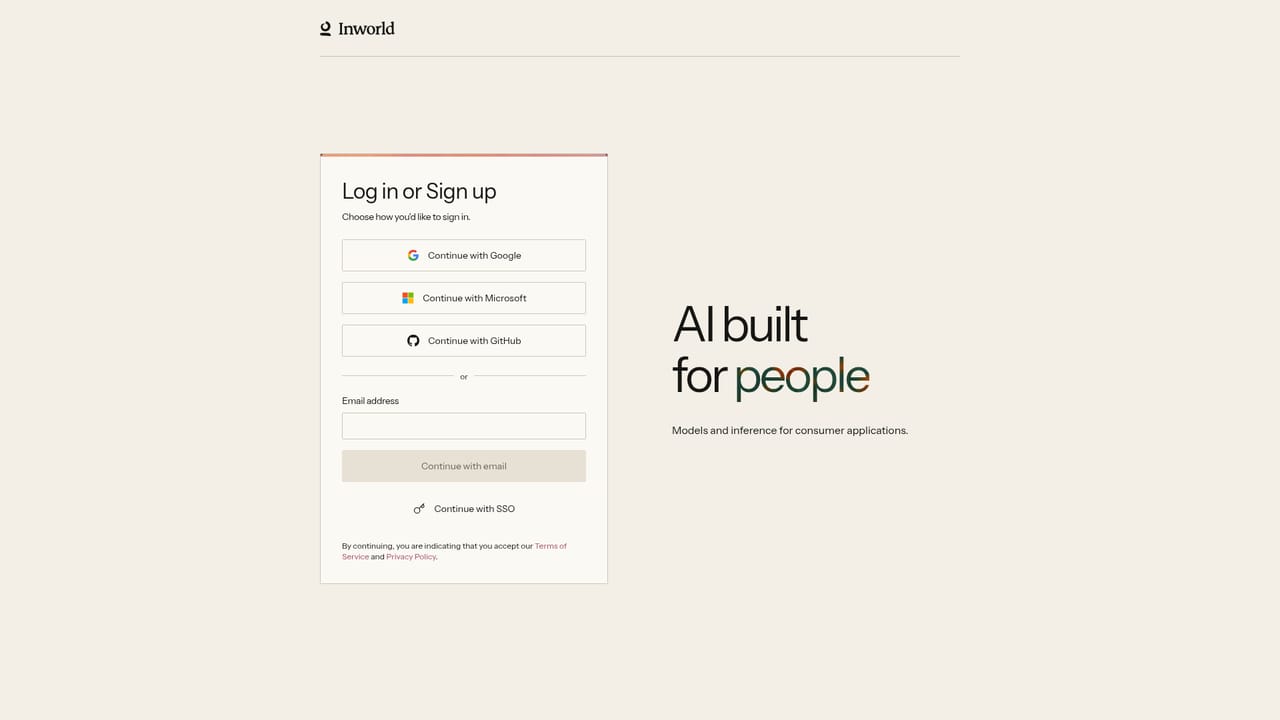
    Create an account on the Inworld platform to obtain an API key. The same console houses voice models, LLM inference and your usage settings.
    Inworld — Get an API key on the platform
  2. 2Test voices in the TTS playground
    Open the playground, pick a voice persona, choose a language and type a line. Add a bracketed style prompt to hear how delivery changes before you write any code.
    Inworld — Test voices in the TTS playground
  3. 3Read the TTS documentation
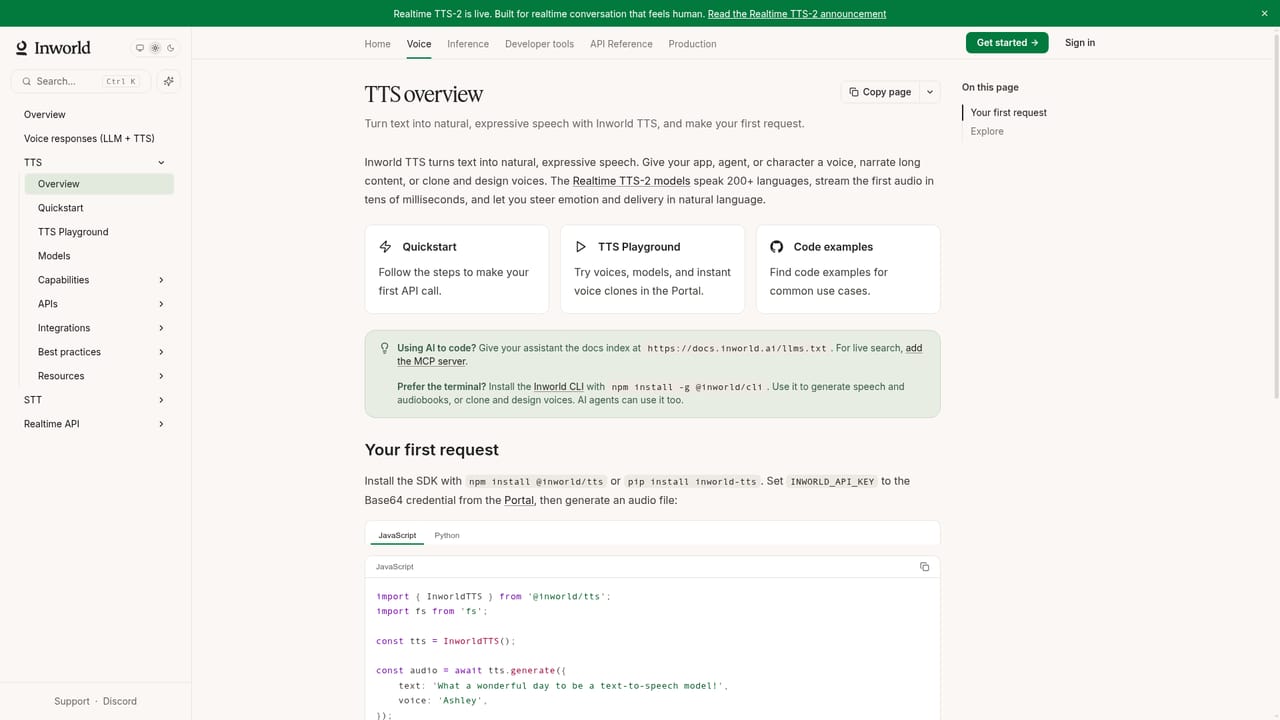
    The docs cover request structure, voice identifiers and style prompt syntax. Work through the TTS section first so your integration matches the current API shape.
    Inworld — Read the TTS documentation
  4. 4Wire up speech to text and speech to speech
    If your product needs a conversational loop, add STT for transcription and speech to speech for the agent turn. Both are documented separately from TTS.
    Inworld — Wire up speech to text and speech to speech
  5. 5Pick an inference model or use the router
    Browse the model catalogue for open LLMs with published throughput and latency notes, or route requests through the Inworld router to compare providers on the same prompt.
  6. 6Review pricing and talk to sales
    Check the pricing page for the plan structure, then contact sales if you need volume terms for consumer-scale traffic.

Pros and cons

Pros

  • Realtime TTS-2 Flash claims first audio as low as 50 ms, well ahead of general purpose voice APIsAI
  • One platform covers TTS, STT, speech to speech and LLM inference, which cuts down on separate vendor contractsAI
  • Named voice personas with bracketed style prompts give expressive control without custom recordingAI
  • A browser playground and an open TTS evaluation toolkit let you benchmark quality before committingAI
  • Priority LLM serving and five nines reliability claims target high-traffic consumer workloadsAI

Cons

  • Developer-first: there is no finished consumer app, so you need engineering resources to use itAI
  • Voice list is curated around specific personas rather than a large library of arbitrary cloned voicesAI
  • Language coverage shown in the playground stops at six languages, narrower than some rivalsAI
  • Per-request pricing at consumer scale is hard to forecast without modelling your own trafficAI
  • Reliability and quality figures come from Inworld's own benchmarks and partner boards, so independent testing is advisableAI

How much does Inworld cost?

Pricing

Inworld does not publish rates on its homepage. A dedicated pricing page exists, and the site links to both the pricing page and a sales contact route, which points to usage-based plans quoted per account rather than a public rate card.

Learn more

Support

Support runs through documentation, an API reference and a sales contact form. The site also publishes a security page and customer stories, but no public help centre or community forum is listed.

Learn more

Integrations

Inworld voices and transcription are shown working inside LiveKit Agents with no second API key, and a single flag enables Expressive mode there. Customers including Pipecat and Stream appear in the case study list, alongside an agent skill you can add to a personal assistant.

Learn more

Features

Core offerings are realtime text to speech with expressive style prompts, speech to text, speech to speech for agent conversations, and LLM inference across a catalogue of open models such as DeepSeek V4.1 Flash, GLM 5.3 Flash, Gemma 4 variants and Qwen3.8 Flash. A model router compares providers on the same prompt, and priority serving is offered for latency-sensitive traffic.

Learn more

Frequently asked questions about Inworld

  • How much does Inworld cost?
    Inworld does not publish rates on its homepage. A dedicated pricing page exists, and the site links to both the pricing page and a sales contact route, which points to usage-based plans quoted per account rather than a public rate card.
  • Does Inworld have an API?
    Yes, Inworld offers an API.
  • How do you use Inworld?
    The walkthrough on this page covers 6 steps: 1. Get an API key on the platform 2. Test voices in the TTS playground 3. Read the TTS documentation 4. Wire up speech to text and speech to speech 5. Pick an inference model or use the router 6. Review pricing and talk to sales.
  • What platforms does Inworld support?
    Inworld is available on Web App.
  • What does Inworld integrate with?
    Inworld voices and transcription are shown working inside LiveKit Agents with no second API key, and a single flag enables Expressive mode there. Customers including Pipecat and Stream appear in the case study list, alongside an agent skill you can add to a personal assistant.
  • What are the limitations of Inworld?
    Developer-first: there is no finished consumer app, so you need engineering resources to use it. Voice list is curated around specific personas rather than a large library of arbitrary cloned voices. Language coverage shown in the playground stops at six languages, narrower than some rivals.

Status

StatusActive
Views0
Outbound clicks0
Added10/21/2026

Platforms

Web App

Pricing

PaidFreemium