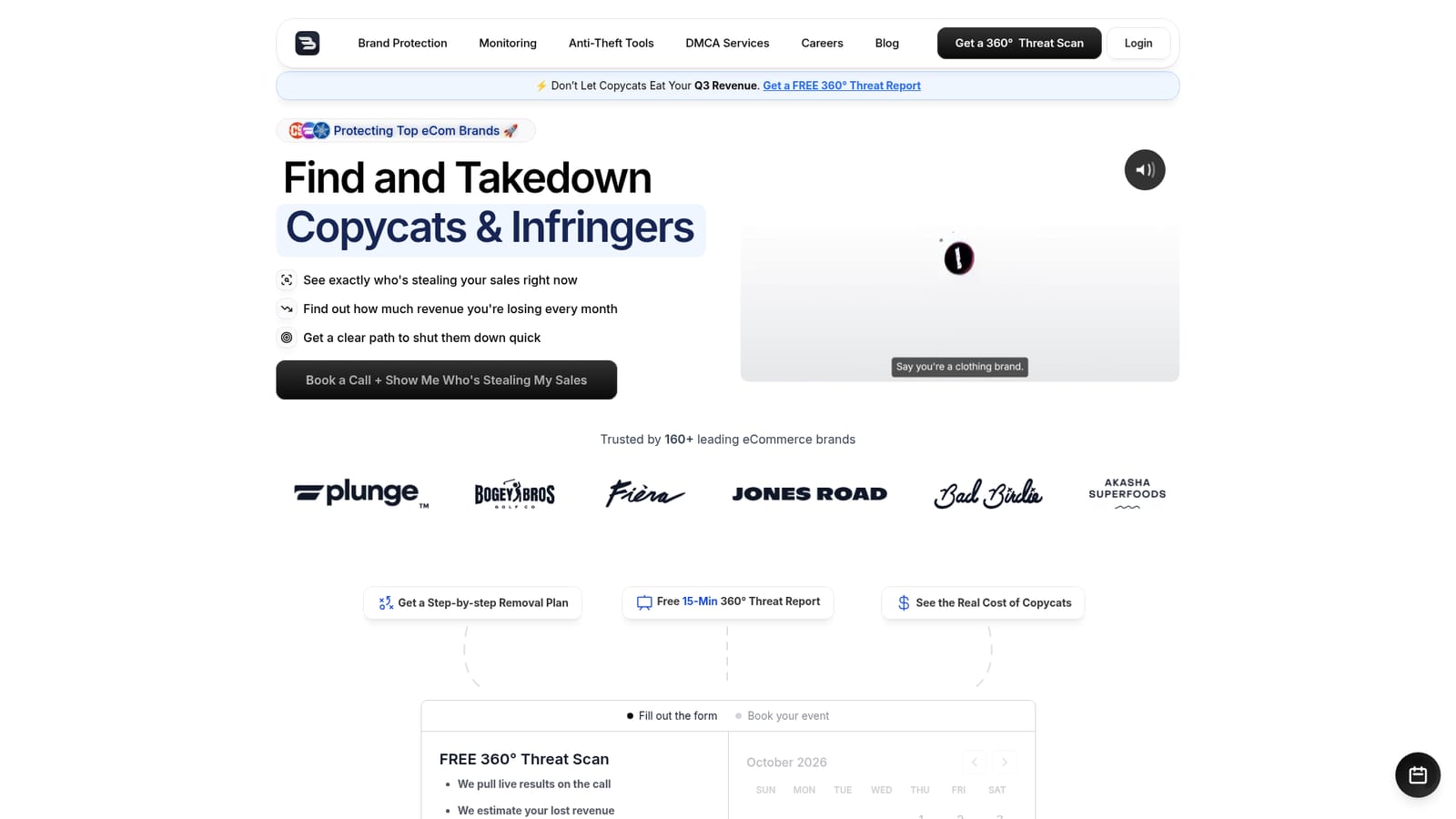
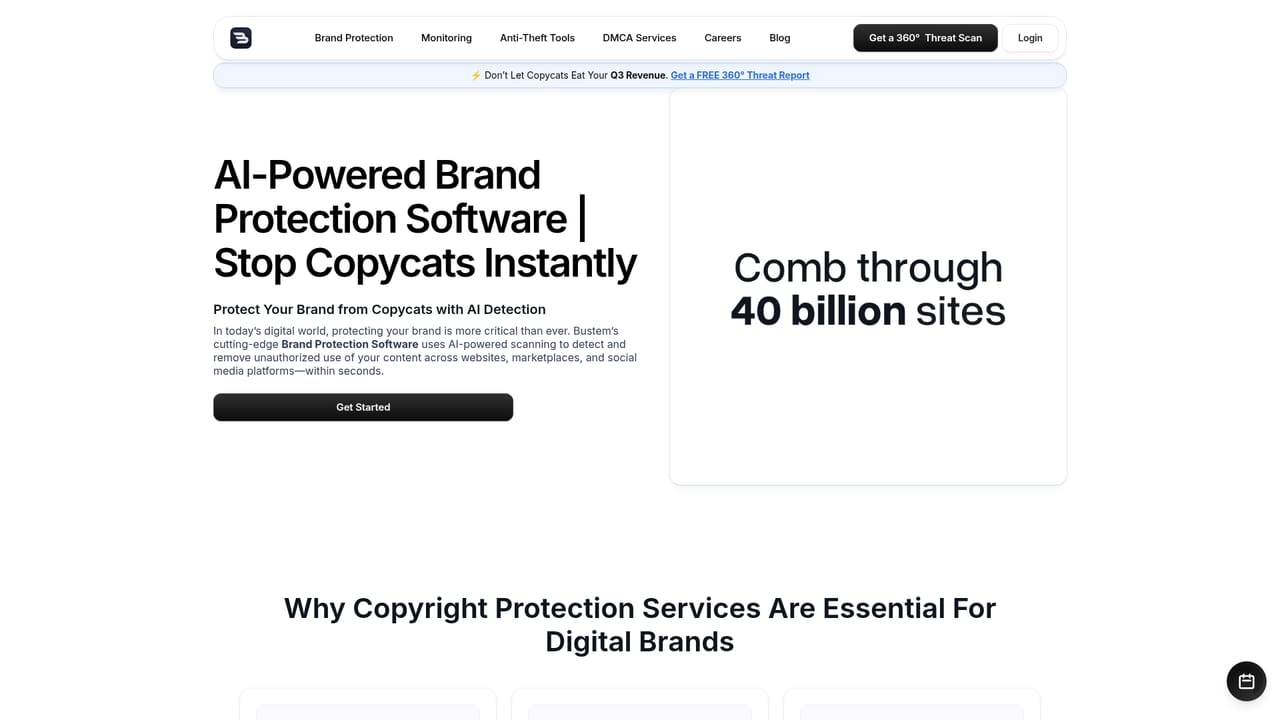
Bustem is a legal tool. A brand protection service combining AI infringement detection with a human takedown team. It monitors marketplaces, ad platforms and websites for counterfeits and copycats, routes each match through human review, and files DMCA notices, host complaints and platform escalations once the client approves.
Bustem is a brand protection service that pairs automated infringement detection with a human enforcement team. The software scans marketplaces, ad platforms and websites for listings, images and storefronts that mimic a client's brand, while specialists handle the DMCA notices, host complaints and platform escalations that follow. It is built around ecommerce, where counterfeit products and hijacked listings translate directly into lost sales.
Detection runs continuously across the major selling and advertising surfaces: Amazon, Walmart, eBay, Etsy, Temu, SHEIN, Alibaba, AliExpress, TikTok Shop, Meta, Instagram, Pinterest, Google and WordPress-hosted sites, with the company claiming coverage of roughly 160 platforms in total. Image recognition, keyword sweeps and reverse image search do the first pass. Every flagged match is then reviewed by a person before anything is filed, and the client approves each case in the dashboard before enforcement begins. That two-stage check is the core of the pitch: fewer false positives, and no action taken without sign-off.
The audience is brand owners and ecommerce operators who already have a recognized product line and are losing margin to lookalikes. Typical engagements start with a free threat scan call, where the team pulls live results and puts a dollar estimate on the leakage. From there, Bustem positions itself as an alternative to three common options: a stretched in-house team without IP expertise, a general virtual assistant, or hourly IP counsel. The company reports more than 100,000 takedowns and 160 brands protected, and says clients get direct Slack access to the founder, CTO, COO and lead agent rather than a faceless portal.
Contracts are described as month to month with no annual lock-in. Pricing is not published on the homepage, so the only way to get a number is the strategy call. For brands with a serious counterfeiting problem, the hybrid model is the differentiator; for smaller sellers, the sales-led onboarding and lack of self-serve signup will feel heavy.