What these tools do
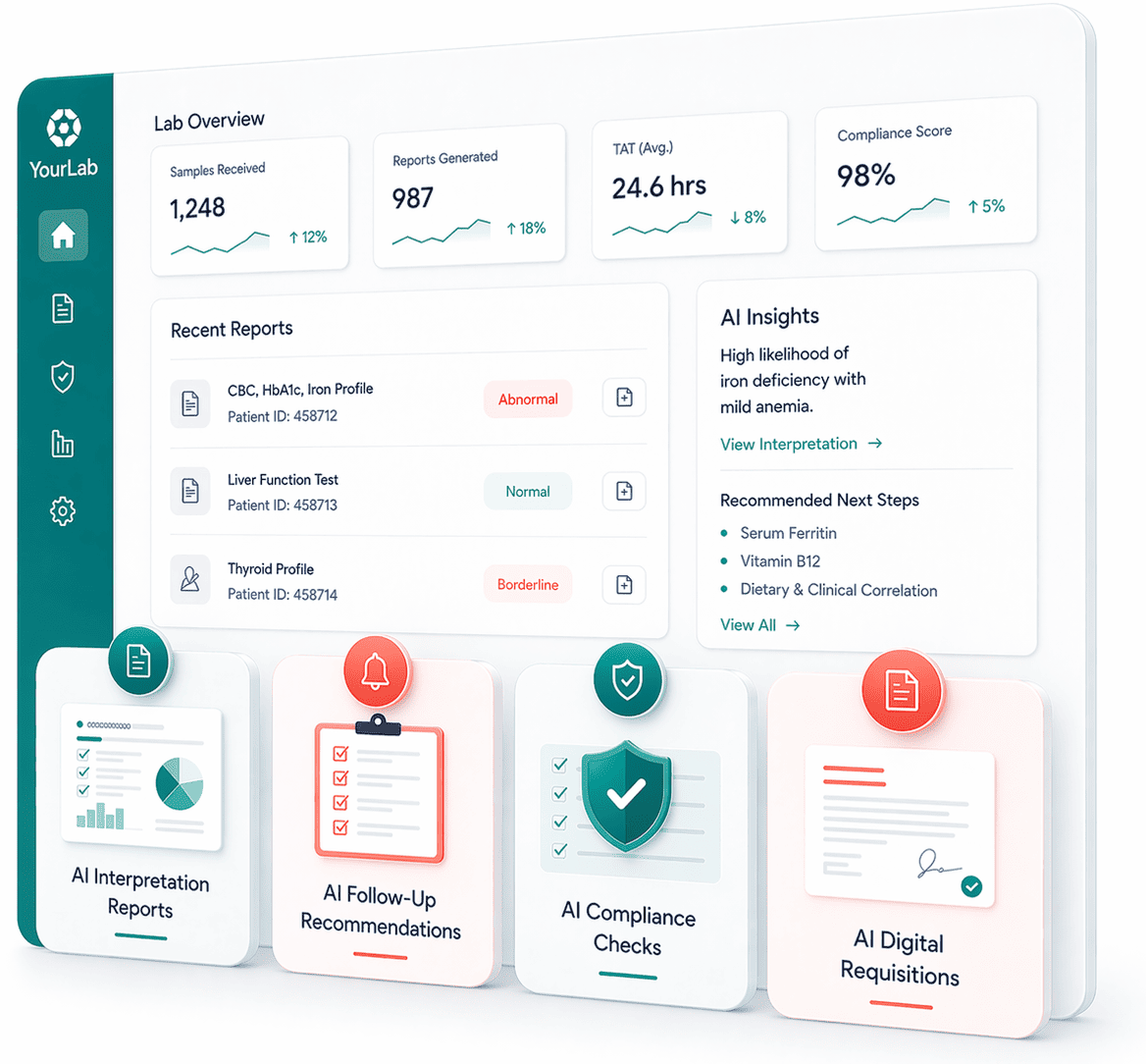
Lab report AI covers a split audience. On the coursework side, students and teachers use these tools to check AI-written text, grade essays against a rubric, verify plagiarism and confirm citations before a write-up is submitted. On the clinical side, people with lab results use them to turn a dense report into plain language and a list of questions. For students, the category replaces the slow loop of rereading drafts, hunting dubious sources and waiting on feedback. For teachers, it replaces manual grading passes. For patients, it replaces guessing what a lab value means.
How to choose one
Start with which lab report you mean. A coursework write-up needs detection, citation and grading tools. A clinical result needs a decoder that explains values in plain English. For coursework, decide whether you want a detector (sentence-level flags, cross-checking across several engines) or a grader (rubric scoring, editable feedback). If you write academic work, a citation checker matters more than a detector, because fabricated sources cause more damage than a low AI score. For clinical tools, check what happens to the data, whether output arrives by email or in an app, and whether the report includes follow-up questions for a doctor. Pricing models vary widely: free daily allowances, pay-per-check, and paid subscriptions. Match the model to how often you will use it.
Notable tools
Know Nota gives plain-English AI text checks with a free daily word allowance, useful for quick sanity checks before submission.
DetectMy.ai runs several detectors and combines them into one report, which suits anyone who wants a second and third opinion on a score.
Acurio checks thesis citations against the sources they claim to quote, filling a gap that most detectors ignore.
Essay Grader AI handles rubric-based grading and feedback for teachers working through a stack of essays.
Clasa AI combines rubric-based essay grading with editable feedback and AI detection in a single workflow.
On the clinical side, MedLabReport takes uploaded lab results and returns a plain-language report by email. Docus AI builds a similar plain-language layer with suggested follow-ups.
Common questions
What is the best way to check if a lab report was written with AI?
Run the text through a detector that flags sentences rather than whole documents. AI Scanner.io offers free sentence-level highlighting with no signup, and DetectMy.ai cross-checks several detectors in one report. Treat any score as a signal, not proof, and combine it with citation checks from Acurio when sources are involved.
Can these tools grade a lab report automatically?
Yes, for essays and write-ups with a clear rubric. Essay Grader AI and Clasa AI both score against rubrics and produce editable feedback, which saves teachers a first pass. Review the output before it reaches students, since rubric interpretation still needs a human.
Can I use AI to explain my own lab results?
Tools like MedLabReport and Docus AI turn lab values into plain-language reports and suggested follow-up questions. They are explainers, not diagnoses, and the follow-up questions are the useful part to bring to a doctor. ReadingScan does the same for radiology reports.
When to look elsewhere
If your problem is solving a problem set rather than writing it up, the Math Word Problems category is the closer fit. If you are preparing for an exam rather than checking submitted work, start with Exam Preparation instead.