Support
Support runs through the June docs site for setup and product questions, plus a help centre for terms and privacy articles. There is also a June School resource, a blog, guides and a public changelog.
Learn moreProduct analytics for B2B SaaS with an AI assistant for ad-hoc questions

June AI is a question answering tool. June is product analytics for B2B SaaS, with a June AI assistant that answers ad-hoc product questions in natural language and lets anyone save useful queries so the whole team can reuse them.
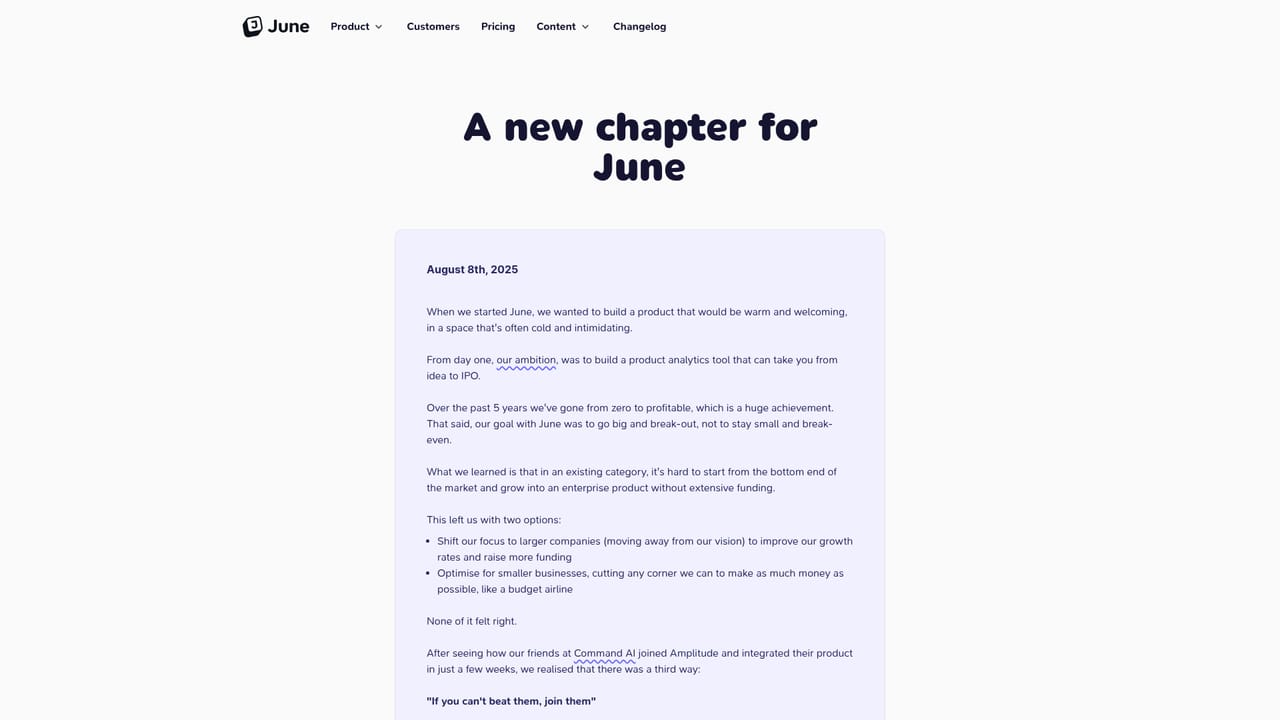
June is a product analytics tool built for B2B SaaS companies rather than for consumer apps. Its core pitch is that a team should not need to build a reporting stack from scratch: June connects to a data source, turns product events into reports that emphasize how companies use the product, and keeps those reports readable for people outside the data team. It has been recognized by Product Hunt (Golden Kitty winner in 2022 for Data and Analytics), described as the fastest growing app on Twilio Segment in 2022, and rated 4.9 out of 5 on G2. June AI is the part of the product that answers questions in natural language. When someone has an ad-hoc question and needs a quick answer, the AI is presented as an alternative to queuing work with a data analyst. Answers can be turned into saved queries, so an insight one person found useful becomes something the whole team can find and reuse later. In day-to-day use that means a product manager can check a specific behavior without writing SQL, and a growth lead can point colleagues at a saved view instead of re-explaining a funnel. The tool fits SaaS teams that already collect product event data and want analysis to be shareable across product, growth and leadership. Setup is a matter of connecting a data source and sending events; June documents the process on its own docs site. Salesforce, HubSpot and Attio integrations cover the CRM side, and June also offers adjacent pieces such as a feature report, a qualification bot and an iOS widget. Compared with established product analytics suites, June positions itself as the lighter, faster route for early and mid-stage B2B SaaS. Head-to-head pages against Amplitude and Mixpanel make that positioning explicit, and the published benchmarks and customer stories give buyers material to compare. Teams with complex, heavily customized analytics needs may still want a broader platform, but for SaaS companies that want quick answers and shared saved queries, June is aimed squarely at that job.
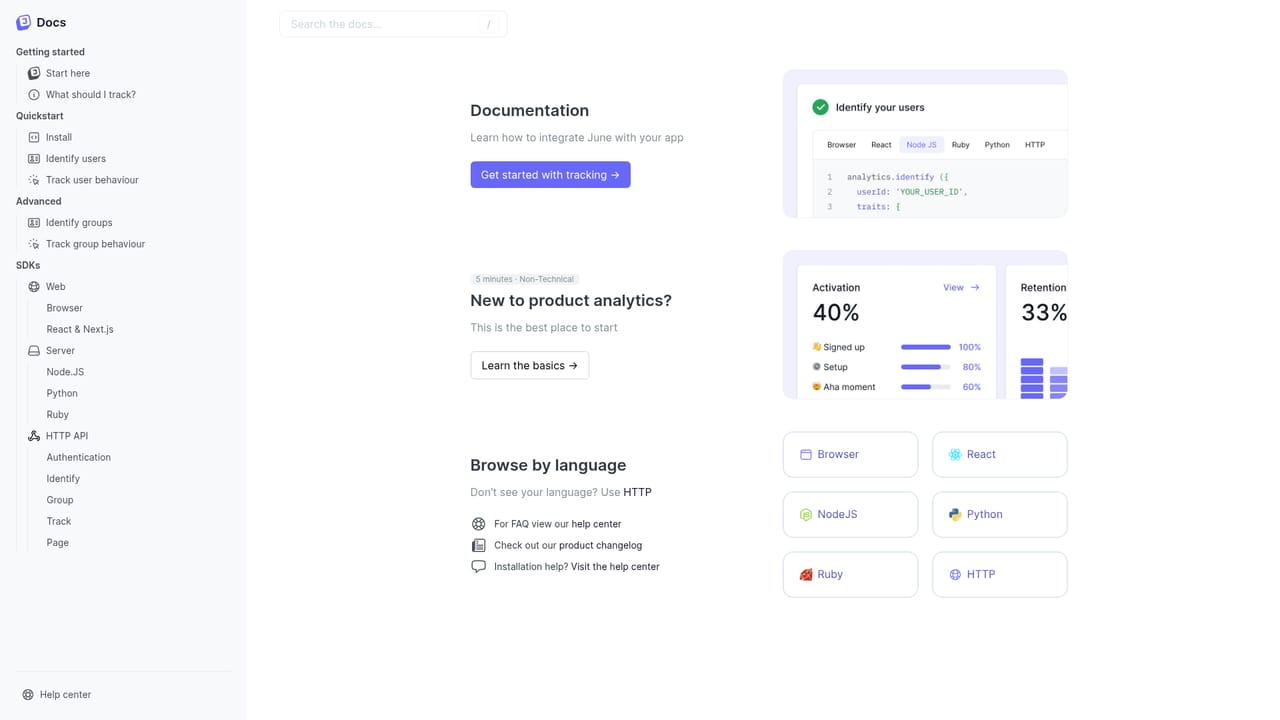
Support runs through the June docs site for setup and product questions, plus a help centre for terms and privacy articles. There is also a June School resource, a blog, guides and a public changelog.
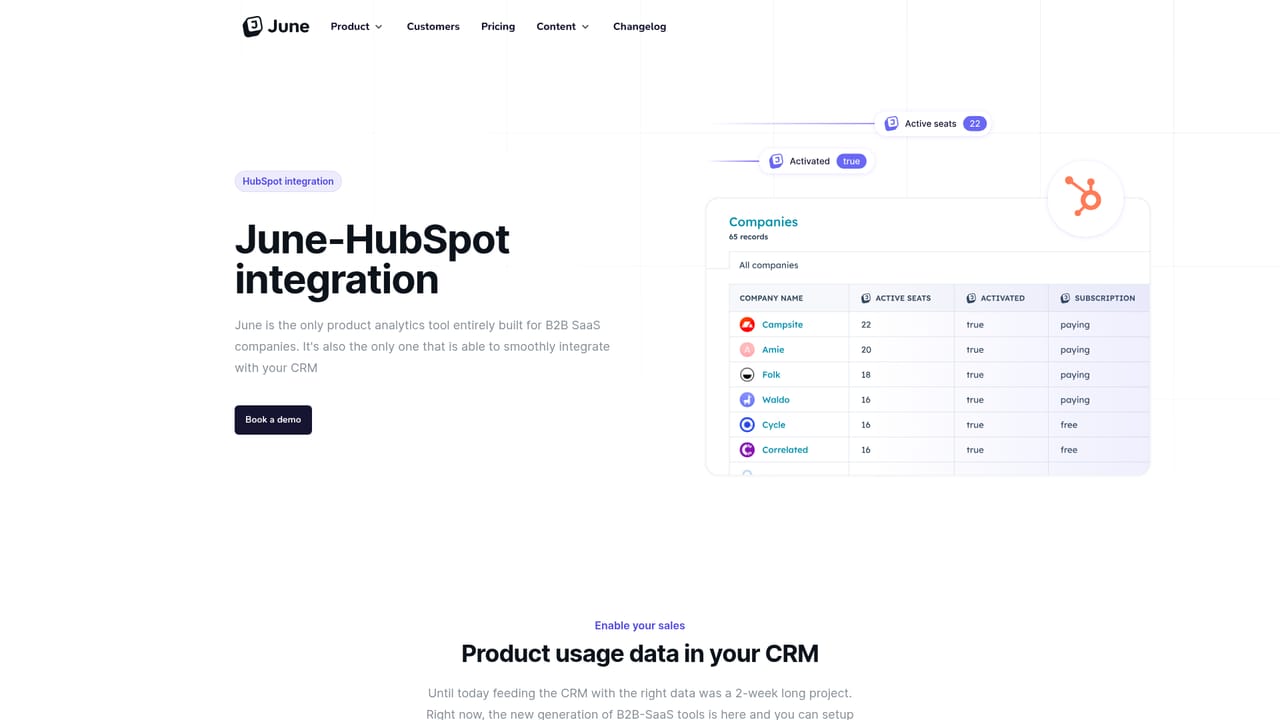
Learn moreJune offers Salesforce, HubSpot and Attio integrations for the CRM side. Data sources are connected through the documented setup on the June docs site, and the company was described as the fastest growing app on Twilio Segment in 2022.
Learn moreJune AI answers specific product questions in natural language, positioned as a way to skip the data analyst queue. Any user can save a useful query so others on the team can find it. The broader product generates reports focused on how companies use a B2B SaaS product, alongside a feature report, a qualification bot and an iOS widget.
 AI Angels400+ customizable AI girlfriends for NSFW chat, voice calls, and roleplay
 Candy AIExperience the future of companionship with AI friends who chat, role-play, and connect with you on a human level.
 ourdream.aiA vast AI roleplay platform with millions of characters for chat, images, video and voiceAI Angels400+ customizable AI girlfriends for NSFW chat, voice calls, and roleplayCandy AIExperience the future of companionship with AI friends who chat, role-play, and connect with you on a human level.ourdream.aiA vast AI roleplay platform with millions of characters for chat, images, video and voice


