Support
Support details are not described on the homepage. Onboarding runs through a demo request and customer success stories, so ask about implementation and ongoing support during evaluation.
Learn moreAI timekeeping that captures billable work as it happens

Laurel is a time optimization tool. Enterprise AI timekeeping for law, accounting and consulting firms. Laurel captures billable work across existing tools and converts it into review-ready time entries with client, matter and descriptions attached.
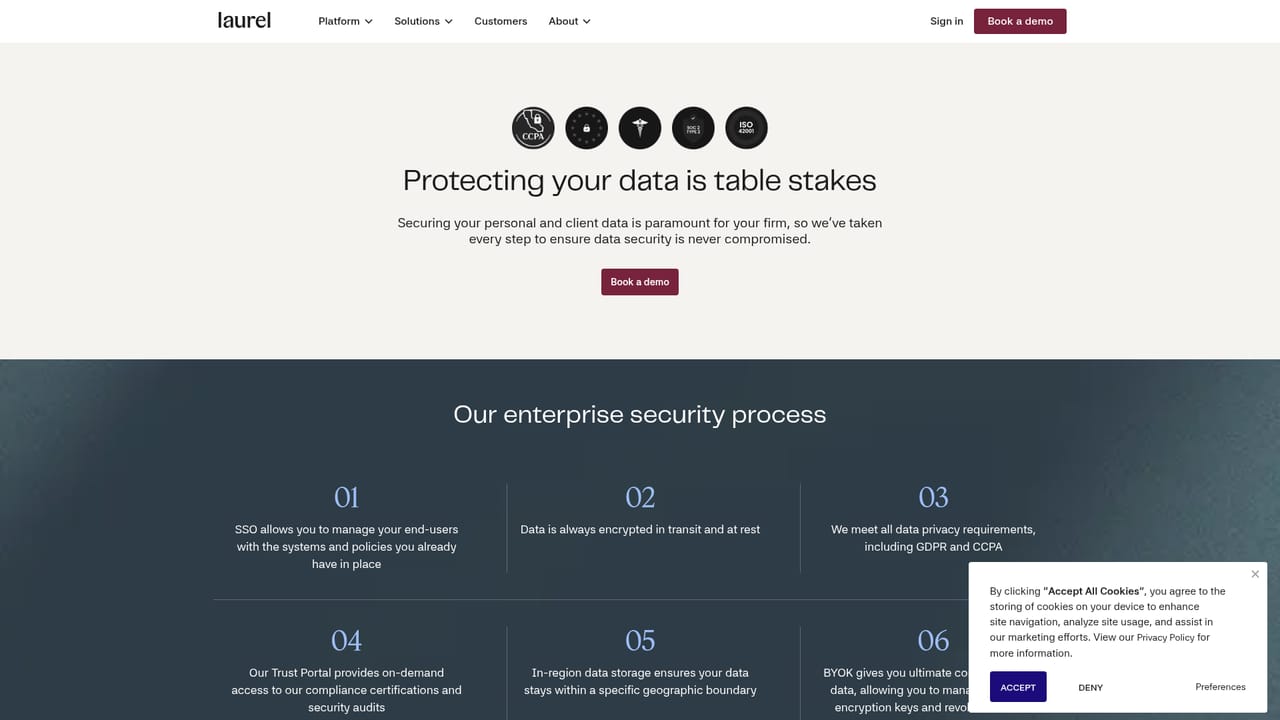
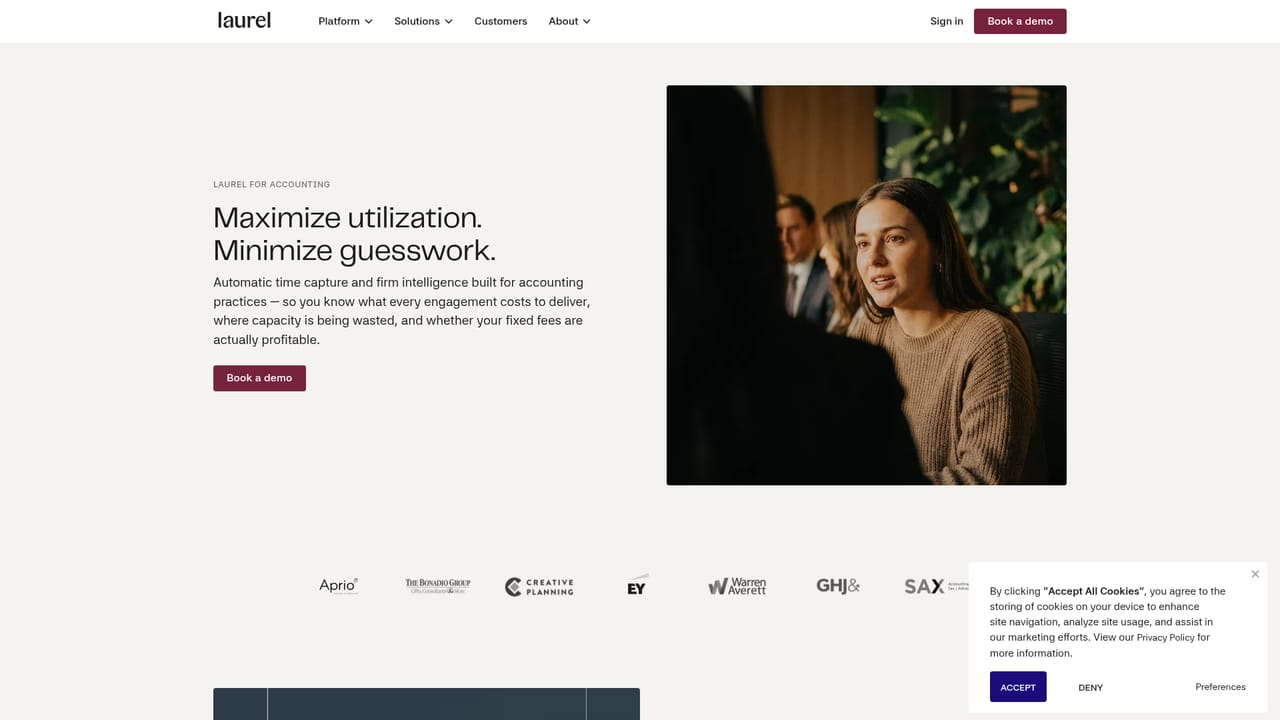
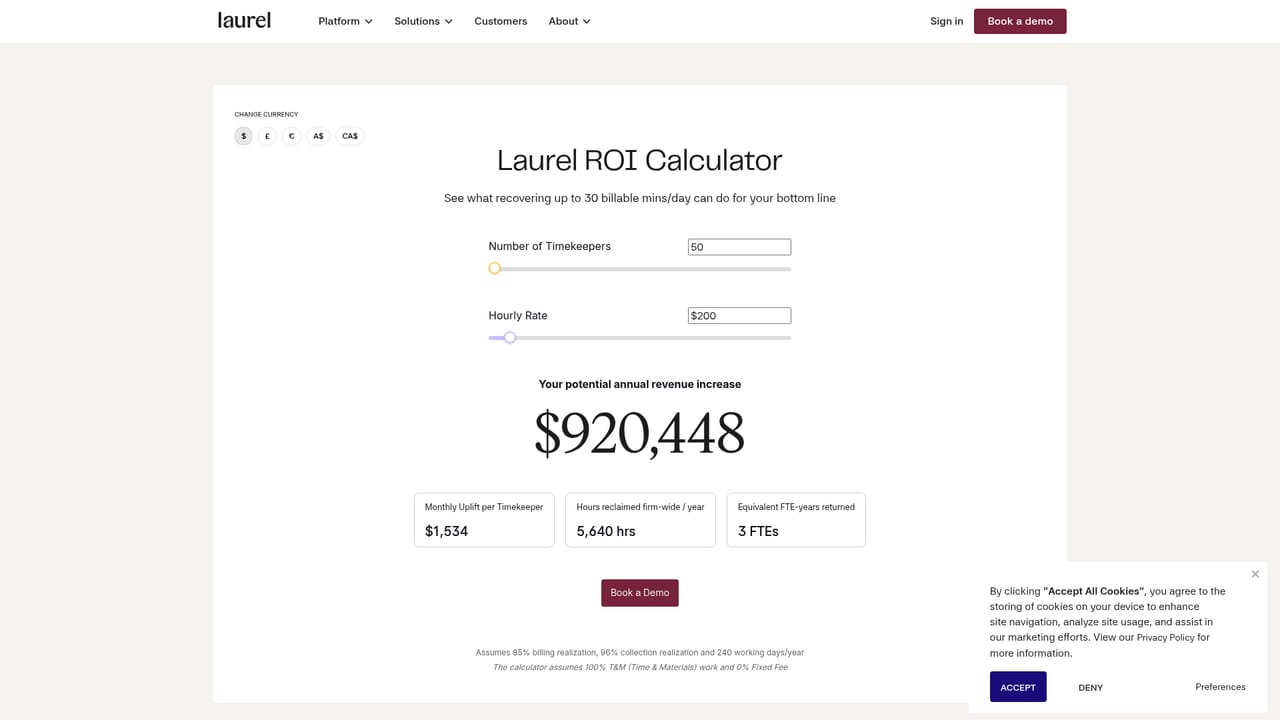
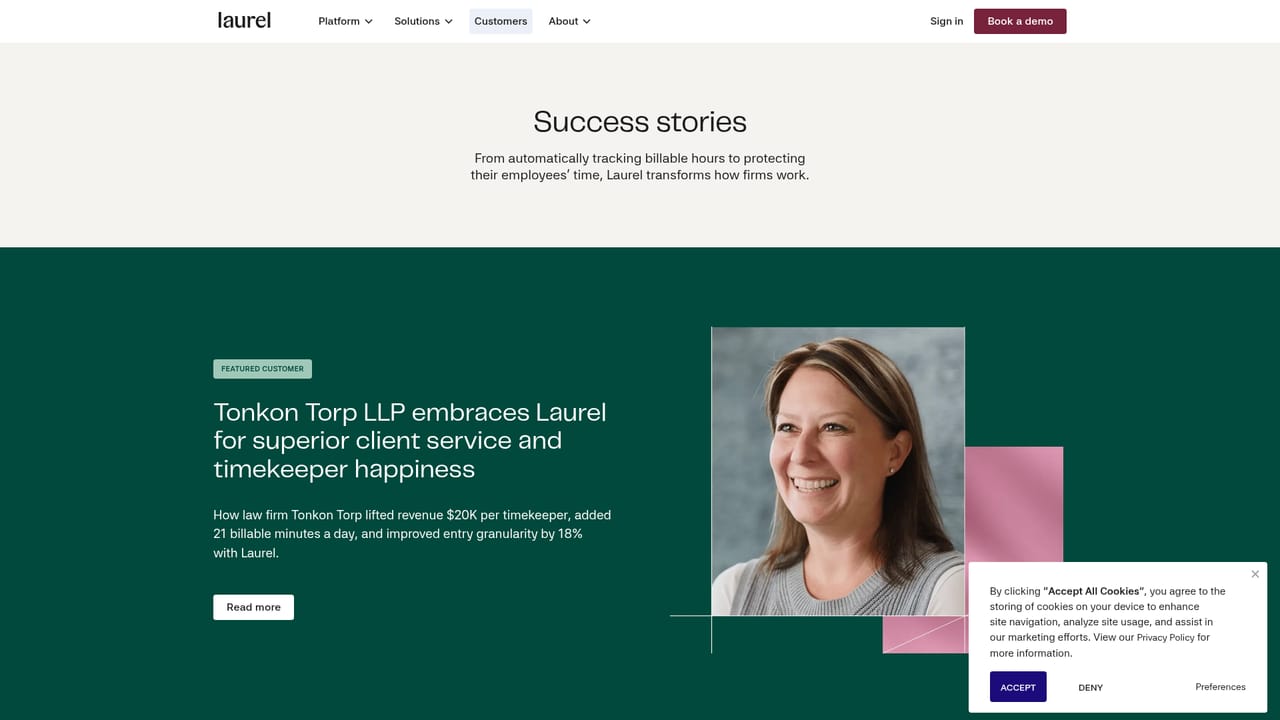
Laurel is an AI timekeeping and work intelligence platform built for professional services firms. Rather than asking lawyers, accountants and consultants to reconstruct their day from memory at the end of the week, Laurel runs quietly in the background across the tools a team already uses and records billable activity as it occurs. The resulting raw activity is turned into structured time entries with the details firms need for billing: client, matter and a usable description. The product is aimed squarely at legal, accounting and consulting organizations where hours are the revenue unit. The homepage frames the value in three ways. Individual professionals recover up to 30 minutes a day and log roughly 2.88 more time entries daily. Firms see profit increases in the 4 to 11 percent range. Managers get a view of where people, agents and departments spend their time, which surfaces scope creep during an engagement rather than at close, and shows the true cost of service delivery by client, engagement and person. Operationally, Laurel positions itself as enterprise infrastructure rather than a lightweight utility. No public LLMs are used, the AI is single tenant, and firms can bring their own keys. It carries ISO 42001 and SOC 2 Type 2 certification and states CCPA, GDPR and HIPAA compliance, with SSO, SCIM and in-region storage for firms with strict data residency rules. A published partnership with Legora shows the model: activity inside Legora generates a time entry in Laurel with client, matter and description attached automatically. Compared with manual timers and calendar-based time reconstruction tools, Laurel competes on capture breadth and the downstream intelligence layer, not just entry generation. The trade-off is that it is a firm-level deployment with compliance overhead, not a self-serve timer for solo practitioners. Buyers evaluating it should treat the ROI calculator and customer stories as vendor claims and validate them against their own realization and write-off data.
Support details are not described on the homepage. Onboarding runs through a demo request and customer success stories, so ask about implementation and ongoing support during evaluation.
Learn moreThe homepage names a Legora partnership that writes time entries into Laurel automatically. Full integration coverage is not listed on the homepage and should be confirmed during a demo.
Learn moreAutomatic capture of billable activity across the tools a team already uses, conversion of raw activity into review-ready time entries with client, matter and description, work intelligence views of where people and departments spend time, engagement profitability and scope creep visibility, plus enterprise controls such as single tenant AI, bring your own keys, SSO, SCIM and in-region storage.
 AI Angels400+ customizable AI girlfriends for NSFW chat, voice calls, and roleplay
 Candy AIExperience the future of companionship with AI friends who chat, role-play, and connect with you on a human level.
 ourdream.aiA vast AI roleplay platform with millions of characters for chat, images, video and voiceAI Angels400+ customizable AI girlfriends for NSFW chat, voice calls, and roleplayCandy AIExperience the future of companionship with AI friends who chat, role-play, and connect with you on a human level.ourdream.aiA vast AI roleplay platform with millions of characters for chat, images, video and voice


