Support
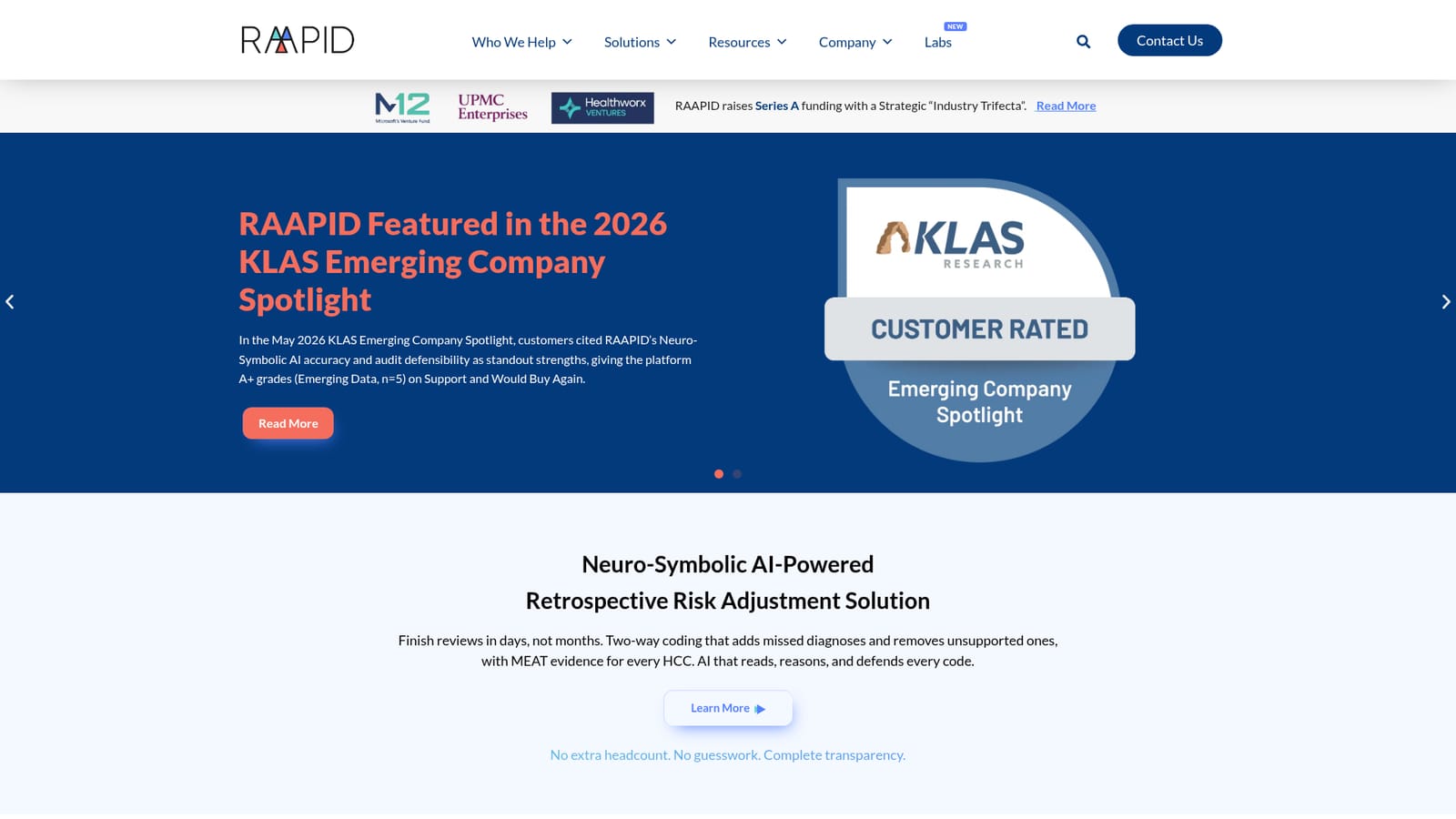
Customers in the 2026 KLAS Emerging Company Spotlight (n=5) gave A+ grades for support and would buy again; no support tiers or SLAs are published on the homepage.
Learn moreNeuro-symbolic risk adjustment coding built to defend every HCC

RAAPID INC is a pattern recognition tool. RAAPID is a neuro-symbolic AI platform for HCC risk adjustment and RADV audit defense, covering prospective and retrospective coding with MEAT evidence attached to every diagnosis. Built for health plans and value-based care teams rather than general clinical use.
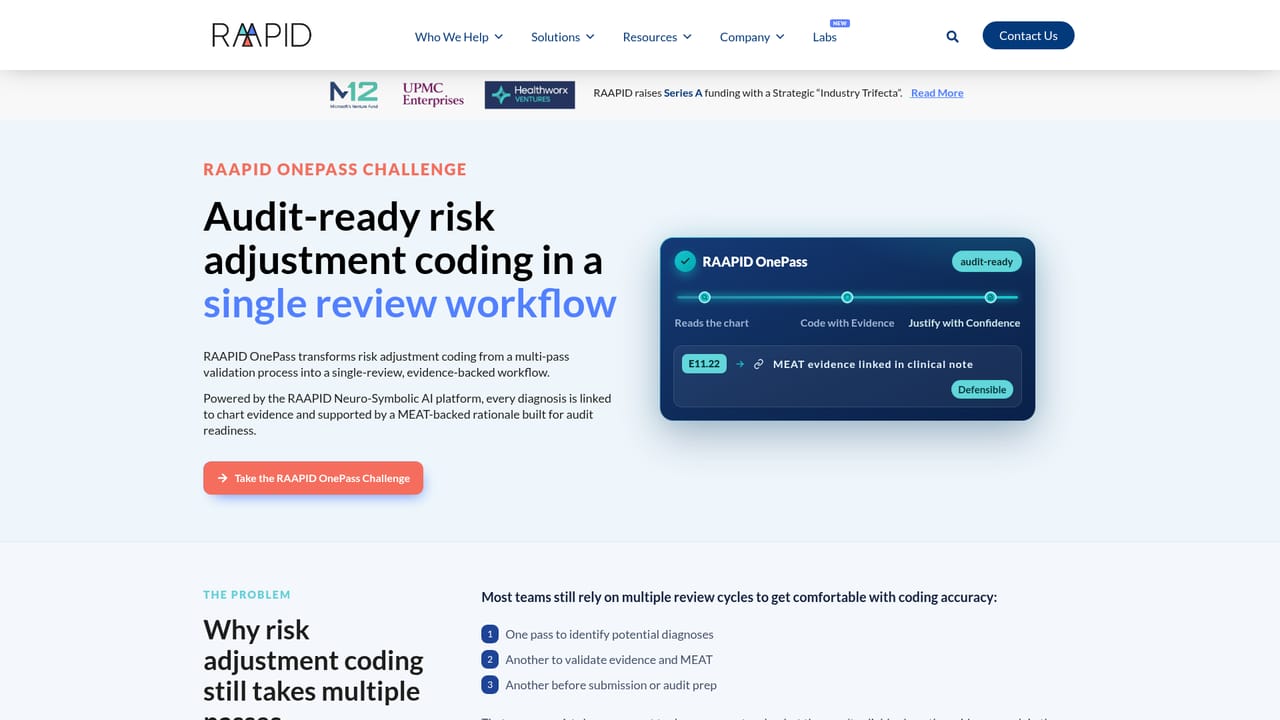
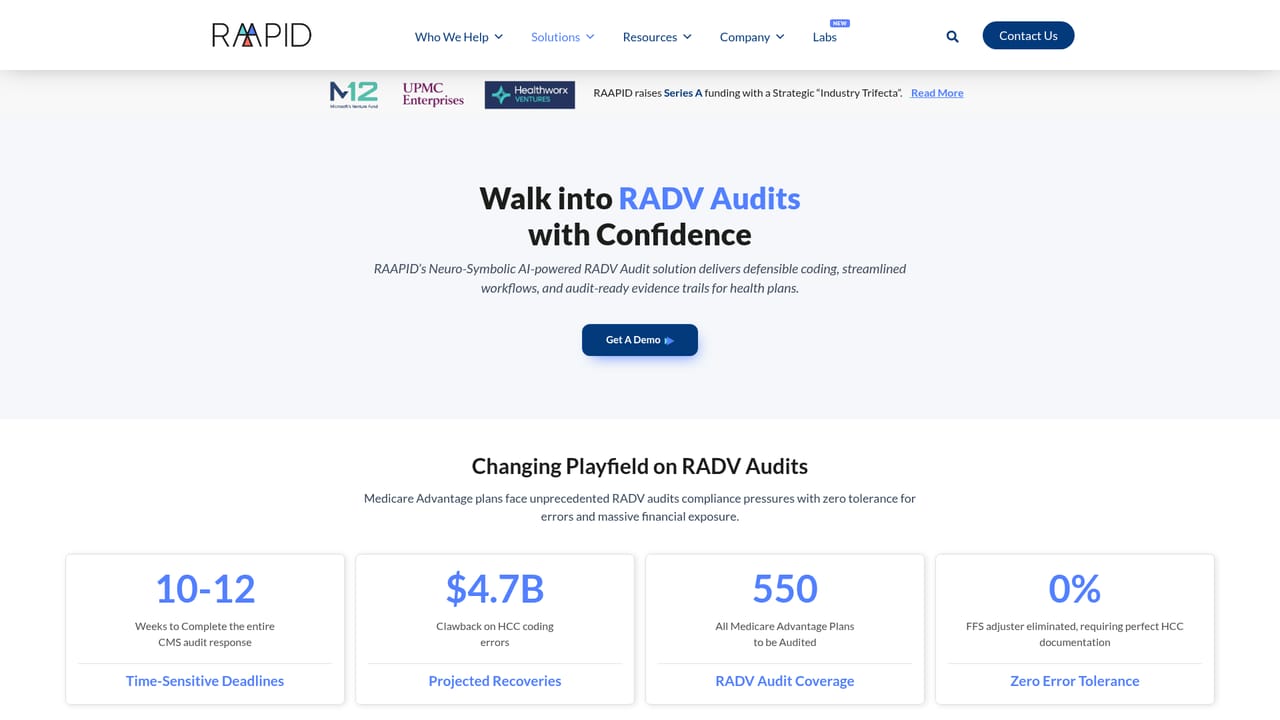
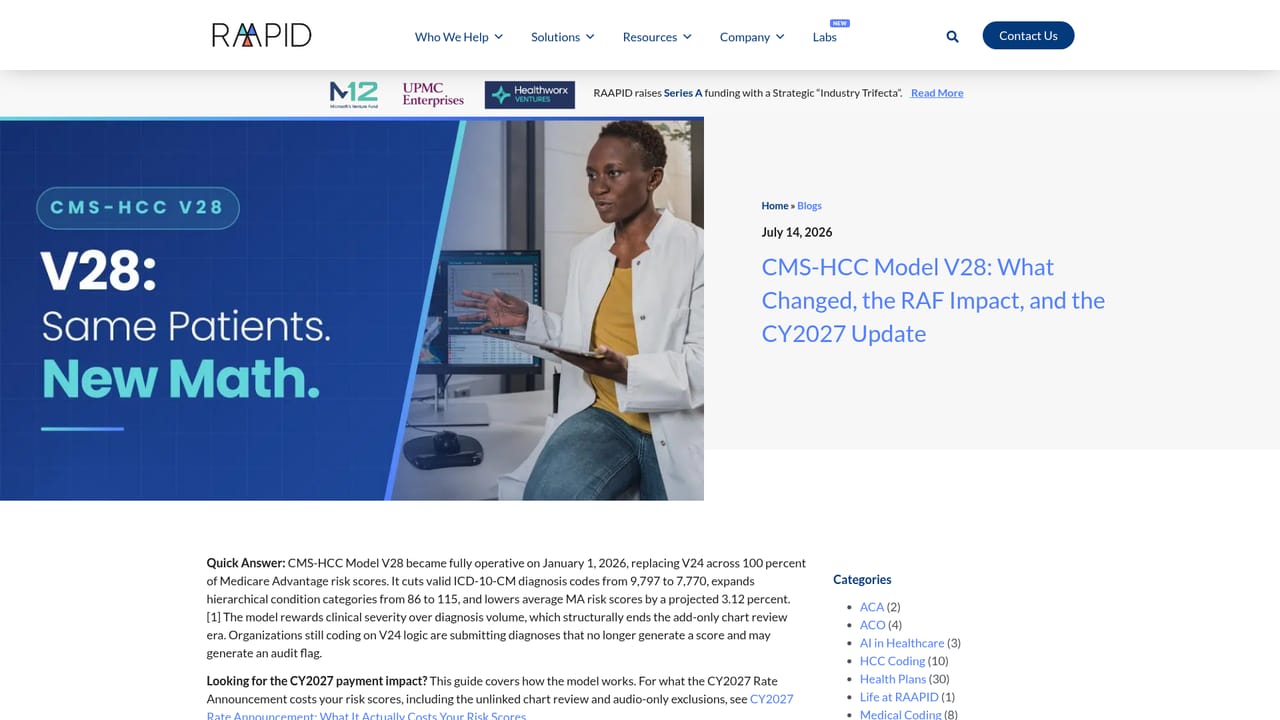
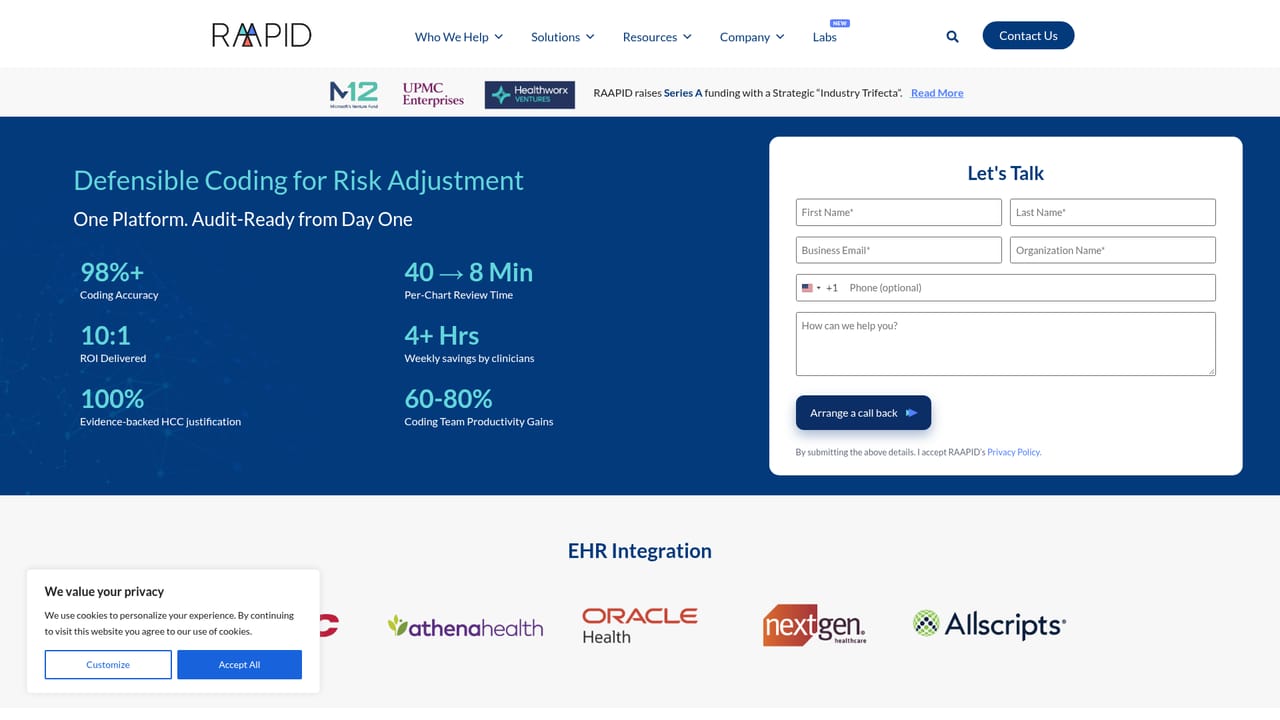
RAAPID is a risk adjustment platform for health plans, provider groups and value-based care organizations that combines neuro-symbolic AI with a human review workflow. The core job is HCC coding: reading charts, identifying diagnoses that were missed, flagging codes that are not supported by the record, and attaching MEAT (monitor, evaluate, assess, treat) evidence to each one so the result can survive an audit. The company cites 98 percent accuracy, a 10:1 return on investment and audit-ready output as its headline numbers. The product is organized as separate modules that share the same underlying engine. Retrospective risk adjustment compresses chart review timelines from months to days with two-way coding that both adds and removes codes. Prospective risk adjustment handles pre-visit planning, high-risk patient prioritization and post-visit validation, with EHR integration described as part of the offering. A RADV audit module runs evidence-first checks and generates export files for submission. The OnePass program is positioned as a single review pass where every diagnosis is linked to chart evidence and a documented rationale. In practice, a coding team uploads or connects chart data, lets the platform propose diagnoses with supporting evidence, and then works through a validation queue. Reviewers see the source text behind each suggestion rather than a bare code list, which is the main defense against RADV takebacks. The platform also publishes guidance on CMS HCC Model V28 and on submission deadlines for 2025 through 2027, useful reference material for teams adapting to the newer model. The tool sits in a specialized lane rather than competing with general-purpose clinical documentation assistants. It assumes familiarity with HCC methodology, MEAT criteria and Medicare Advantage reporting, so it is a poor fit for practices without a risk adjustment function. Pricing is quote-based and not disclosed publicly, and buyers should treat the vendor's accuracy and ROI figures as claims to validate during a pilot. Reviewers in the 2026 KLAS Emerging Company Spotlight gave top marks for support and willingness to buy again.
Customers in the 2026 KLAS Emerging Company Spotlight (n=5) gave A+ grades for support and would buy again; no support tiers or SLAs are published on the homepage.
Learn moreEHR integration is listed as part of the prospective risk adjustment offering; no named EHR vendors or third-party connectors are published on the homepage.
Learn moreRetrospective risk adjustment with two-way HCC coding and MEAT evidence trails, prospective risk adjustment with high-risk patient prioritization and pre-visit planning, a RADV audit module with evidence-first checks and export generation, EHR integration, and the OnePass single-review coding workflow.
Learn more AI Angels400+ customizable AI girlfriends for NSFW chat, voice calls, and roleplay
 Candy AIExperience the future of companionship with AI friends who chat, role-play, and connect with you on a human level.
 ourdream.aiA vast AI roleplay platform with millions of characters for chat, images, video and voiceAI Angels400+ customizable AI girlfriends for NSFW chat, voice calls, and roleplayCandy AIExperience the future of companionship with AI friends who chat, role-play, and connect with you on a human level.ourdream.aiA vast AI roleplay platform with millions of characters for chat, images, video and voice


