Free trial
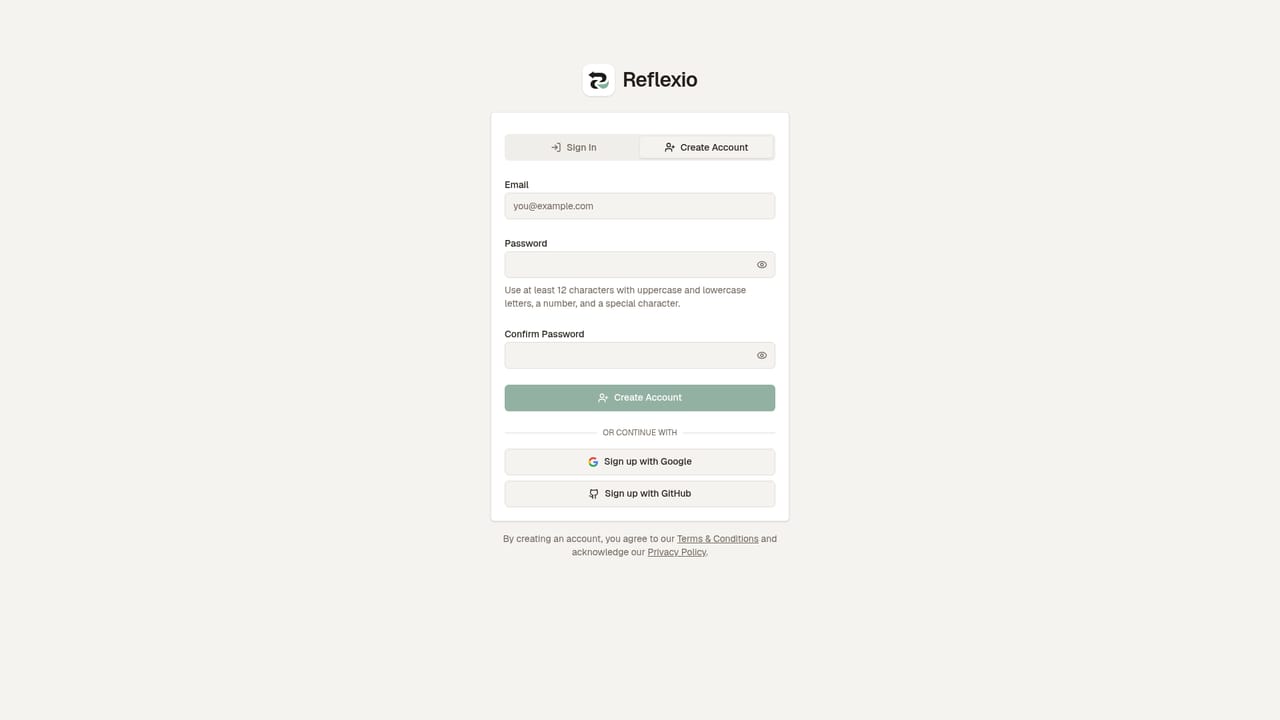
The homepage invites visitors to start free through the registration page, but it does not state how long the free access lasts or what limits apply.
Learn moreTurns agent corrections into reusable rules so mistakes are not repeated.

Reflexio is a developer tool that turns agent corrections into reusable rules so mistakes are not repeated. Reflexio learns from user corrections and failed tool calls, converts them into reviewable behavioral rules, and retrieves those rules before each agent response.
Reflexio is an AI agent learning platform built around a single observation: every correction a user gives an agent disappears when the conversation ends. Reflexio captures those corrections, converts them into behavioral rules with attached evidence and confidence scores, and hands the relevant rules back to the agent before its next answer. The company positions this as an alternative to memory layers, which store what a user said rather than how the agent should act differently next time. In practice the system has three stages. Data ingestion accepts execution paths, tool calls and user corrections from an instrumented tracing platform or from direct publishes through the SDK. The intelligence engine then mines recurring failures and drafts candidate learnings, which appear in a review portal where a human can edit or reject them. At runtime the agent retrieves matching rules before responding and sends execution feedback back into the loop, so the rule set keeps evolving. Published figures claim reductions above 36 percent in execution failure, above 50 percent in token usage and above 20 percent in latency. The product is aimed at engineering teams running production agents in support, sales, data analysis, recruiting and coding. Those teams care less about chat history than about governance: Reflexio does not rewrite model weights, and it offers deployment options ranging from a fully managed cloud through bring your own keys to a self-hosted instance inside your own VPC. Rules can be exported, searched or deleted, and rejecting a candidate removes it from retrieval. Its natural comparison is with agent memory tools and manual prompt iteration. Reflexio occupies the space between them, sitting in the execution loop and offering auditable, retrievable rules instead of stored conversation state. Integration happens through a portable coding agent skill, Python, TypeScript, REST or the CLI, so adopting it does not require rebuilding the whole agent.
The homepage invites visitors to start free through the registration page, but it does not state how long the free access lasts or what limits apply.
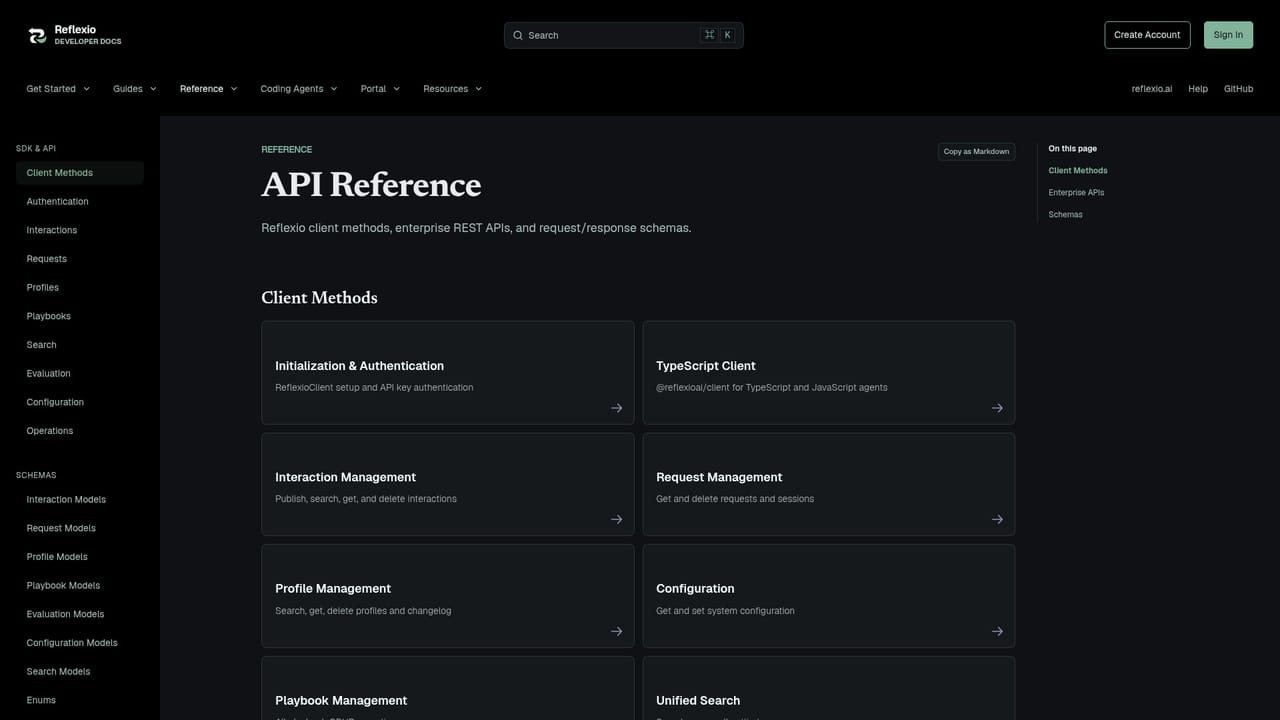
Learn moreIntegration is available through a portable coding agent skill for Codex, Claude Code and Cursor, plus Python and TypeScript SDKs, REST and a CLI. Tracing platforms can also feed ingestion.
Learn moreUnified ingestion from tracing platforms or direct SDK publishes, a behavioral synthesis engine that extracts rules with evidence and confidence, a review portal for editing or rejecting learnings, runtime retrieval before each agent response, continuous execution feedback, and deployment boundaries spanning managed cloud, bring your own keys and self-hosted cloud.
 AI Angels400+ customizable AI girlfriends for NSFW chat, voice calls, and roleplay
 Candy AIExperience the future of companionship with AI friends who chat, role-play, and connect with you on a human level.
 ourdream.aiA vast AI roleplay platform with millions of characters for chat, images, video and voiceAI Angels400+ customizable AI girlfriends for NSFW chat, voice calls, and roleplayCandy AIExperience the future of companionship with AI friends who chat, role-play, and connect with you on a human level.ourdream.aiA vast AI roleplay platform with millions of characters for chat, images, video and voice


