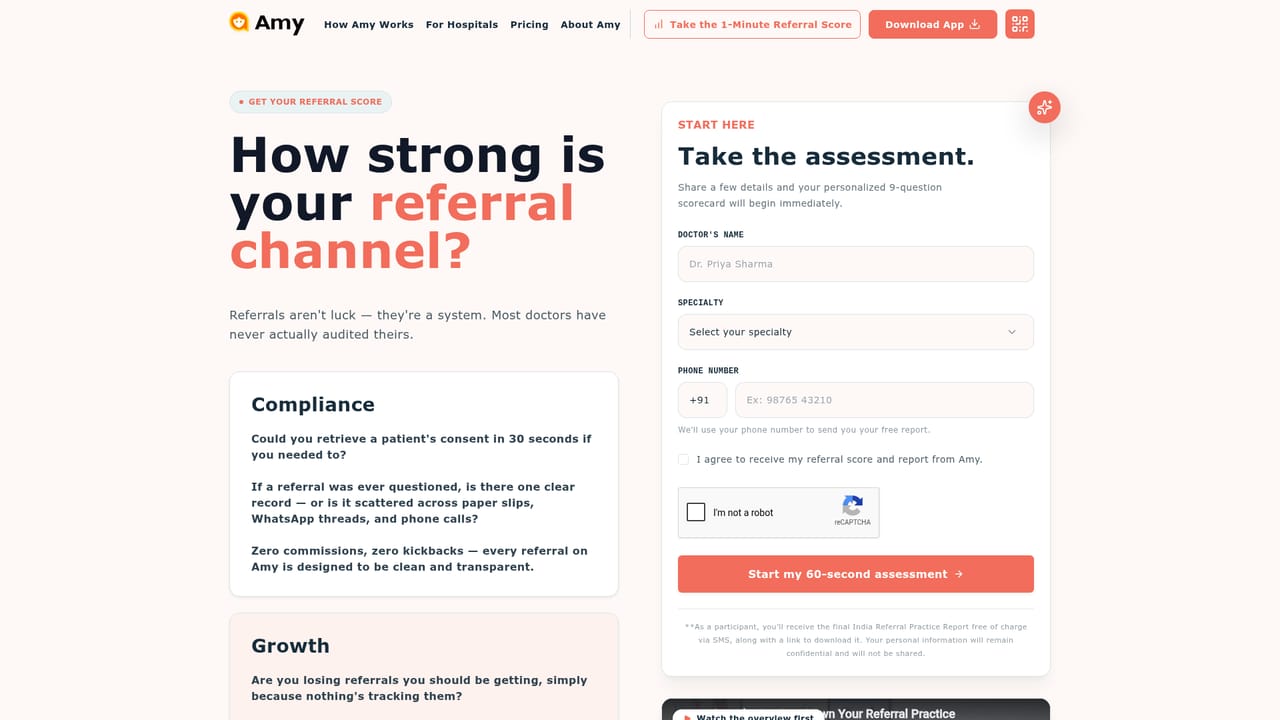
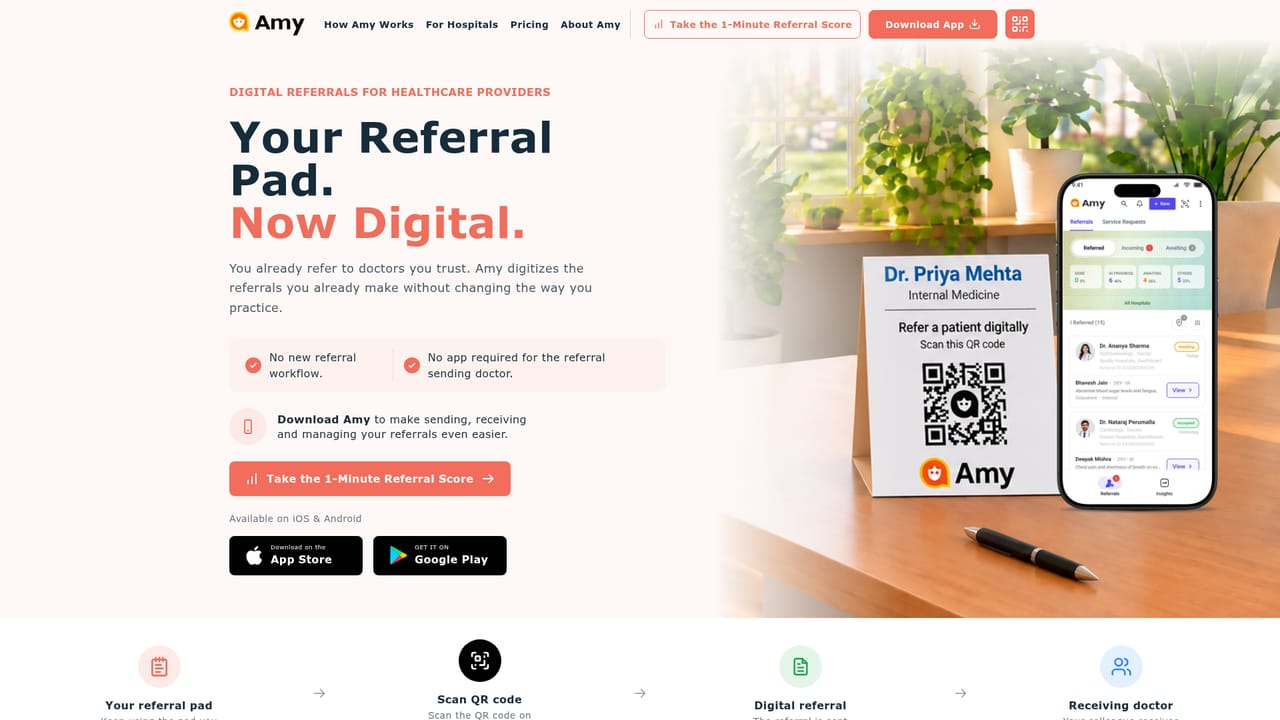
Amy Pro is a QR tool. Amy Pro digitizes the paper referral pad: doctors scan a QR code, the referral travels securely to a colleague, and consent, communication and outcome stay attached to one record. Includes a personal Referral Practice that follows the clinician across hospitals, plus hospital-level tracking and referral intelligence reports.
Amy Pro is a referral management platform for healthcare providers. It takes the paper referral pad a doctor already uses and turns it into a digital record, so a referral sent to a trusted colleague becomes a tracked, encrypted entry in a personal system of record rather than a note that vanishes once the patient walks out of the room. The sending doctor does not need to install anything or learn a new workflow. The receiving side uses the Amy app on iOS or Android.
The workflow follows a scan: the referring doctor scans the QR code on an existing referral pad, and the referral is transmitted securely to the chosen provider. From there Amy tracks consent capture, delivery to the receiving provider, communication tied to that referral, and the eventual outcome. Everything accumulates into what the company calls a Referral Practice, a history of referral relationships that travels with a clinician across hospitals, clinics and employers rather than staying locked inside one institution's records.
Beyond the individual doctor, Amy targets hospitals with a broader view: incoming and outgoing referrals across departments and external providers, a capability to route referrals to verified specialists without sharing personal phone numbers, and reporting that includes referral tracking, non-converted referrals, wait times by specialist and missed opportunities. Referral marketing teams can also measure coordinator activity and word of mouth.
The obvious comparison is a hospital EHR or a standalone secure messaging tool. Amy positions itself as neutral across organisations and mobile-first, which suits independent practitioners and doctors who move between facilities. Buyers should note that the marketing leans on trust and confidentiality language without publishing technical detail on the site, so security review has to happen directly with the vendor.
Any clinician or hospital group that treats referrals as a relationship to maintain, rather than a one-off handoff, is the core audience.