Support
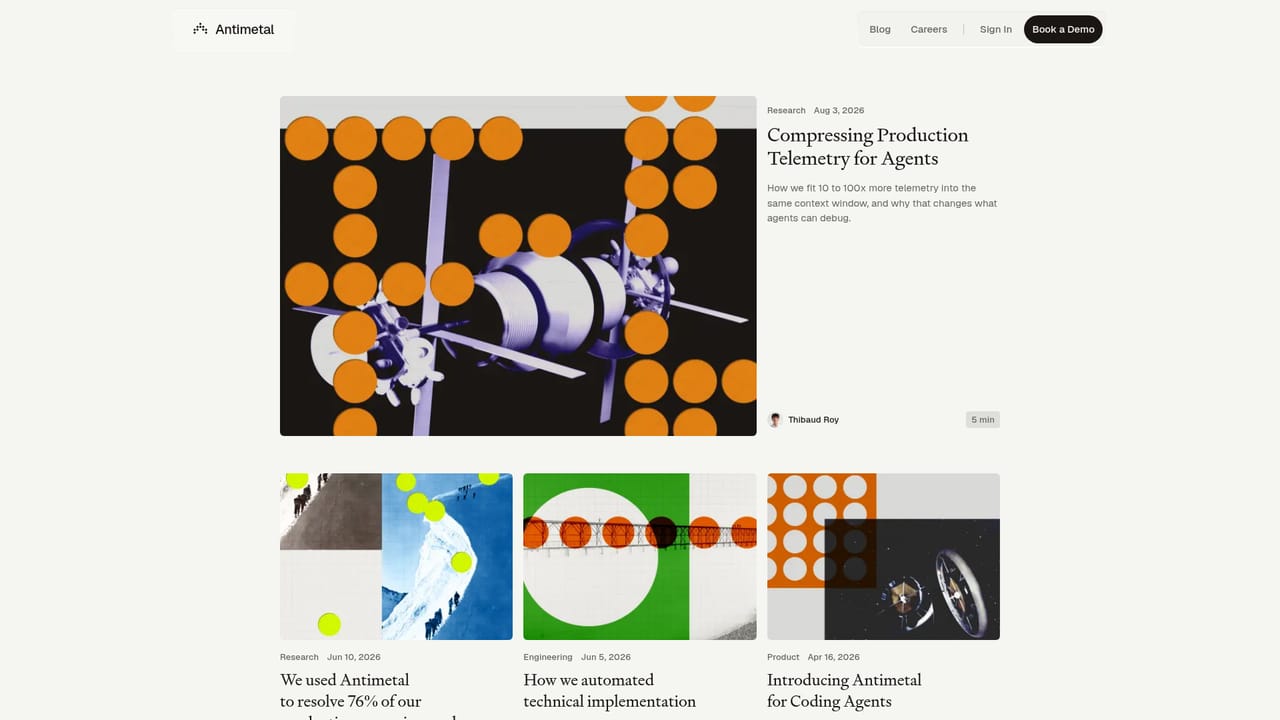
Support is arranged through the demo booking flow, and a blog publishes engineering write-ups. No help centre or documentation portal is listed.
Learn moreAutonomous production system that finds, fixes, and prevents issues.

Antimetal is an autonomous production system that patrols services and infrastructure, groups monitoring signals into issues and improvements, and proposes reviewable fixes with supporting evidence.
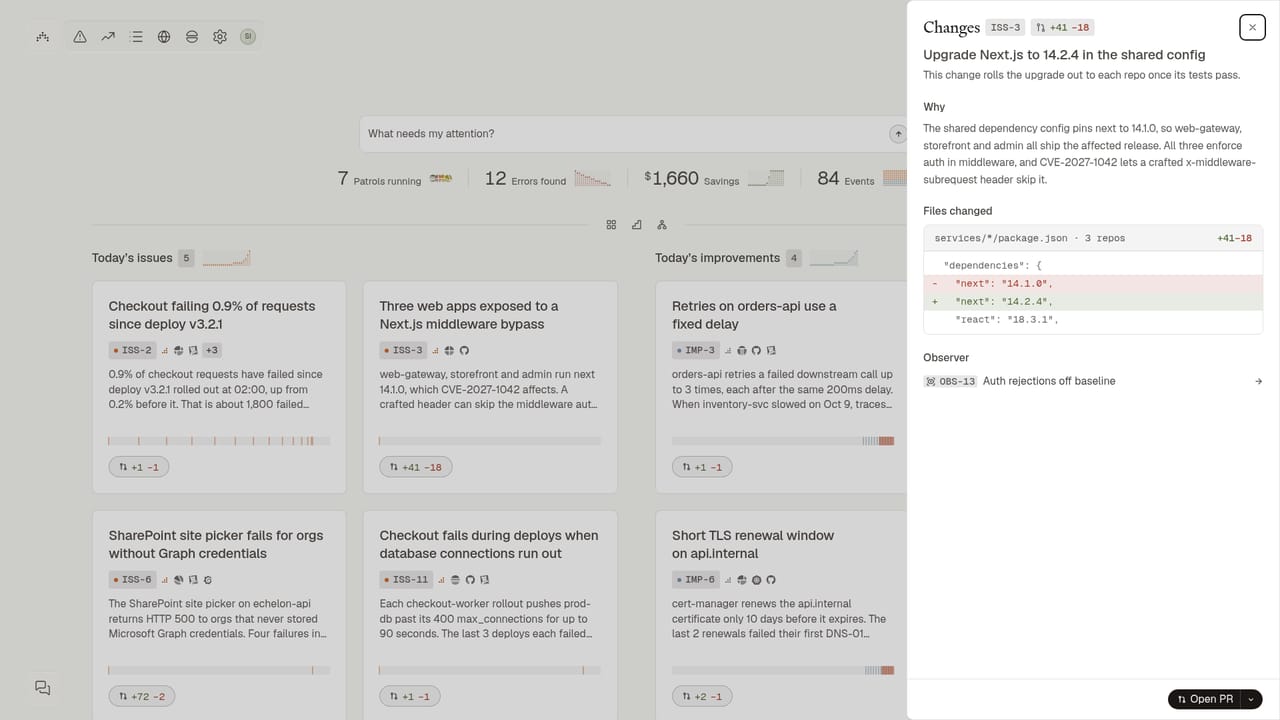
Antimetal is an autonomous production system that monitors your environment, diagnoses issues, proposes fixes, and works to prevent problems from recurring. Based on the homepage, it runs patrols across services, databases, queues, and infrastructure to surface production issues and suggested improvements. The product is presented as a desktop app with a live view of running patrols, detected errors, estimated savings, and a stream of events drawn from monitoring tools such as Datadog and Grafana. In practice, Antimetal groups signals into issues and improvements. An issue record includes a plain description of the symptom, the affected service, the patrol that found it, and supporting evidence such as error rates, latency drift, or log excerpts. Some findings arrive with a rollback pull request already open, while others include resolution notes and verification steps. Improvements are proposed changes with a reviewable implementation plan and projected impact, covering areas like timeout tuning, latency monitors, retry behavior, autoscaler headroom, certificate renewal windows, and shutdown grace periods. A table of linked events shows how alerts from external tools are attached to the same issue, marked as noise, or recorded without action. The tool is aimed at engineering and platform teams that run production services and want less manual triage. It fits alongside observability and incident response stacks rather than replacing them: Datadog and Grafana alerts feed into Antimetal, which decides whether to open an issue, link it to an existing one, or suppress it. A demo interface is publicly available, and the vendor publishes engineering write-ups on automating technical implementation and building a unified model of software systems. Where it differs from conventional monitoring is the emphasis on action and prevention rather than alert volume. The pitch is a system that patrols continuously, reasons across services, and hands teams fix plans they can review before anything changes. Buyers should treat the autonomous framing carefully: the homepage shows proposed changes and open pull requests, but not the full approval and execution model.
Support is arranged through the demo booking flow, and a blog publishes engineering write-ups. No help centre or documentation portal is listed.
Learn moreThe homepage and demo show events arriving from Datadog and Grafana, which are linked to issues or silenced. No further integrations are listed in the source.
Patrols run continuously across service health, error sweeps, database health, vulnerability scans, and scaling risk. Findings become issues with evidence or improvements with reviewable plans and projected impact. Events from tools such as Datadog and Grafana are linked to issues, marked as noise, or recorded with no action. A dashboard summarizes patrols, errors, savings, and events.
Learn more AI Angels400+ customizable AI girlfriends for NSFW chat, voice calls, and roleplay
 Candy AIExperience the future of companionship with AI friends who chat, role-play, and connect with you on a human level.
 ourdream.aiA vast AI roleplay platform with millions of characters for chat, images, video and voiceAI Angels400+ customizable AI girlfriends for NSFW chat, voice calls, and roleplayCandy AIExperience the future of companionship with AI friends who chat, role-play, and connect with you on a human level.ourdream.aiA vast AI roleplay platform with millions of characters for chat, images, video and voice


