Free trial
No time-limited trial is described. A free Starter tier covers one active developer, and free usage plus discounts are offered to qualified open source projects and pre-Series A startups on request.
Learn moreAI code review that reads your whole repo, not just the diff

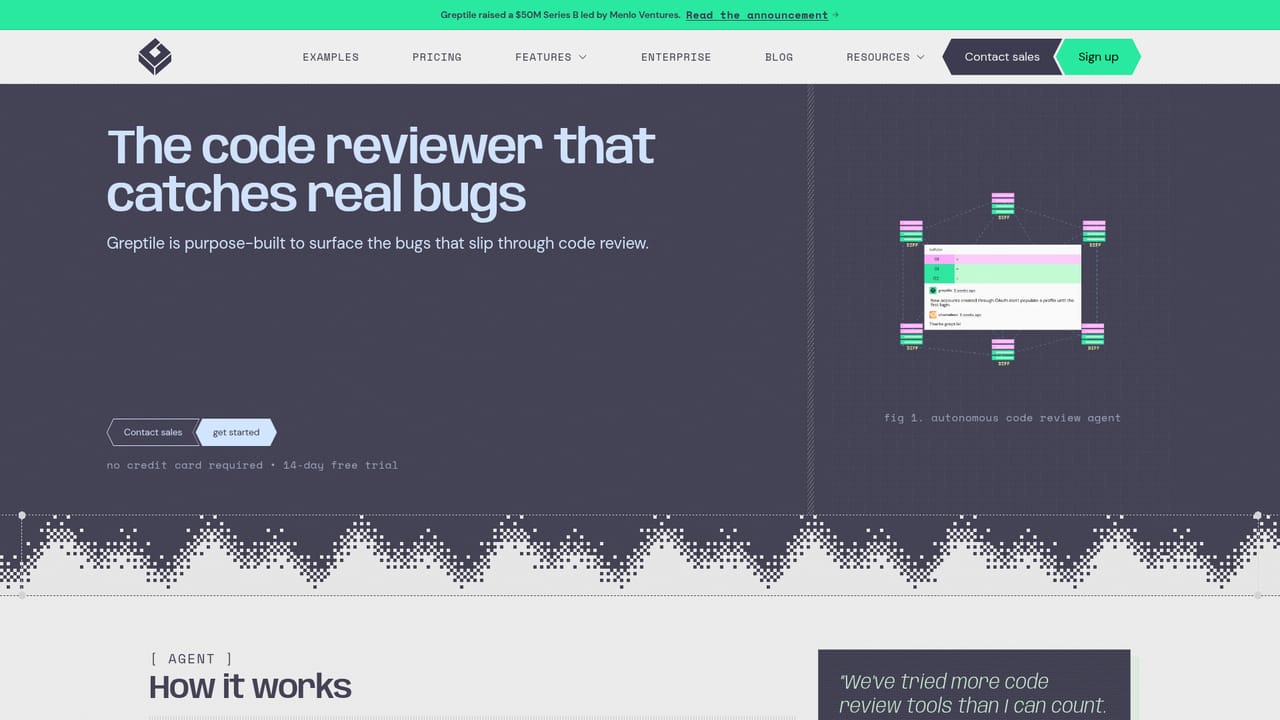
Greptile AI is a code modifier tool. Greptile reviews pull requests with a graph index of the whole repository, so its agents catch cross-file logic bugs, style breaches and security risks that diff-only reviewers overlook. It plugs into GitHub, GitLab and Bitbucket, learns team standards from PR comments, and feeds findings into coding agents via MCP and the /greploop command.
Greptile is an AI code review tool built around one idea: a reviewer cannot judge a pull request without knowing the rest of the codebase. The product constructs a graph index of your repository, mapping files, functions and their dependencies, then runs a swarm of agents over each pull request in parallel. Because the agents can follow references beyond the changed lines, Greptile surfaces problems that a diff-only reviewer would miss, from unbalanced resource releases and undefined methods to mid-loop overflow that leaves orphaned keys. Setup fits the normal developer workflow. Teams connect a supported code host (GitHub, GitLab, Bitbucket or Cursor Origin), and Greptile begins commenting on pull requests. Reviews come in three depth tiers called base, plus and apex, which consume different amounts of credits. Beyond defaults, teams write custom rules in plain English, point the tool at repo-specific context and enforce the patterns they actually care about. The system also reads human PR comments over time to infer coding standards, so review quality should shift as the tool absorbs how a team works. TREX, a separate capability, runs the PR branch in a sandbox to catch bugs that only appear at runtime. Greptile positions itself less as a standalone bot and more as a validation layer under every coding agent. Issues can be pushed one-click into Claude Code, Cursor, Codex or Devin, an MCP connection shares comment context with external agents, and a Claude Code plugin plus the /greploop command let agents iterate against Greptile until comments are resolved. The target buyer is an engineering team already using AI coding assistants and feeling the review bottleneck. Smaller teams can start on the free tier, while regulated organizations get self-hosted deployment with their own LLM providers, SOC 2 reporting, SSO and audit logs. Alternatives in this space range from lightweight PR linters to full platforms, and Greptile's bet is that repository-wide context plus agent interoperability is the differentiator that matters.


No time-limited trial is described. A free Starter tier covers one active developer, and free usage plus discounts are offered to qualified open source projects and pre-Series A startups on request.
Learn moreStarter is free for one active developer with unlimited repositories and 50 credits per month. Pro costs $30 per seat per month with 50 credits per seat, and extra credits are $1 each. Reviews consume credits by tier: base 1, plus 3, apex 10.
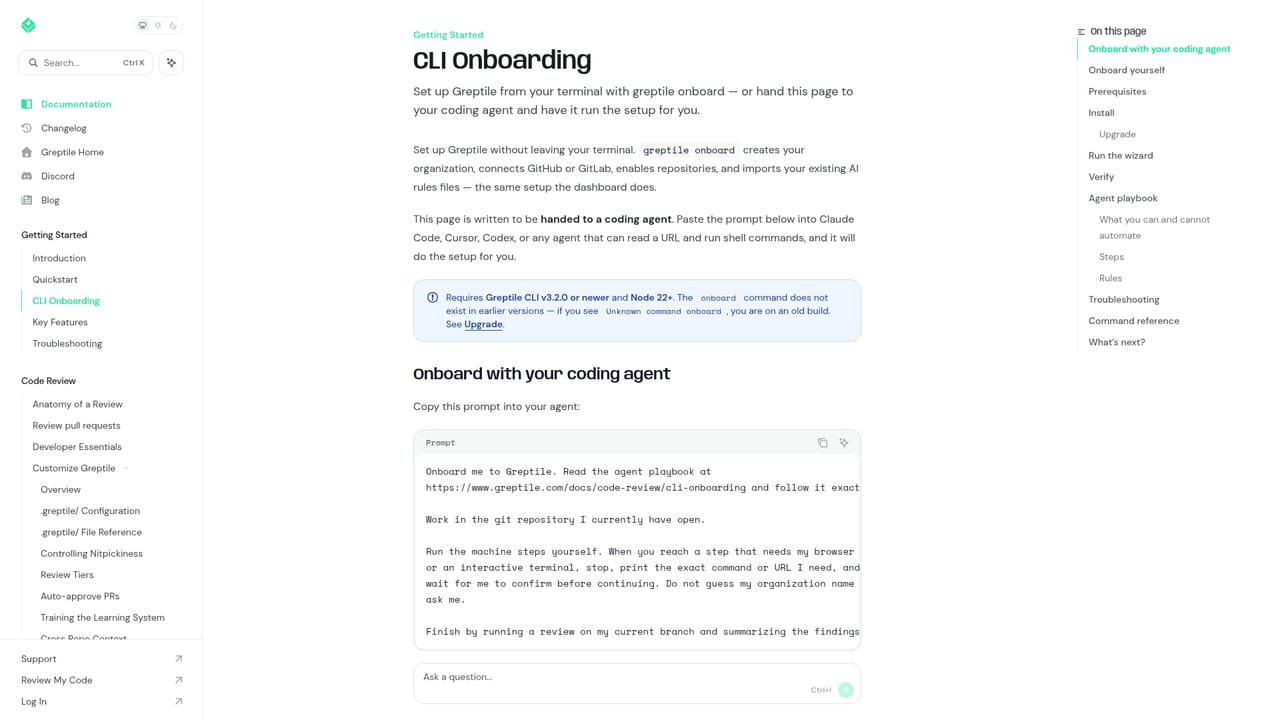
Learn moreThe homepage lists a contact form for sales and general questions, dedicated support on the Enterprise plan, and documentation covering CLI onboarding. No public help centre or community forum is described.
Learn moreCode hosts include GitHub, GitLab, Bitbucket and Cursor Origin, with Enterprise support for GitHub Enterprise Server and Cloud, GitLab Self-Managed, Bitbucket Data Center, Gitea and Perforce via P4 Code Review. Agent links cover Claude Code, Cursor, Codex and Devin through MCP.
Learn moreRepository graph indexing, a parallel agent swarm for PR review, custom rules in plain English, standards learned from PR comments, TREX sandbox testing of PR branches, one-click handoff to Claude Code, Cursor, Codex and Devin, an MCP connection, a Claude Code plugin and the /greploop command.
Learn more AI Angels400+ customizable AI girlfriends for NSFW chat, voice calls, and roleplay
 Candy AIExperience the future of companionship with AI friends who chat, role-play, and connect with you on a human level.
 ourdream.aiA vast AI roleplay platform with millions of characters for chat, images, video and voiceAI Angels400+ customizable AI girlfriends for NSFW chat, voice calls, and roleplayCandy AIExperience the future of companionship with AI friends who chat, role-play, and connect with you on a human level.ourdream.aiA vast AI roleplay platform with millions of characters for chat, images, video and voice


