Free trial
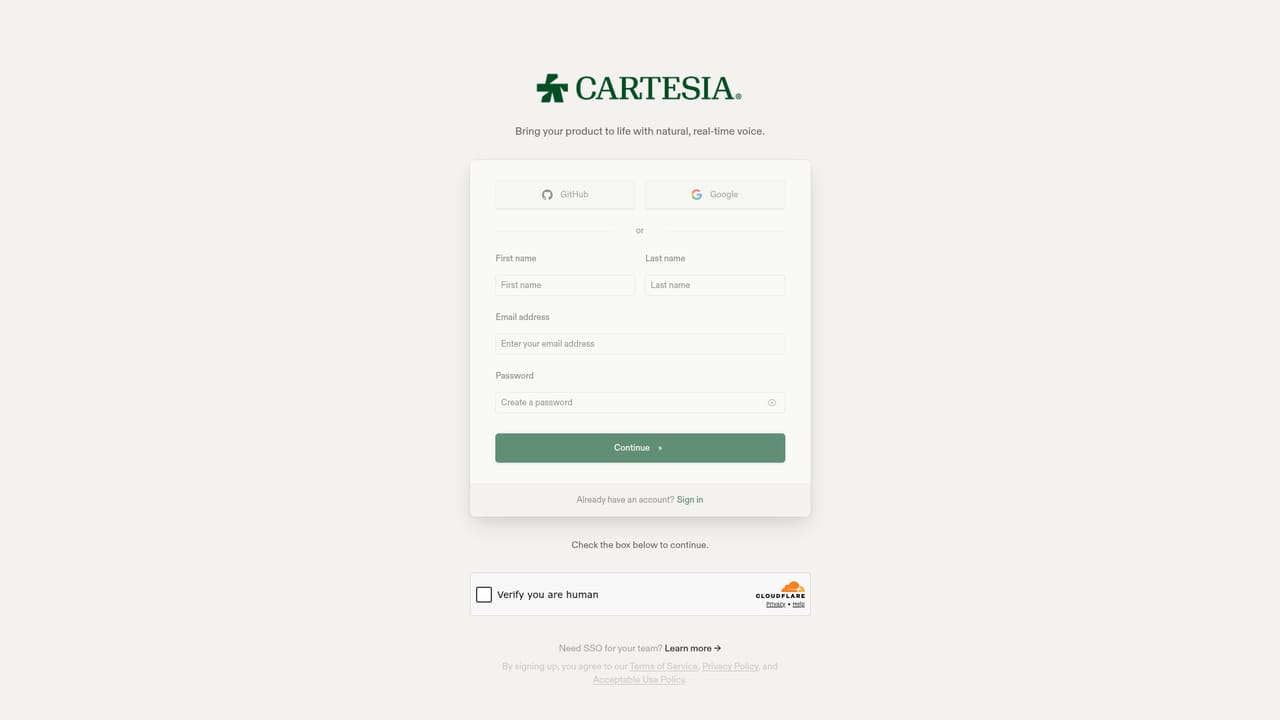
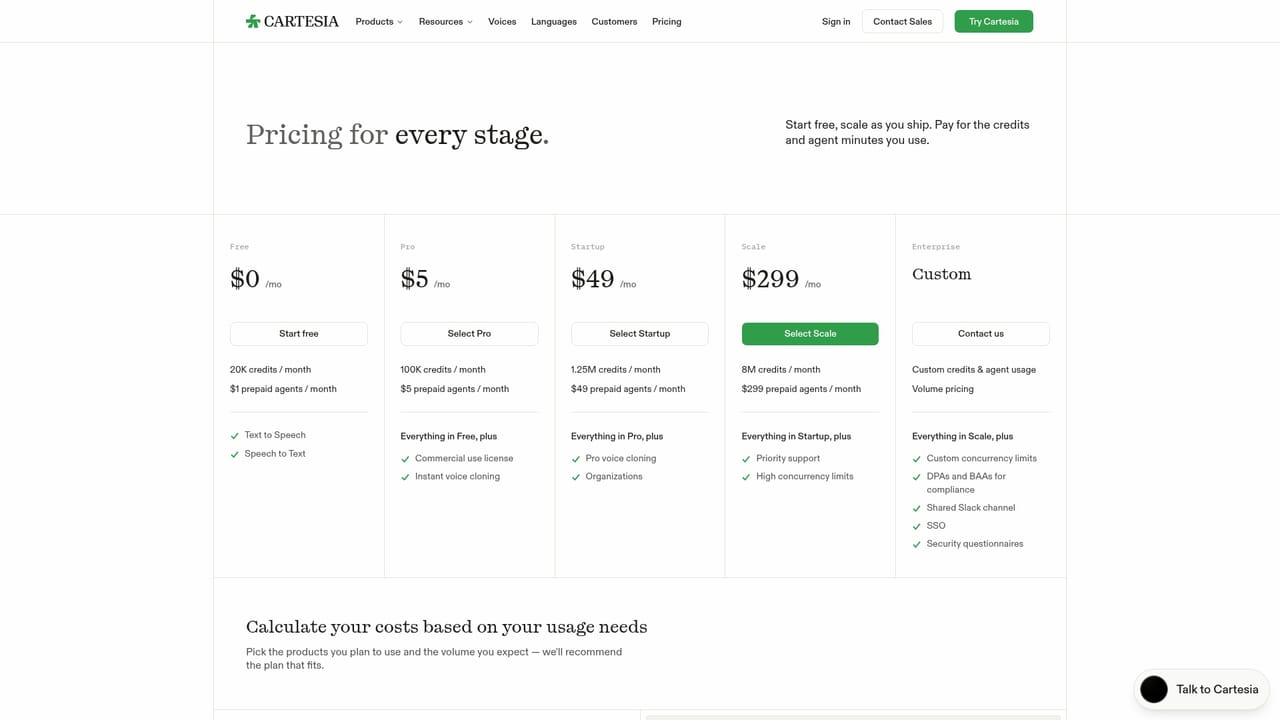
A free tier provides 20K credits for evaluation and personal use, including API access and Instant Voice Cloning. Commercial usage rights require a paid self-serve plan.
Learn moreReal-time TTS API that laughs on cue and speaks 44 languages
Own Cartesia Sonic-3? Verify ownership to get a dofollow link

Cartesia Sonic-3 is an AI narration tool. Cartesia's Sonic-3 is a streaming text to speech API built for low-latency voice agents and expressive narration. It offers sub-90ms first audio, 44 languages, instant voice cloning and custom pronunciation dictionaries, with free, self-serve paid and enterprise deployment tiers.
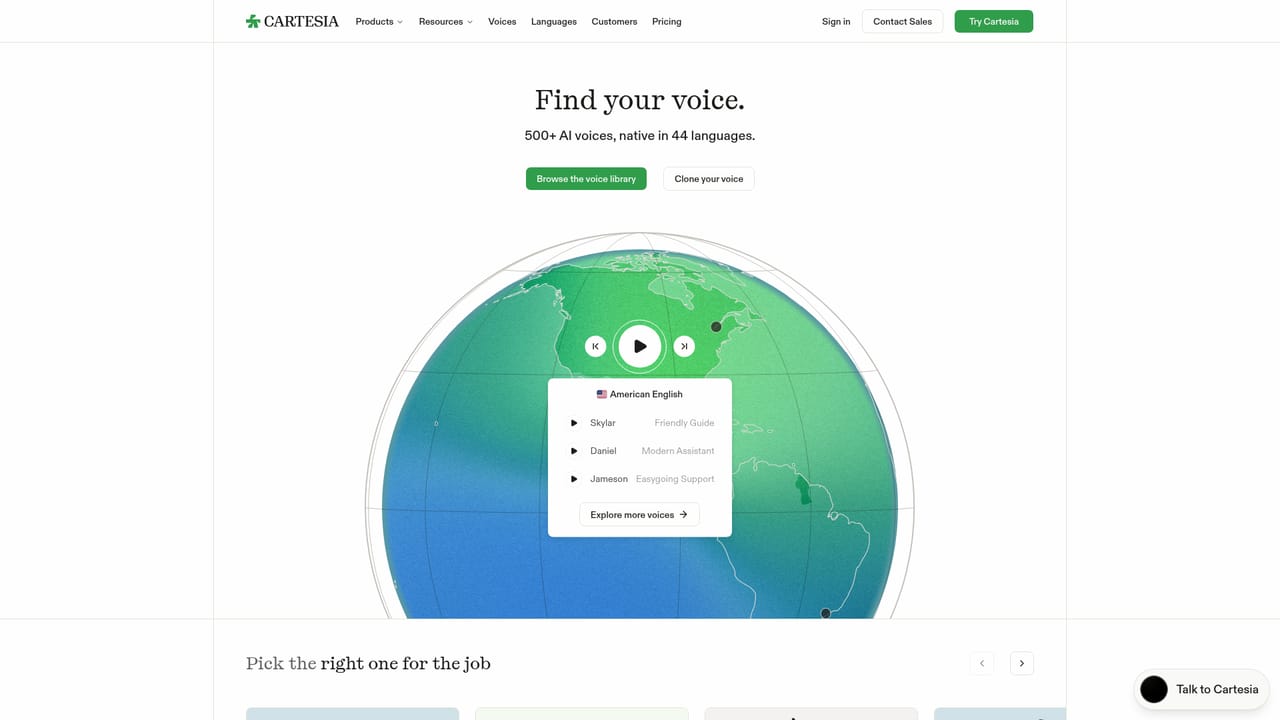
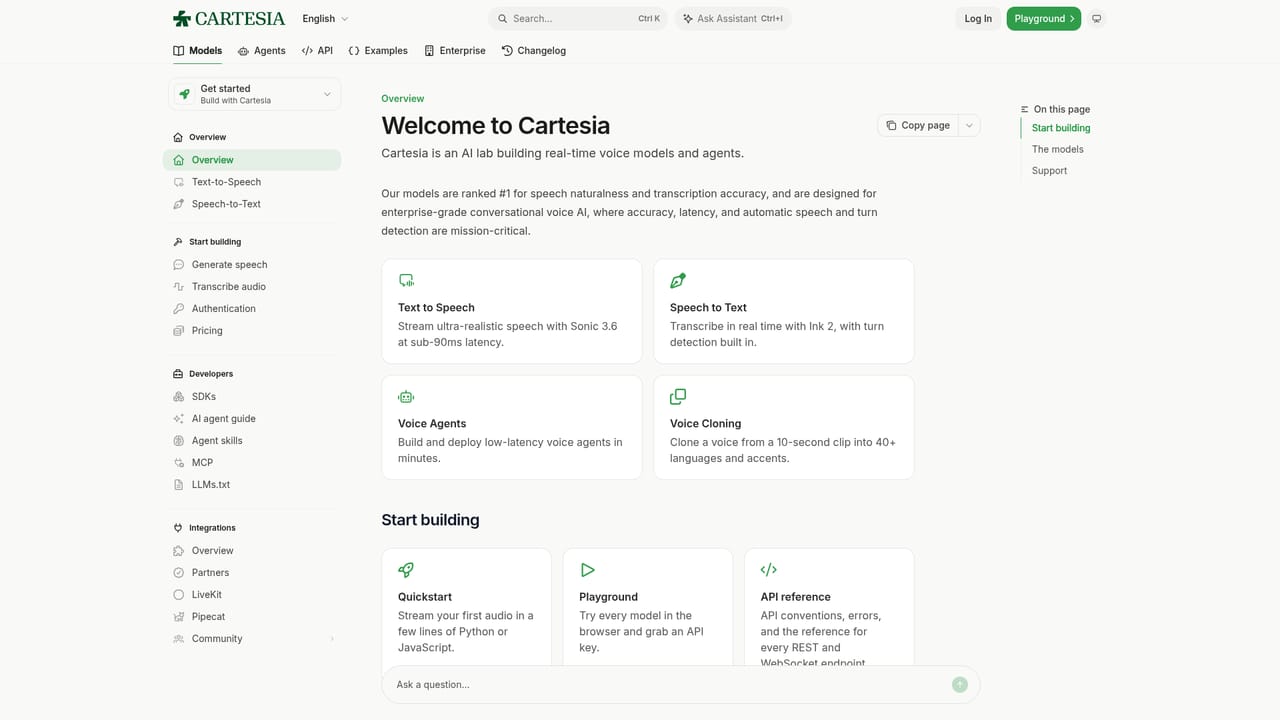
Sonic-3, now offered as Sonic-3.6, is Cartesia's text to speech model delivered as a streaming API. The headline claim is first audio in under 90 milliseconds, with playback starting before the full response has been generated. That latency profile is the reason the product is framed around live conversations rather than pre-rendered narration, though nothing stops a team from using it for recorded content. Expression is handled at the transcript level. Sonic reads the emotional subtext of the input and calibrates delivery on its own, and non-verbal cues such as laughter can be typed directly into the script. Voice cloning takes about 10 seconds of reference audio for an instant clone, with a higher-fidelity professional tier built from 15 to 30 minutes of clean speech and custom voice development available under enterprise contracts. Pronunciation dictionaries let teams pin down proper nouns, order identifiers and domain jargon, and localization carries tone and speaker identity across 44 languages. The model sits on State Space Model architecture developed by Cartesia's founding team at Stanford. The vendor's argument is that this avoids the usual trade between quality and speed, and it points to first place on Artificial Analysis blind leaderboards for both speech and speech to text. The practical audience is builders: voice agent platforms, support automation, recruiting and sales outreach, plus media teams that need expressive narration. Deployment ranges from self-serve API keys to VPC, on-premise and air-gapped installs, backed by SOC 2 Type 2, HIPAA eligibility, GDPR compliance and optional zero data retention. Competitively, Sonic is aimed at the hosted speech APIs from the large labs and at specialist voice vendors. Cartesia's differentiators are latency, deployment flexibility for regulated buyers, and a pronunciation engine that handles alphanumerics. Its weaknesses are the ones that come with an API-first product: there is no timeline editor for post-production work, and the compliance features that matter most to enterprises sit behind sales conversations.
A free tier provides 20K credits for evaluation and personal use, including API access and Instant Voice Cloning. Commercial usage rights require a paid self-serve plan.
Learn moreThree tiers. Free covers evaluation and personal use with 20K credits, plus access to Sonic, the API, voices and Instant Voice Cloning. Self-serve paid plans add commercial rights, more credits, higher concurrency and faster generation. Enterprise is custom priced and includes on-prem, VPC, OEM, custom voices, zero data retention and SLAs.
Learn moreSelf-serve users rely on documentation and the sales contact form. Enterprise agreements cover higher SLAs, BAAs, zero data retention and deployment assistance. Startup grants are available through a separate program.
Learn moreAccess is through the Sonic streaming API. Enterprise buyers can deploy in their own VPC on AWS, GCP or Azure, on-premise including air-gapped environments, or embed the model through OEM licensing.
Learn moreStreaming TTS with first audio under 90ms, emotion inferred from the transcript plus explicit non-verbal cues such as laughter, instant cloning from about 10 seconds of audio, professional cloning from longer samples, localization across 44 languages with tone preserved, and custom pronunciation dictionaries for proper nouns and alphanumerics.
Learn more AI Angels400+ customizable AI girlfriends for NSFW chat, voice calls, and roleplay
 Candy AIExperience the future of companionship with AI friends who chat, role-play, and connect with you on a human level.
 ourdream.aiA vast AI roleplay platform with millions of characters for chat, images, video and voiceAI Angels400+ customizable AI girlfriends for NSFW chat, voice calls, and roleplayCandy AIExperience the future of companionship with AI friends who chat, role-play, and connect with you on a human level.ourdream.aiA vast AI roleplay platform with millions of characters for chat, images, video and voice


