What these tools do
French grammar checking tools look at a piece of French writing and flag what is wrong: gender and number agreement, accents, verb conjugation, elision, punctuation and awkward phrasing. Some go further and suggest a rewrite or explain the rule. The purpose is not to teach French from zero. The purpose is to catch the errors that a spell checker misses, the ones that come from grammar rather than vocabulary. This category suits students writing essays, professionals sending French emails, translators reviewing drafts, and anyone who learned French later in life and wants a second pass before publishing. It replaces the habit of rereading the same paragraph five times and still wondering whether the participle agrees.
How to choose one
Start with the kind of French you write. If it is formal or academic, prioritise tools that explain corrections rather than only rewriting, because you need to learn the rule and defend the sentence. If it is casual or professional email, a tool that corrects in place and keeps your voice will save more time. Check where the tool runs: a browser extension or a document add-on keeps the correction inside the editor you already use, while a web app means copying text back and forth. Look at whether the tool handles French specifically or treats it as one language among many, since French agreement and accents demand dedicated attention. Finally, decide whether you want correction only or correction plus vocabulary building, because those are different jobs.
Notable tools
QuillBot is built around paraphrasing with natural language processing, which helps when a French sentence is grammatically fine but reads heavily and needs a cleaner version.
HyperWrite suggests corrections and enhancements to your text, useful for a general improvement pass rather than a strict rule check.
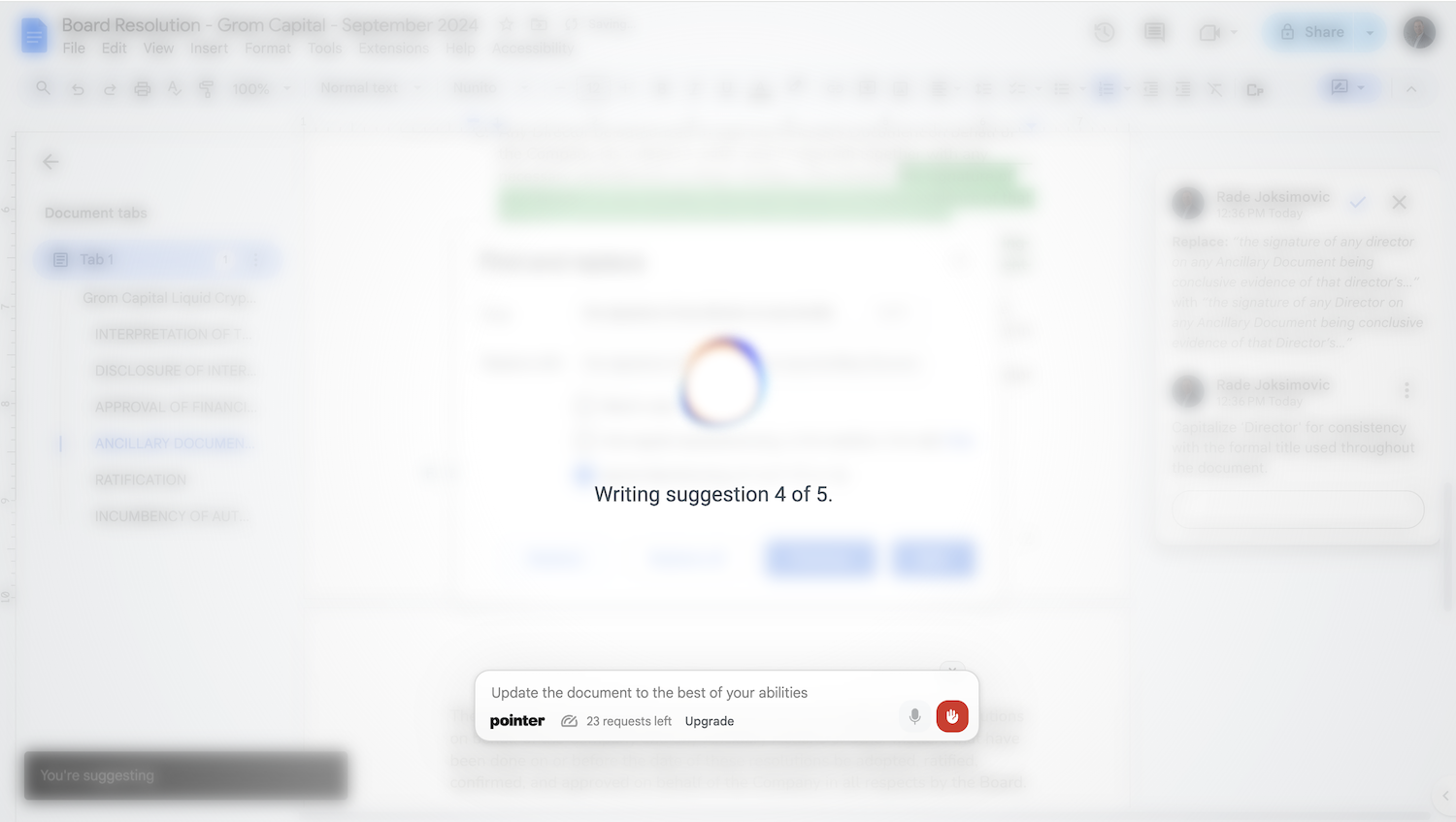
Pointer delivers AI writing help as native suggestions inside Google Docs, so French correction happens in the document without switching tabs.
Paragraph AI fixes, replies and edits wherever you type, which suits short French messages and email replies more than long essays.
MindDory is a vocabulary builder, so it supports the word knowledge that underlies grammar accuracy rather than correcting sentences directly.
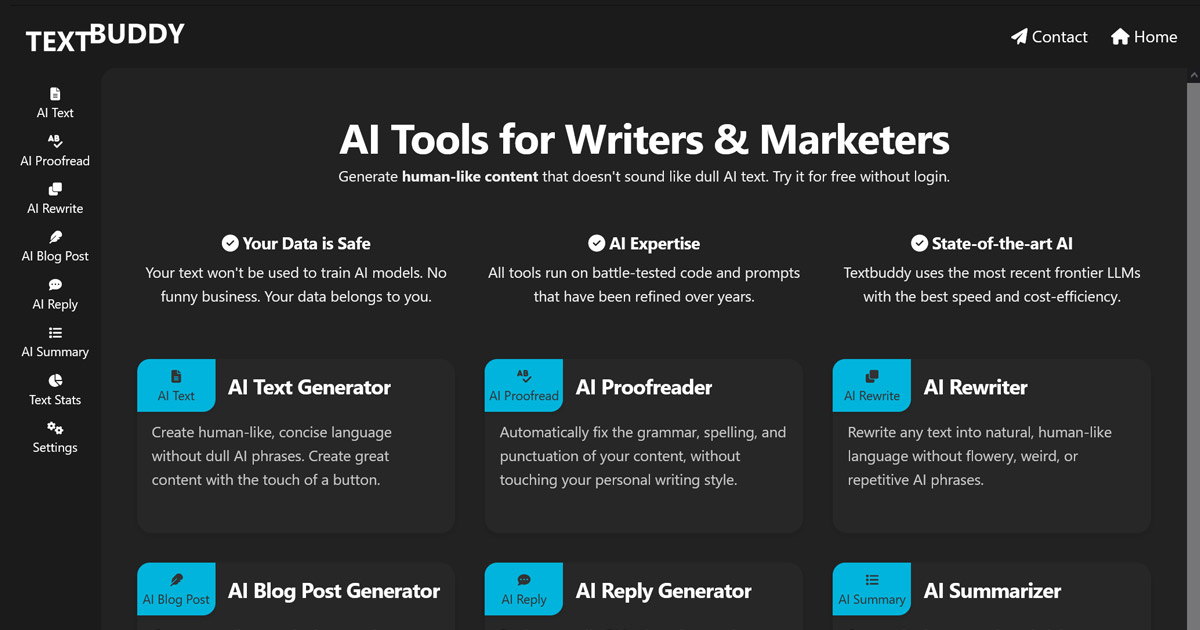
Textbuddy is a browser based toolbox for cleaner, more human writing, a lightweight option for a quick pass over a draft.
Common questions
How does French grammar correction differ from a spell checker?
A spell checker compares words against a dictionary. French grammar correction has to read the relationship between words: whether an adjective matches the noun, whether a past participle agrees with an auxiliary, whether the accent changes the meaning. That is why a draft can pass a spell check and still contain errors a French reader would notice immediately.
Can these tools replace a human proofreader?
For everyday writing, a careful pass with a French grammar checker catches most mechanical errors. For contracts, academic submissions or published copy, a human reader still matters, because register, tone and intent are judgment calls. Treat the tool as a filter before the human review, not after it.
Which tool should a French learner try first?
A learner benefits most from corrections that come with an explanation, so the same mistake is less likely to repeat. MindDory helps build the vocabulary that grammar rules hang on, while a correction-focused assistant shows the error in context. Using both is more useful than either alone.
When to look elsewhere
If the problem is not French specifically but the general quality of your English prose, the Grammar Checker category covers broader correction and style. If you have a correct sentence and want a different wording, the Paraphrasing Tool category is the right place to start.