ROK Solution

Organization-centric hyperautomation with native identity governance

Advanced
Screenshot of ROK Solution, Organization-centric hyperautomation with native identity governance

What is ROK Solution?

ROK Solution is an organization-centric hyperautomation platform: a living org chart synced with HRIS and directories anchors no-code BPM, RPA and generative AI workflows, with native identity governance making access rights and audit evidence follow real roles, moves and departures.

ROK Solution is a hyperautomation platform built around a single organizing idea: the organizational chart, not the application, is the starting point. The platform maintains a living organizational model that stays synchronized with your HRIS and directories, and every workflow, access right and compliance control is anchored to that model. Hierarchical, matrix, functional and geographic structures are all supported, so the chart reflects how the company actually operates rather than how a single tool assumes it does. On top of that foundation sit three pillars. The first is orchestration: the living org chart acts as the source of truth for who exists, what role they hold and who reports to whom. The second is creation: no-code BPM, workflow and RPA tooling, assisted by generative AI and a rules engine, lets teams build business applications and automate processes. The homepage describes natural language to executable application as a supported path, and a multi-agent AI architecture generates applications from the organizational chart without direct access to internal data. The third is native IGA, where identity governance is architectural rather than bolted on, so access rights follow positions, roles and real organizational movements such as onboarding, internal mobility and departures. Kanban, Gantt and lean management tools are included for team collaboration inside the same framework. The product is aimed at regulated, complex organizations: banking, industry, transport and services groups where HR, IT and security each run their own rules today. Published references include HSBC (7,000 agents), Elis (400 sites), Novares (21 countries, 11 employee lifecycle workflows in production) and Transdev (300 entities). ROK positions itself against ServiceNow, Appian, SailPoint, Okta, Workday and similar vendors by arguing those tools automate isolated components, while ROK connects org data, workflows and access so audit evidence is generated continuously instead of reconstructed at audit time. Compliance with DORA, ISO 27001 and GDPR is presented as a property of the architecture, not a configuration exercise. Deployment is described as taking under one month, with claims of 75 percent lower operating costs and 28 countries served. Buyers who want a lightweight standalone automation tool will find ROK broader and heavier than needed; organizations with real governance obligations are the natural fit.

How do you use ROK Solution?

  1. 1Book a demo to scope your use case
    ROK does not appear to offer self-serve signup, so the first move is a scoping meeting. Bring a concrete process such as onboarding or an SAP access review so the demo maps to your own organization.
    ROK Solution — Book a demo to scope your use case
  2. 2Model the organizational chart
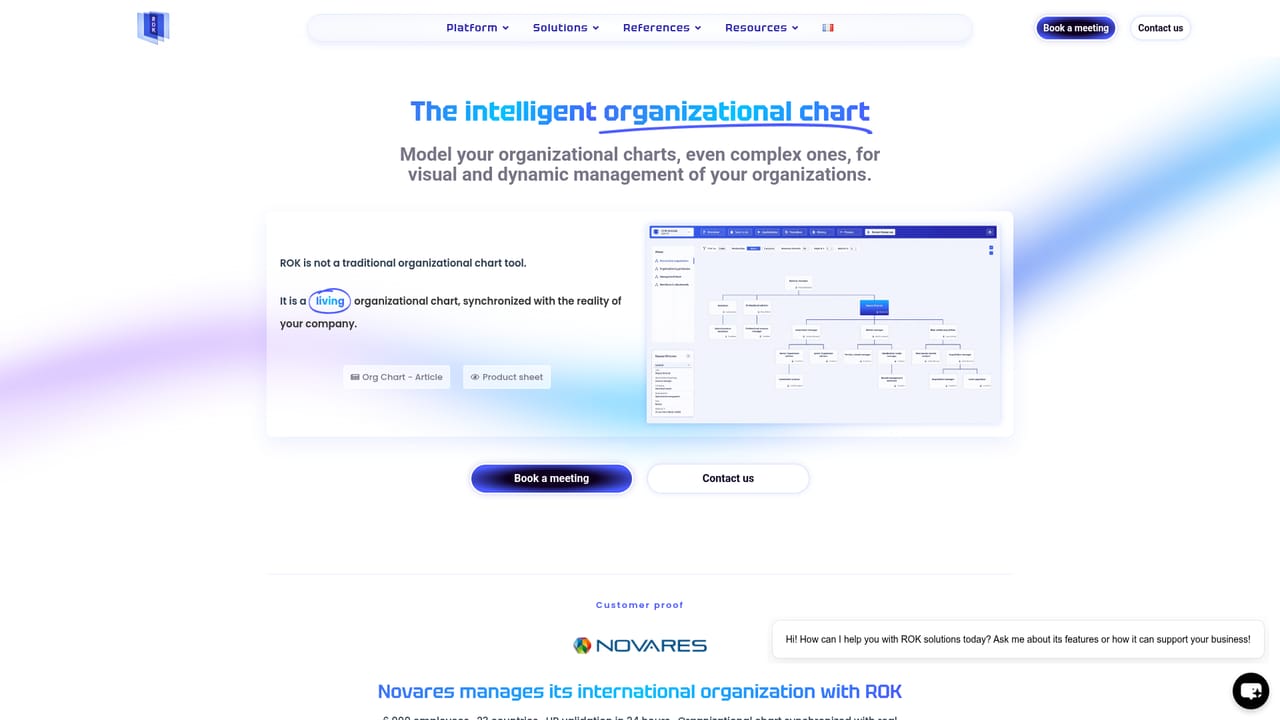
    The org chart is the platform's foundation. Review how hierarchical, matrix, functional and geographic axes are represented and plan synchronization with your HRIS and directories.
    ROK Solution — Model the organizational chart
  3. 3Build a first no-code workflow
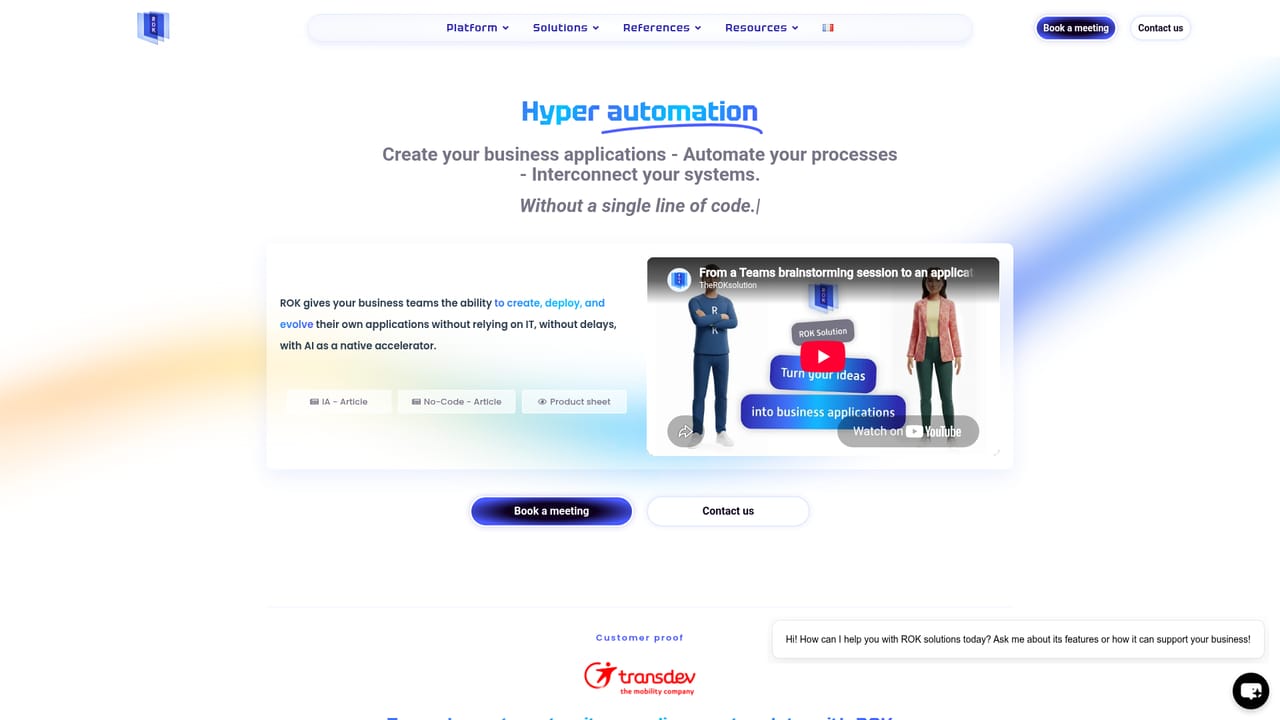
    Use the hyperautomation layer to model a process with BPM, workflow and rules engine components, testing how generative AI can turn a natural language description into an executable application.
    ROK Solution — Build a first no-code workflow
  4. 4Connect access rights to roles
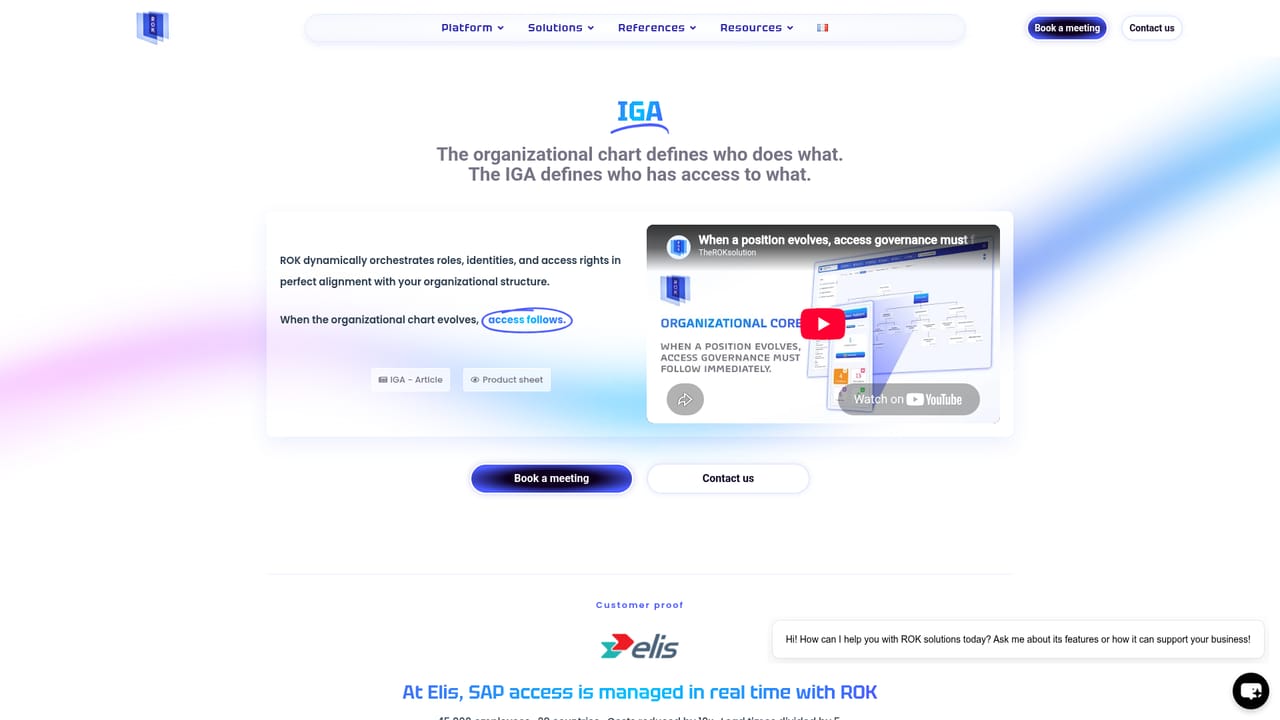
    Map positions and roles to access rights so onboarding, mobility and departure events trigger the right grants and revocations automatically, with audit evidence captured as they happen.
    ROK Solution — Connect access rights to roles
  5. 5Extend to a concrete domain
    Pick a domain page that matches your priority, for example onboarding automation or SAP and ERP role management, and validate the templates and controls against your own procedures.
  6. 6Validate governance with audit stakeholders
    Before rollout, walk internal audit and security through how DORA, ISO 27001 and GDPR evidence accumulates from live workflows, and agree the controls that must be demonstrable.

Pros and cons

Pros

  • Anchors workflows and access rights in a living org chart synchronized with existing HRIS and directories, so organizational change propagates instead of fragmentingAI
  • Native IGA built into the platform architecture rather than licensed as a separate identity governance layerAI
  • No-code BPM and RPA with generative AI support, including generating applications from natural languageAI
  • Strong regulated-enterprise references including HSBC, Elis, Novares and Transdev across banking, industry and transportAI
  • Case material points to deployment in under one month and substantial operating cost reductionAI

Cons

  • No public pricing, plans or self-serve signup are shown, so evaluation requires a sales conversation and demoAI
  • Positioned as an enterprise platform, which means implementation effort and organizational modeling work before value appearsAI
  • The generative AI and no-code claims are vendor-stated; no independent benchmarks or public documentation are linked from the homepageAI
  • Deepest value assumes a maintained org chart and connected HRIS, a dependency smaller or messier organizations may not be ready forAI
  • Core positioning is governance and compliance, so teams seeking a quick standalone automation or creative tool will find it overbuiltAI

How much does ROK Solution cost?

Integrations

The homepage states that ROK connects to HRIS, directories, ERP (including SAP), IAM tools, document management systems and application connectors without replacing them, and offers an AI connector and process automation layer.

Learn more

Features

Core features span a living multi-axis organizational chart synced with HRIS and directories, no-code BPM, workflow and RPA with generative AI and an advanced rules engine, native IGA tying access rights to positions and roles, a controlled multi-agent AI architecture, compliance by design for DORA, ISO 27001 and GDPR, plus Kanban, Gantt and lean management for team collaboration.

Learn more

Frequently asked questions about ROK Solution

  • How do you use ROK Solution?
    The walkthrough on this page covers 6 steps: 1. Book a demo to scope your use case 2. Model the organizational chart 3. Build a first no-code workflow 4. Connect access rights to roles 5. Extend to a concrete domain 6. Validate governance with audit stakeholders.
  • What platforms does ROK Solution support?
    ROK Solution is available on Web App.
  • What does ROK Solution integrate with?
    The homepage states that ROK connects to HRIS, directories, ERP (including SAP), IAM tools, document management systems and application connectors without replacing them, and offers an AI connector and process automation layer.
  • What are the limitations of ROK Solution?
    No public pricing, plans or self-serve signup are shown, so evaluation requires a sales conversation and demo. Positioned as an enterprise platform, which means implementation effort and organizational modeling work before value appears. The generative AI and no-code claims are vendor-stated; no independent benchmarks or public documentation are linked from the homepage.

Status

StatusActive
Views0
Outbound clicks0
Added10/21/2026

Platforms

Web App

Pricing

Paid